
← Back to Identification Guide
Pressing plants manufactured the discs and assembled the final product, but the jackets themselves came from a different industry altogether. Capitol of Canada (and the other labels that released Beatles records here) subcontracted specialized printing companies to produce their record jackets. Four main printers handled Beatles-related printed material in Canada between 1962 and the end of the Canadian vinyl era: Parr's Litho, Ever Reddy, Modern Graphics and Shorewood Packaging.
A record jacket was rarely the work of a single company in the 1960s. A printing company was hired to produce the front and back slicks, while a packaging company (Modern Album of Canada, in Capitol's case) supplied and assembled the cardboard frame on which the slicks were pasted. Modern Album would then ship the completed jackets back to the pressing plant, where the discs were inserted into the jackets, packaging the final product that would then be distributed across the country. (Loose poly bags or tight shrink wraps would likely have been done at the pressing plant.)
Since the parts were never produced in exactly matching quantities, leftover frames and slicks were combined over time, which explains many of the hybrid covers documented in this archive.
Most jackets carry the printer's mark in small print, usually on the front cover or along the spine: a logo accompanied by a "LITHO IN CANADA" or "PRINTED IN CANADA" mention. In some rare instances, covers are unmarked, carrying only the "Litho in Canada" mention without any printer logo; these pressings are explained in detail in their respective variation entries. Since the printers succeeded one another over fairly well-defined periods, this small mark is often the fastest way to date a cover, to tell an original from a later run, and to spot leftover or transitional covers that do not match the record found inside. The sections below present each company, its logo and identifying marks, and the years during which its covers are found on Beatles records.

Parr's Print & Litho Ltd. was founded in Toronto in 1954 by Victor Parr and Al Siegel, and was the first printing plant in Canada to specialize in record jackets and labels. Victor Parr had been running Mercury Records' in-house printing department in Canada; when Quality Records took over the Mercury brand in 1954, he left and started his own shop.
Parr's became Capitol of Canada's primary cover printer from the late 1950s, and also printed for Columbia and Epic (starting in 1956), for London and its associated labels until mid 1969, and supplied label stock and 8-track labels to much of the industry (Quality, RCA, Ampex and others). Parr's printed covers for Beatles albums until 1967, after which Capitol subcontracted other printers. The company operated until the end of February 2000.
The Beatles-era plant was located at 625 Yonge Street in Toronto. Parr's opened a second plant at 341 Nantucket Blvd in Scarborough in December 1971, and later moved to Markham, where it remained until closing. A Montreal plant also operated on Esplanade Avenue.
The Parr's logo is a capital P underscored by a line, with the name PARR'S below it, boxed in a thick black rectangle. On Beatles covers, the mention "LITHO IN CANADA" is found to the left of the logo. Pre-1962 printings (like the early 6000 series Capitol albums) show an older version of the logo, or sometimes only a text credit reading "P P & L - Litho in Canada", but this earlier logo was never used on any Beatles records.

On Beatles records, Parr's covers run from the very first Canadian album (Beatlemania! LP.6051.1.1 in November 1963) through the early 1970s, housing discs pressed at both RCA and Compo. Other printers gradually took over cover printing from the late 1960s, but Capitol used up its remaining Parr's stock rather than discarding it, so genuine Parr's covers are still found on variations as late as 1973-1974 (the light pink Twist And Shout covers of the Red Target era are a good example). Parr's covers are documented on 25 of the albums in this archive, more than any other printer except Modern Graphics.

Ever Reddy began its operations in 1953 and served the Canadian music industry for six decades; its presses produced some famous jackets over the years, including the Rolling Stones' zippered Sticky Fingers cover and the special jacket of Led Zeppelin IV. The company was Montreal-based in the 1960s and opened its Toronto operations around 1971. Ever Reddy printed for RCA during the 1960s, began printing for Capitol in June 1967, and printed for Apple between 1968 and 1975. The company remained active until its bankruptcy in May 2015.
The Toronto plant operated at 480 Tapscott Road in Scarborough, while the 1960s operations were based in Montreal. The variation entries in this archive distinguish Montreal-period and Toronto-period Ever Reddy covers.
The Ever Reddy logo is a stylized ER monogram inside a circle. On record covers, "PRINTED IN CANADA" appears to the right of the logo. Ever Reddy is the only one of the four printers whose mention reads "Printed" rather than "Litho", which makes the credit easy to recognize even at a glance.
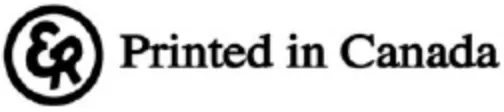
On Beatles records, Ever Reddy covers are mostly found on the Apple-era albums: the White Album, Yellow Submarine, Abbey Road, Hey Jude, Let It Be, the Red and Blue compilations, as well as on other Apple artists' releases from 1968 through the mid 1970s. Ever Reddy covers usually house RCA-pressed discs, but were occasionally found with other pressings, namely A Hard Day's Night (United Artists) in the early 1970s.
Modern Graphics (also known as Modern Lithographing & Printing) was a Philadelphia-based company that set up shop in Montreal in the late 1960s. It printed covers for Decca and Compo, then for Capitol starting in late 1968 and for Apple from 1969. It remained a Capitol supplier until at least 1983: verified copies of Something New from the 1980-1983 period still wear MG-marked covers. The corporate history behind these later years remains to be clarified, as the company's Canadian operations were reported to have wound down much earlier.
Modern Graphics operated from 5332 12th Avenue, and later 364 Place d'Youville, in Montreal.
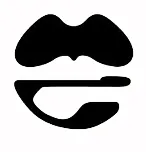
The MG logo is a stylized M sitting over a G, a shape often described as a pair of lips. On record covers, "LITHO IN CANADA" appears to the right of the logo. On covers printed for Compo, the logo was usually placed on the spine. Some Capitol covers that replaced Parr's stock in the early 1970s feature a snuffed out Parr's logo with the new MG logo below it, the tell of a short transition period.

On Beatles records, MG covers appear from late 1968 onward and gradually replaced Parr's covers between about 1971 and 1974. Modern Graphics is the most common cover credit in this archive, documented on 29 albums, and remains the credited printer on variations well into the 1980s.

Shorewood Packaging Corp. of Canada was the Canadian branch of the American Shorewood Packaging Corporation, with its head office in New York City. It was incorporated on December 18, 1970 and began operating in early 1971, largely as a joint venture with CBS: when Columbia opened its Don Mills plant in July 1971, it included a packaging division operated by Shorewood. Shorewood bought out CBS's share in 1985, was sold to International Paper in 2000, and merged with AGI in 2012 to form the AGI-Shorewood Group. Beyond record jackets, the company packaged pharmaceuticals, confectionery, tobacco and other consumer goods.
Shorewood's plant and head office were located at 2220 Midland Avenue in Toronto, with a second plant at 1291 California Avenue in Brockville, Ontario.
The Shorewood logo of the period is a three-dimensional rendering of the initials SPC (later replaced by a 3-D "S"), with "LITHO IN CANADA" to the right of the logo. Shorewood is also behind the Shorepak, a direct-to-board jacket where the image is printed directly on the cardboard with no pasted slick, patented in Canada in 1967. One caution: the "SHOREPAK CAN. PAT. NO. 75888, 1967" notice found on some covers refers to the patented construction and does not by itself prove that Shorewood Canada printed the cover.

On Beatles records, Shorewood enters the picture in the late 1970s, when Capitol turned to it for the posterboard covers of the purple label era. By then Capitol pressed its own discs at Mississauga, so Shorewood covers typically house Capitol pressings, and the later CBS pressings. Shorewood logos are usually found only on the spine of the jacket.
Modern Album printed nothing itself, but almost every slick-construction Beatles cover made in Canada passed through its hands. Modern Album of Canada Ltd. was the Canadian arm of Modern Album & Finishing Co. of the USA, incorporated on September 21, 1960 and run by William J. Hoover (general manager, then president from 1971). It was a packaging and finishing firm: it supplied the cardboard frames and assembled the printed slicks into finished jackets. Besides its work on Capitol product, Modern Album produced jackets and packaging for A&M of Canada, Allied and other labels. In late 1981 the company was raided by police in a record counterfeiting investigation (along with Precision Records and Paramount Pressing) and Hoover was charged with conspiracy to defraud; the corporation was dissolved on August 31, 1985.
The company operated at 1244 Dufferin Street in Toronto from 1960 to the mid 1970s, then at 2450 Finch Avenue West in Weston until 1985.
Its place in the manufacturing chain is what makes it important for collectors. A Beatles jacket of the slick era was made in three stops: the printer (Parr's, Ever Reddy or Modern Graphics) printed the front and back slicks and shipped them to Modern Album; Modern Album pasted the slicks onto its cardboard frames and assembled the finished jackets; the jackets were then sent on to the pressing plant, where the discs were inserted, shrink wrapped and shipped out for distribution.
Printer (prints the slicks) → Modern Album (supplies the frame, assembles the jacket) → Pressing plant (inserts the disc, shrink wraps) → Distribution
Because frames and slicks came from different companies, they were never produced in exactly matching quantities, and leftover parts were recombined rather than discarded. This is the direct cause of many of the hybrid and transitional covers documented in this archive. Modern Album's frames carry no printed mark of their own on Beatles covers (the logo found on a jacket is always the printer's), so its work is identified by the construction itself: frame shape, inner seam width and assembly details.
In the mid 1970s, Modern Album introduced the Super-jac, a paper-wrapped (wrap-around) board jacket designed to compete with Shorewood's direct-to-board Shorepak. Some of these jackets carry a "Super Jac" print on the spine of the Modern Graphics slick (Something New and Second Album, among others). Documented copies go back as early as 1975.