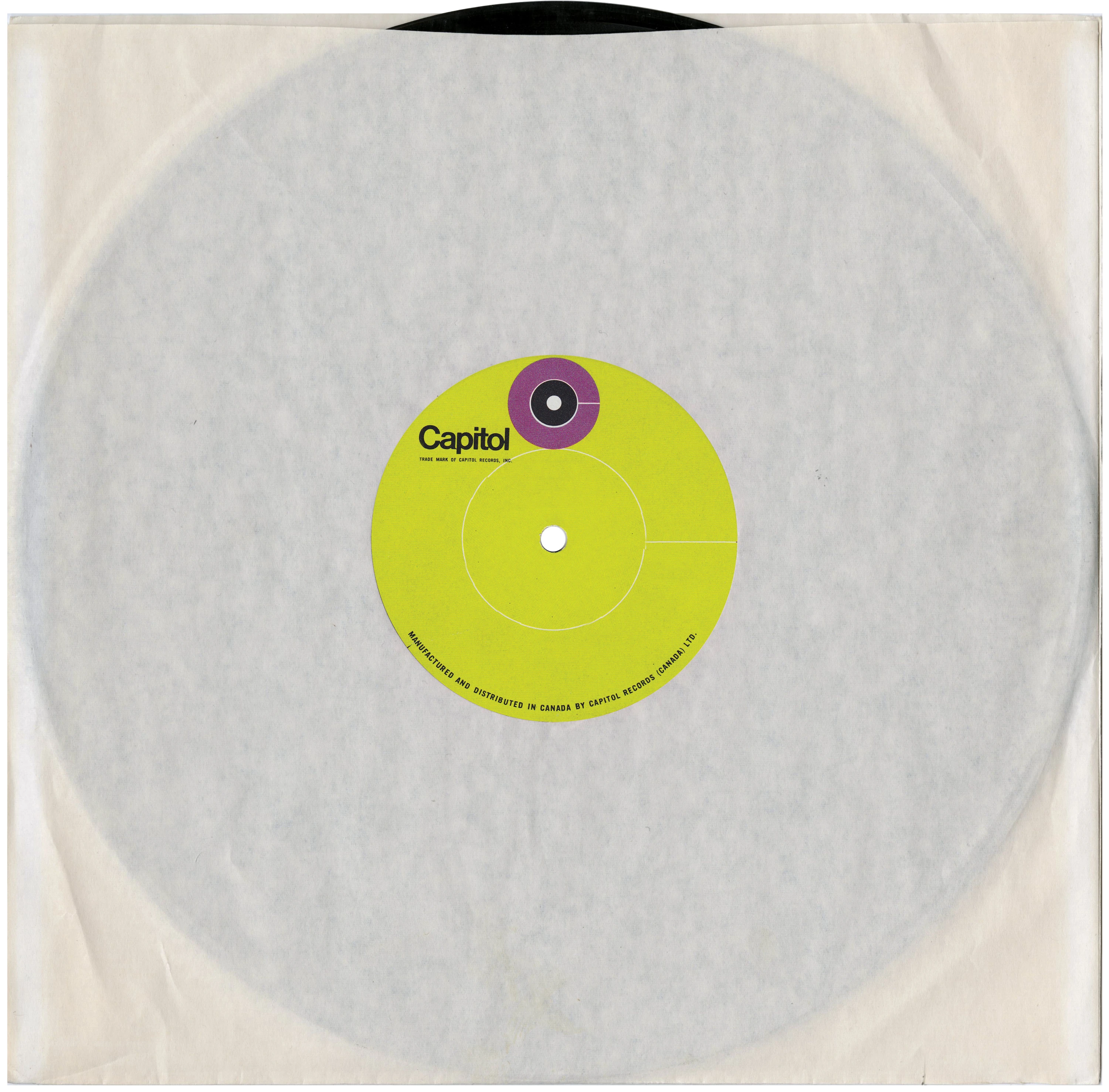
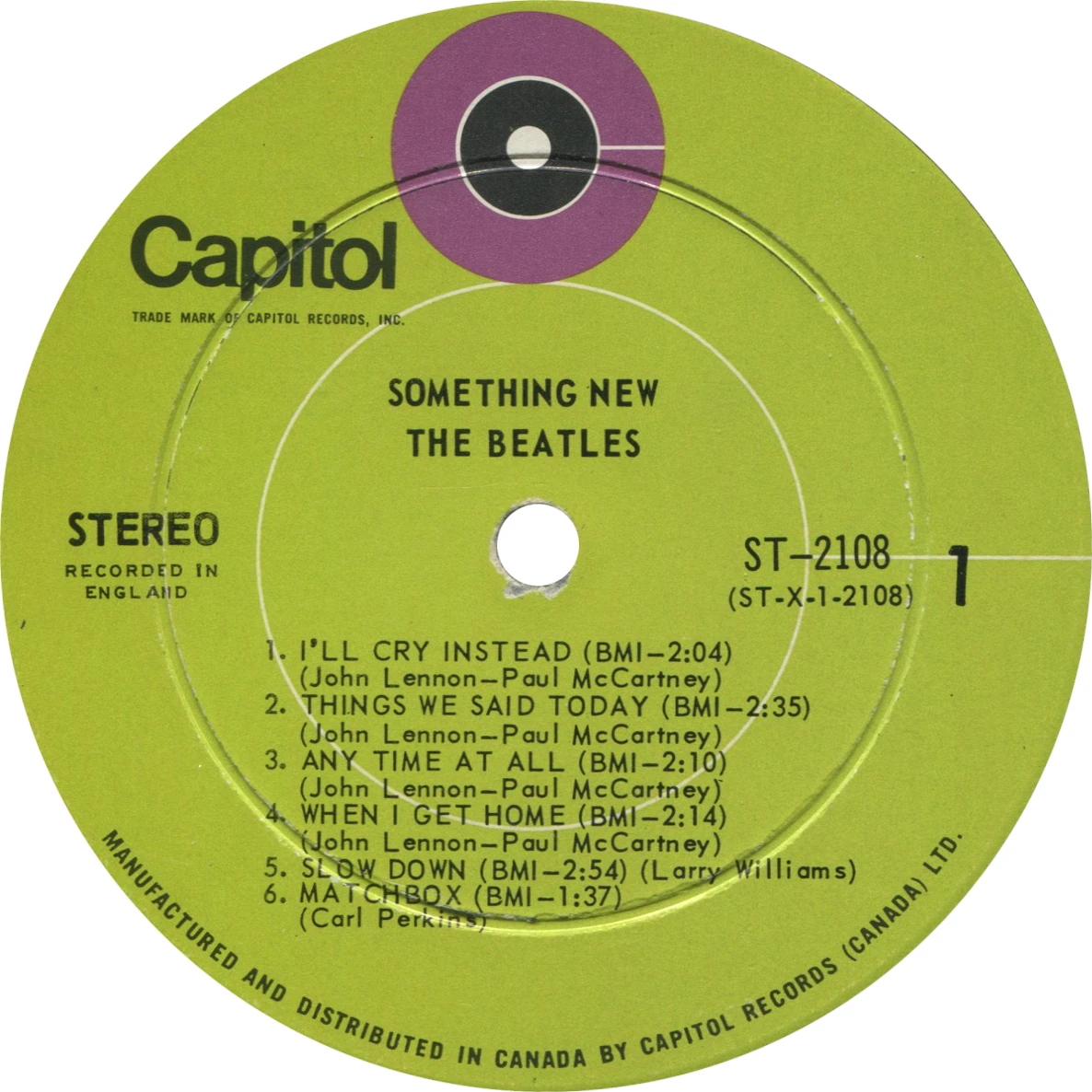
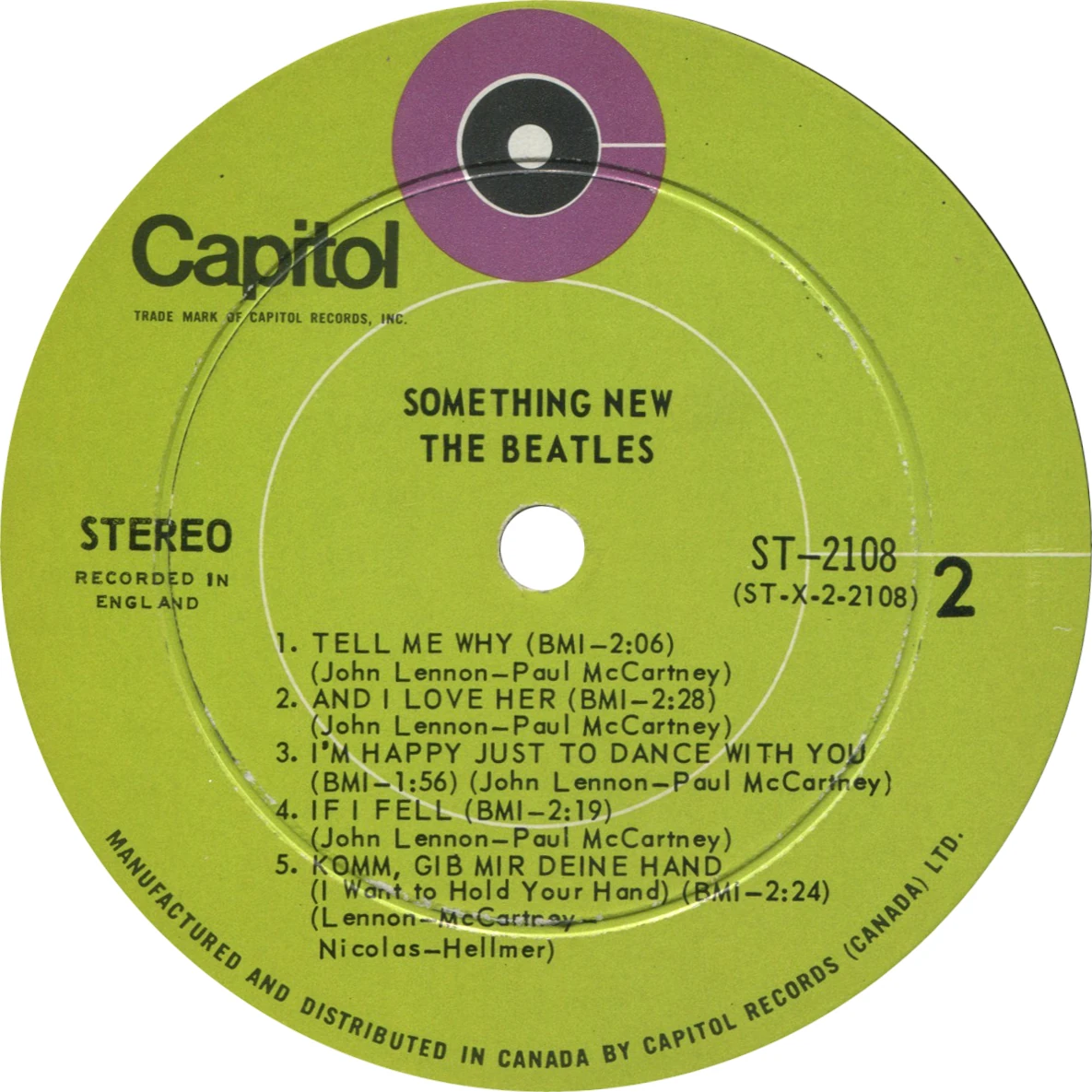
LP.2108.4.1 features the new green target label, appearing in 1970. The record itself did not really change: it was pressed from the same Canadian stereo plates as LP.2108.2.3 and LP.2108.2.4, and the album remained a stereo-only catalogue title.
Availability
This variation was available between 1970, and 1971 (for approximately one year) when the target label changed from green to red (see LP.2108.5.1).
This album was never released on the Apple label in Canada, which is why no LP.2108.3.x entry exists and variations jump from LP.2108.2.4 to LP.2108.4.1.
General Information
In 1969, Capitol decided to modernize their branding. A new logo (the target logo) was significantly different from the traditional dome logo, and labels were updated accordingly, featuring both the new target design as a backdrop to the label itself (green) and as a brand identifier (purple / black logo) at the top of the label. The new look inevitably made its way to Canada as well, but the design was introduced slowly in 1969, seeing most Beatles re-releases appear on this label later in 1970. These are relatively harder to find today as they were pressed in much smaller quantities (and for a short time) as it was dictated by a naturally decreasing demand for the band's back catalogue, fans always being more drawn to the more recent albums.
Pressing Information
As was the case for all previous variations, Capitol of Canada subcontracted the RCA pressing plant in Smiths Falls (Ontario) to manufacture new batches of albums with the new "Green Target" label. The records were pressed from the same Canadian stereo plates introduced in 1968 (see LP.2108.2.3 and LP.2108.2.4), and therefore carry the same markings:
Side 1: ST-1-2108
Side 2: ST-2-2108
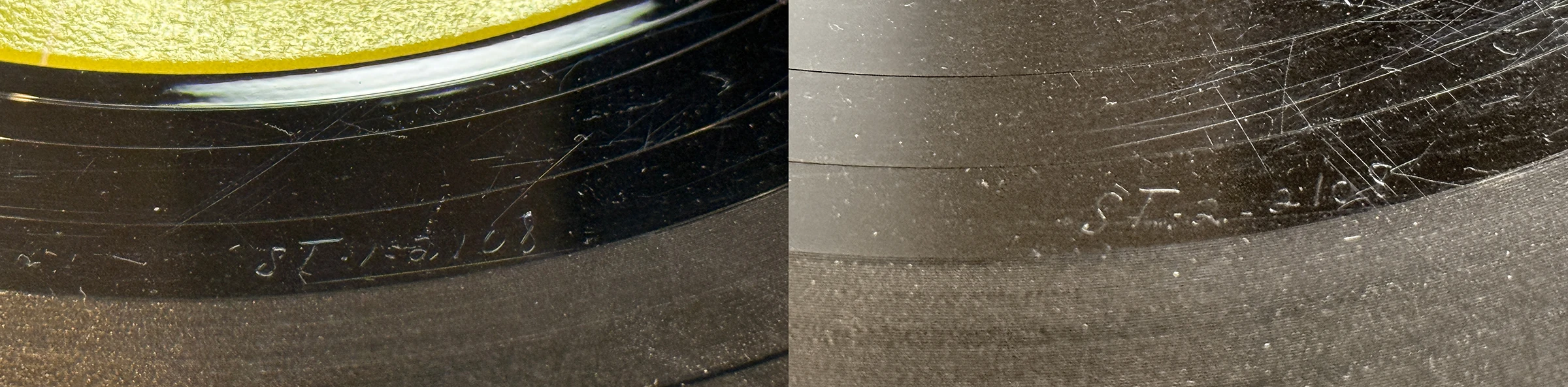
These pressings feature the same 70 mm deep-groove RCA pressing ring as previous pressings. The label design was new (the green target logo), but the text layout remained identical to the previous rainbow pressings (font, alignment, etc.).
Cover
The jacket for LP.2108.4.1 features an identical build to its predecessor: the inner seams (the inside fold of the cardboard jacket) are still cut straight but were found with the older 10 mm dimensions. It is possible that Modern Albums used older warehouse stock, or that they reverted to an older design that was more efficient than the flimsier 5 mm seam model. More information would be appreciated.

Covers up to the mid 70s used a “front slick” construction (a larger back slick, usually printed in black and white that wrapped around the front of the cardboard cover, onto which a smaller colour front slick was glued, creating a white frame effect all around the front image).
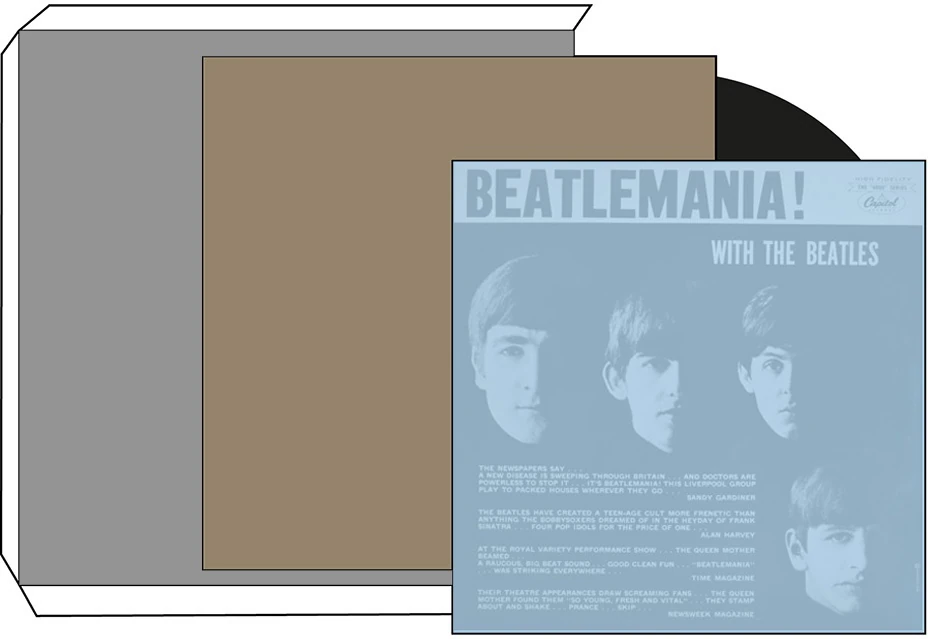
Both slicks were printed by an unmarked printer (shows only "Litho In Canada" with no printer's logo).

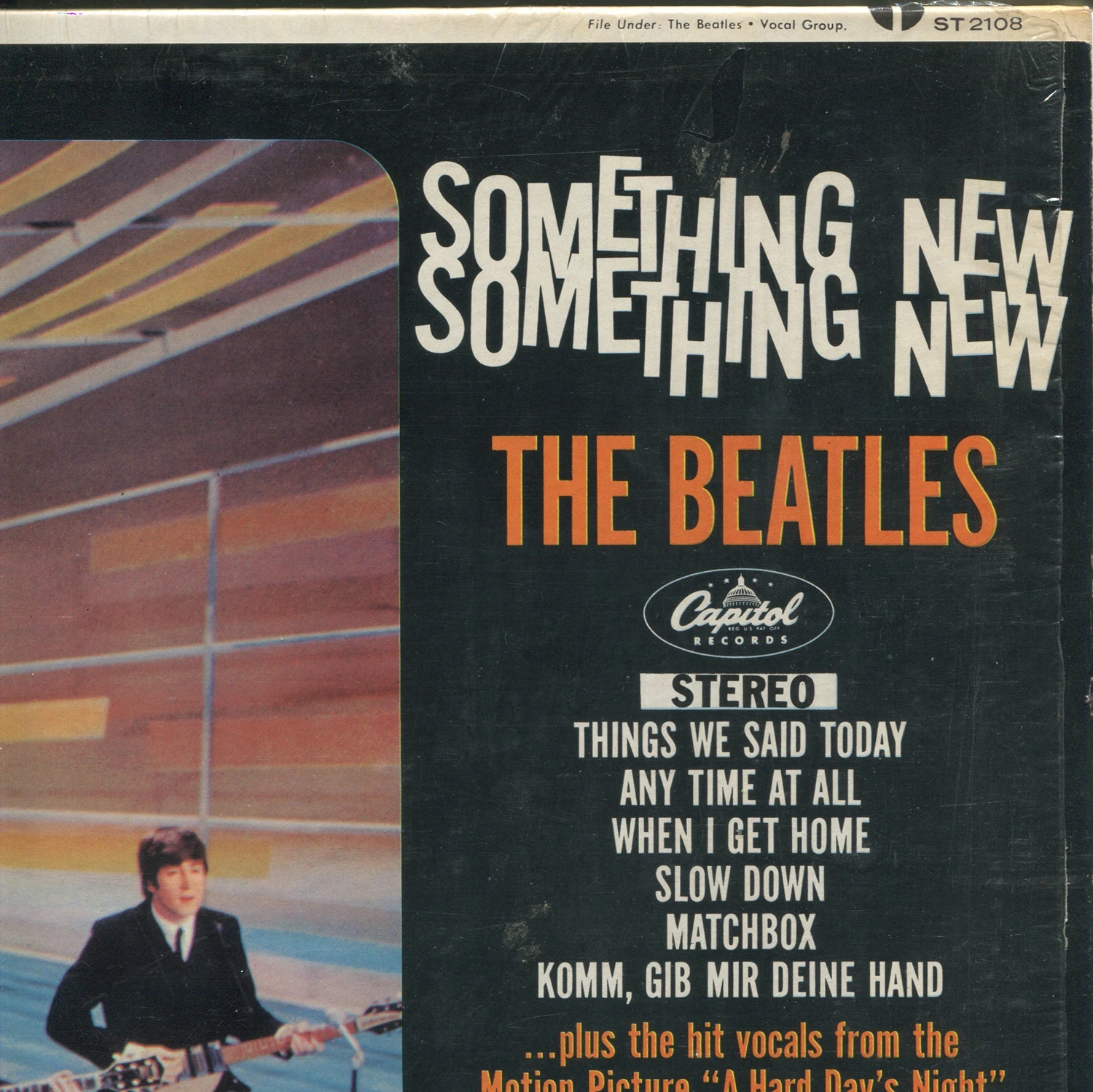
The back cover keeps the Canadian-market list of albums introduced with the first pressing: Beatlemania! and Twist and Shout instead of Meet The Beatles and The Beatles' Second Album, with Long Tall Sally added ahead of The Hollyridge Strings' Beatles Song Book. A Canadian back cover lists four Capitol albums, one more than the American.
The front cover keeps the BLOCK stereo designation introduced with LP.2108.2.4, still on slicks prepared by Parr's. The albums on the back remain in the correct chronological order (Beatlemania before Twist and Shout).
Packaging
Copies of LP.2108.4.1 were packaged with a tight shrink wrap.
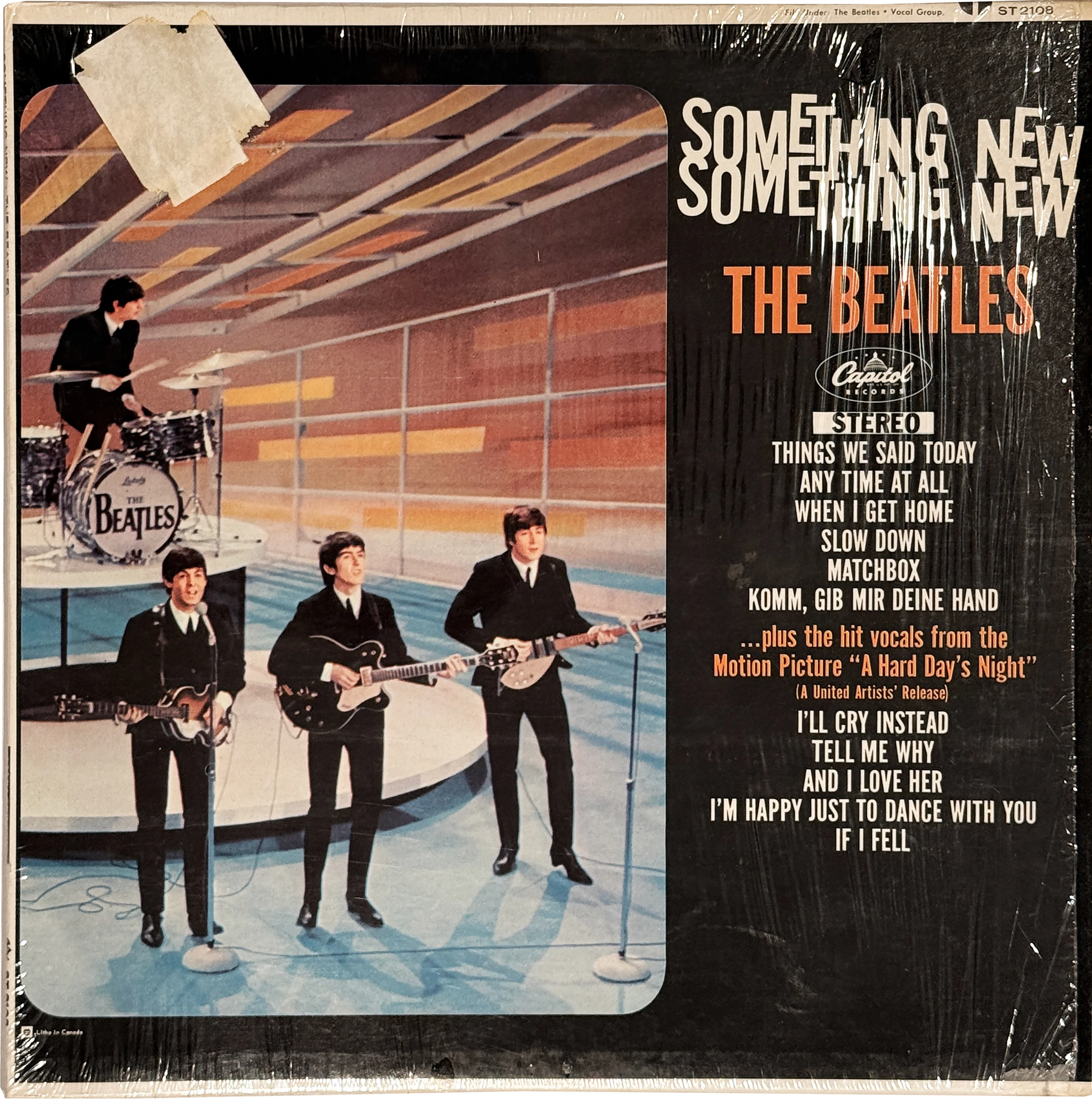
These were now sold with a generic plain paper LP inner sleeve.