
← Something New Variations List
Something New
LP.2108.2.4
2nd Stereo Pressing - BLOCK stereo
1969 - 1970
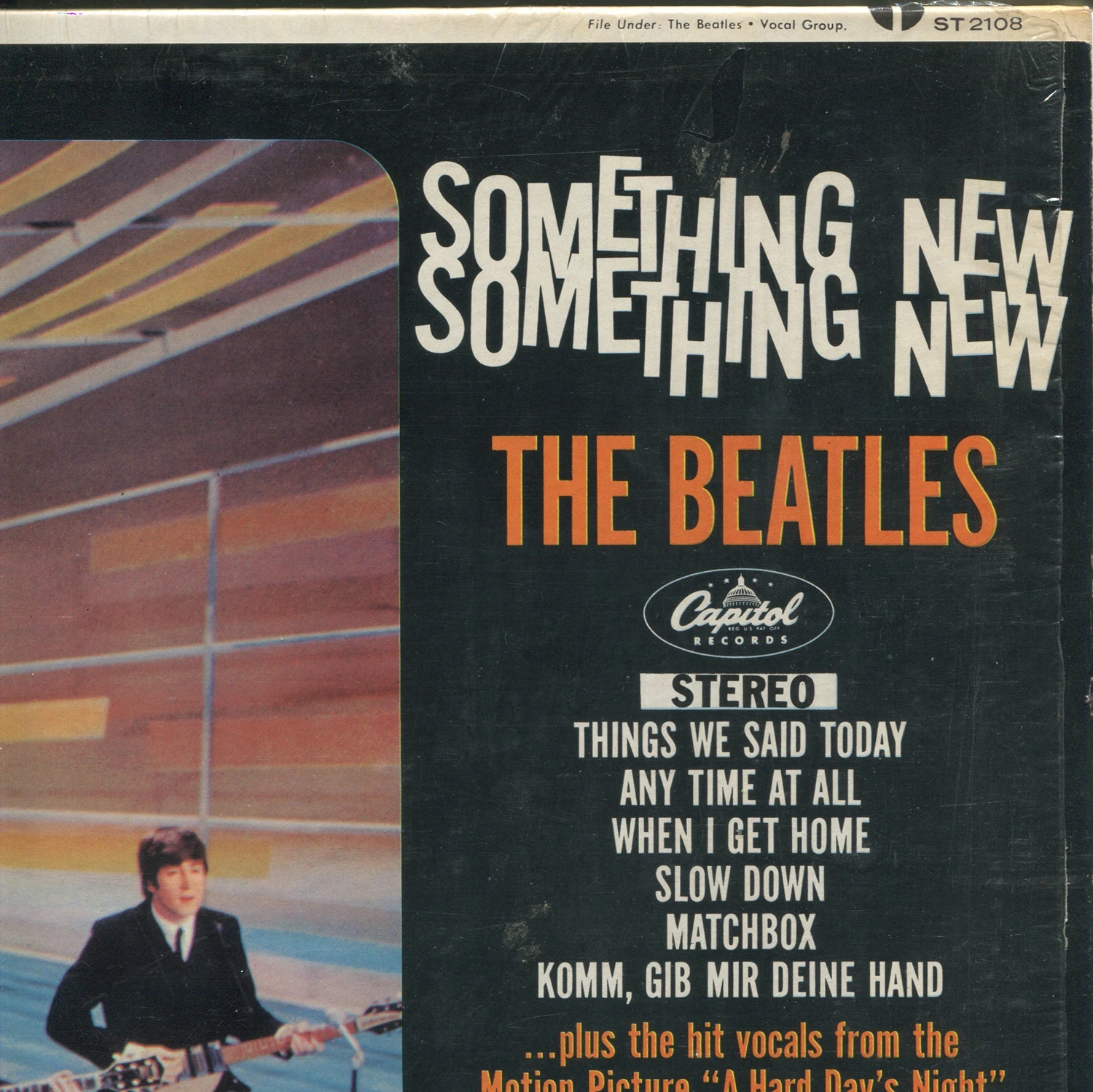
LP.2108.2.4 is the second stereo pressing of Something New in Canada, appearing around 1969. It is identical to LP.2108.2.3 except for the front cover, where the arrow-shaped STEREO banner was replaced by a BLOCK stereo designation. Like its predecessor, the cover carries no "Also Available in Monophonic" notice.
Availability
This variation was available between 1969, and 1970 (for approximately one year) when Capitol changed its label design in favour of the green target label (see LP.2108.4.1).
General Information
Something New had waited almost four years for a first Canadian stereo edition. From that point on, all reissues were therefore stereo only. This variation appeared after mono had been phased out in Canada, so like LP.2108.2.3, LP.2108.2.4 does not carry the "Also Available in Monophonic" notice.
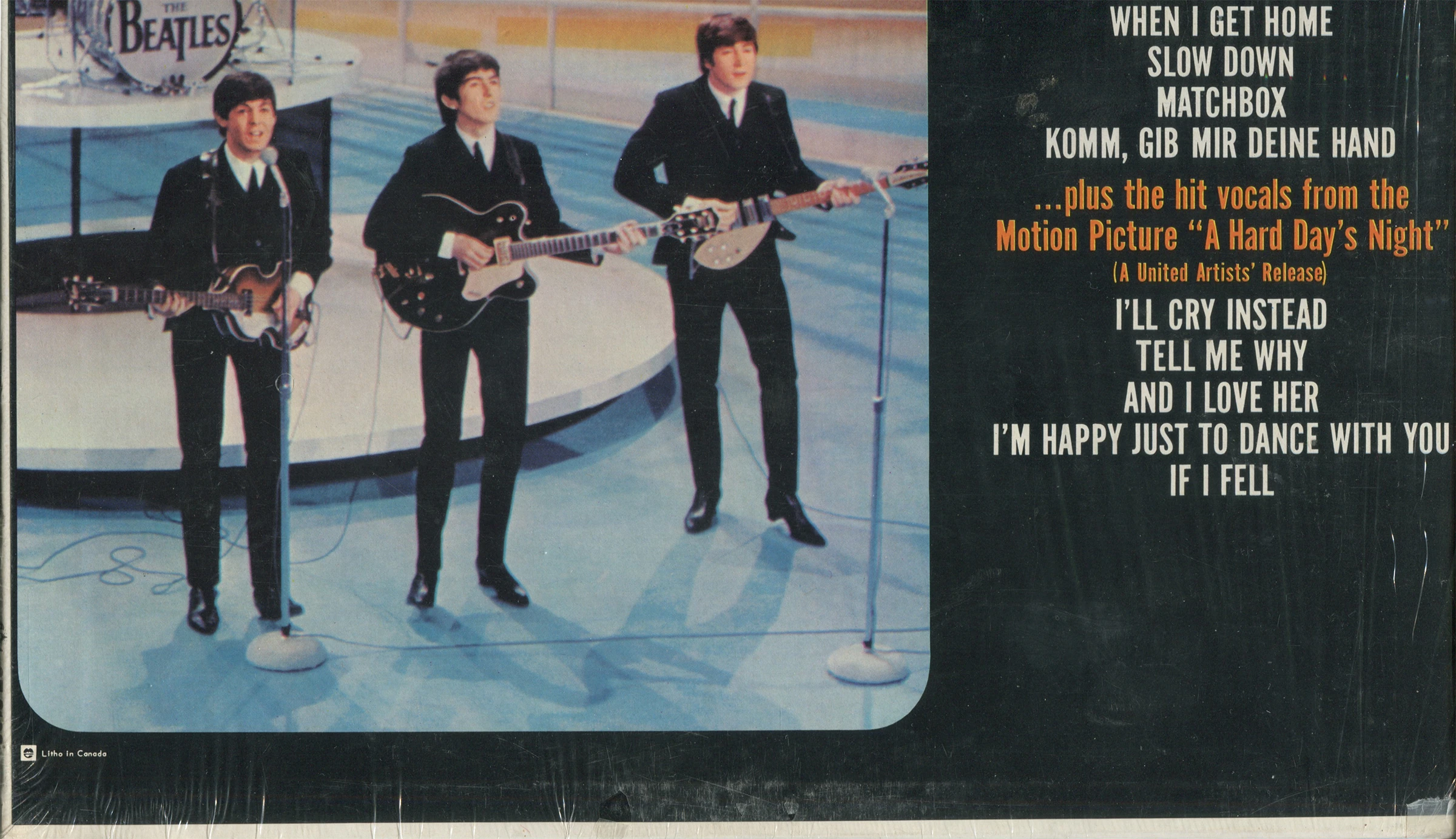
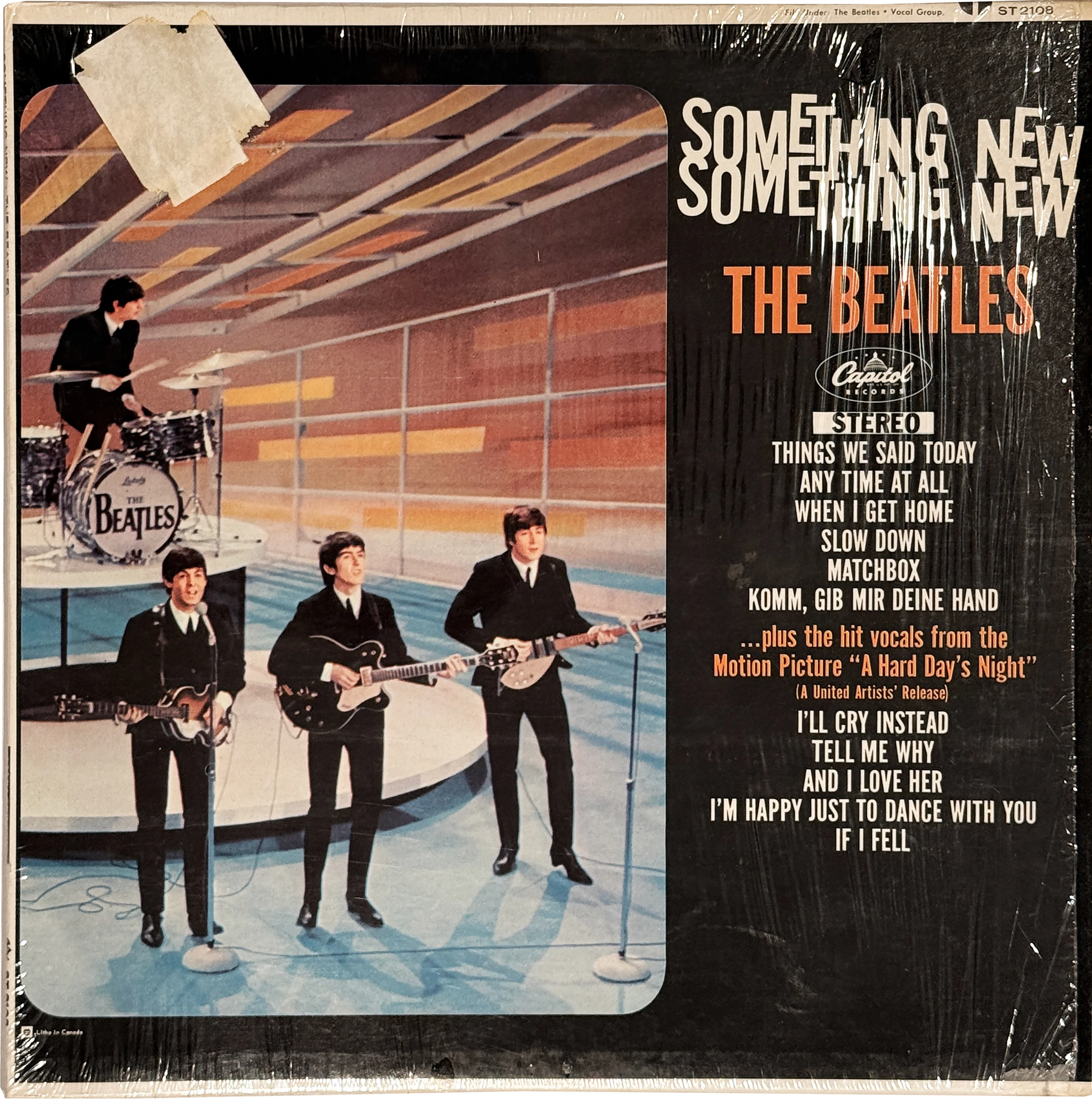
At this point, the cover printer and manufacturer had changed and the arrow stereo banner was replaced by a "BLOCK stereo" designation above the song titles on the front cover itself, on a Modern Graphics cover.
Pressing Information
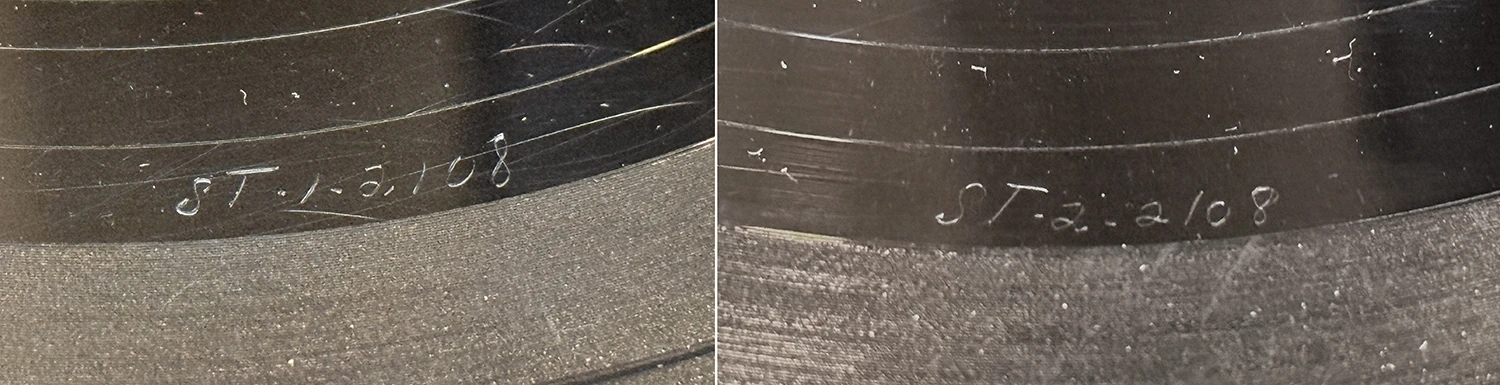
As with all previous variations, Capitol of Canada subcontracted the RCA pressing plant in Smiths Falls (Ontario). The same set of stereo plates as LP.2108.2.3 was used: the deadwax shows identical hand-written matrix numbers. LP.2108.2.4 has markings as follows:
Side 1: ST-1-2108
Side 2: ST-2-2108
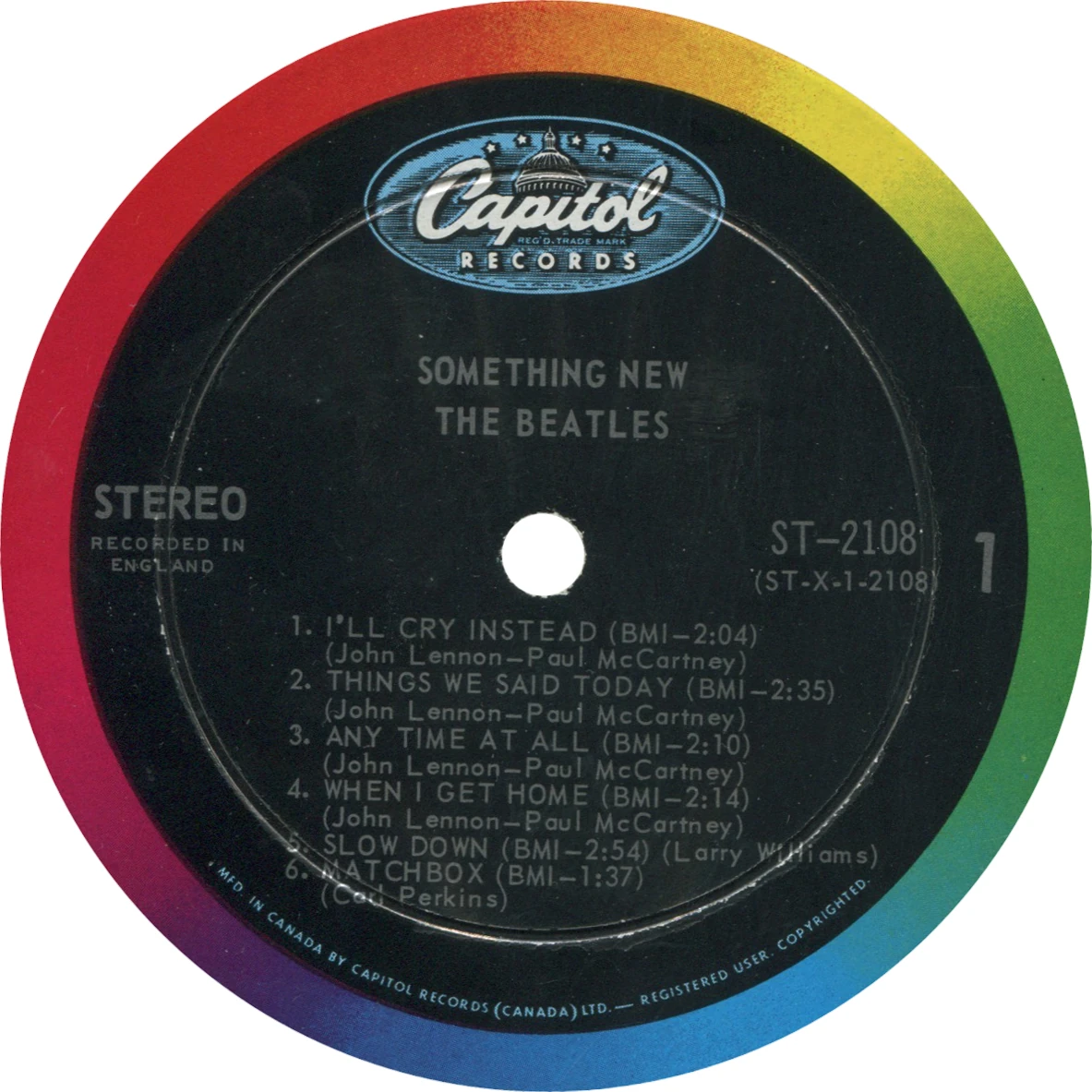
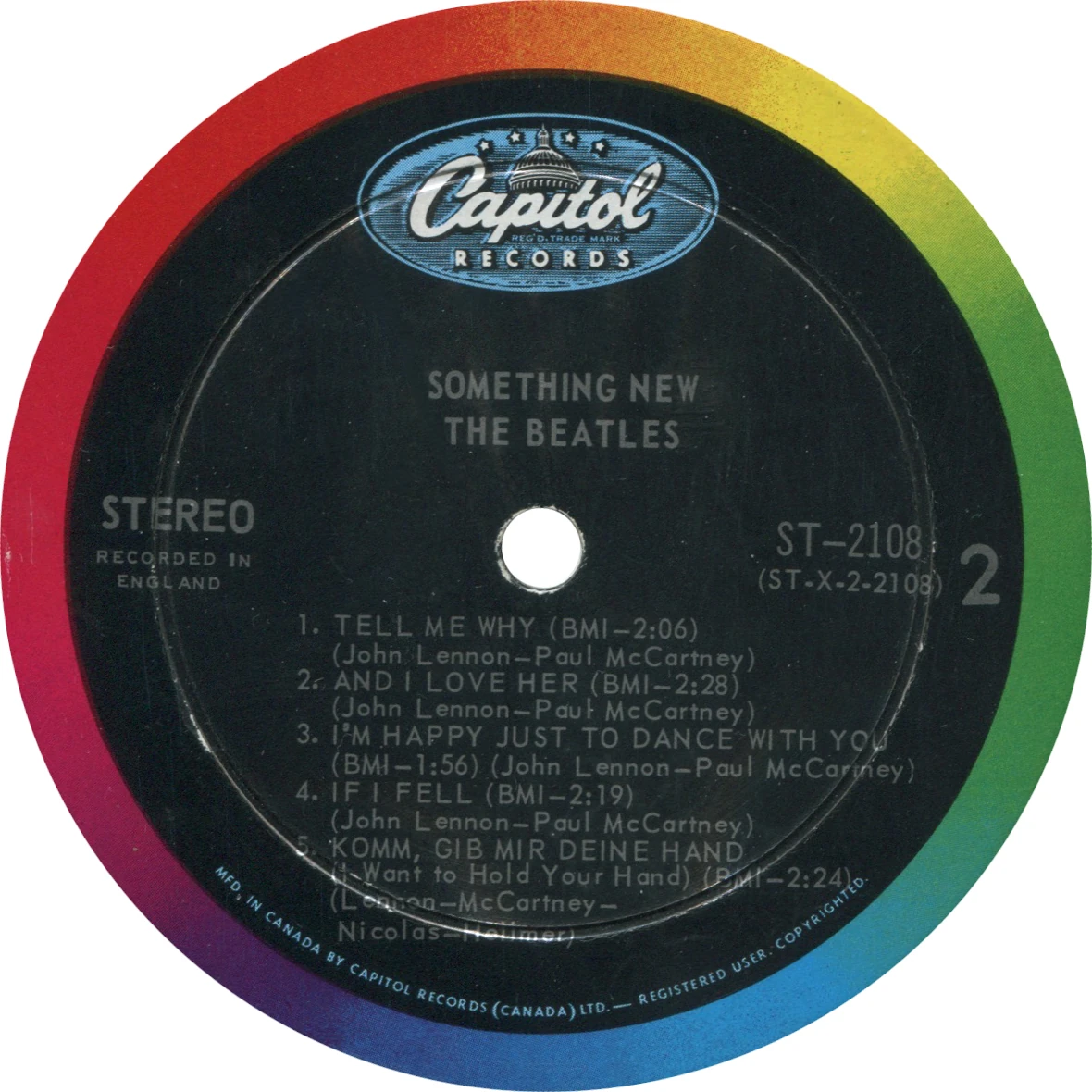
These pressings feature the same 70 mm deep-groove RCA pressing ring as previous pressings. Labels now feature the "brackets" rainbow label (see perimeter print at the bottom of the label: "MFD. IN CANADA BY CAPITOL RECORDS (CANADA) LTD." with brackets around the word CANADA).

Cover
The jacket for LP.2108.2.4 features an identical build to its predecessor: the inner seams (the inside fold of the cardboard jacket) are still cut straight and measure 5 mm.

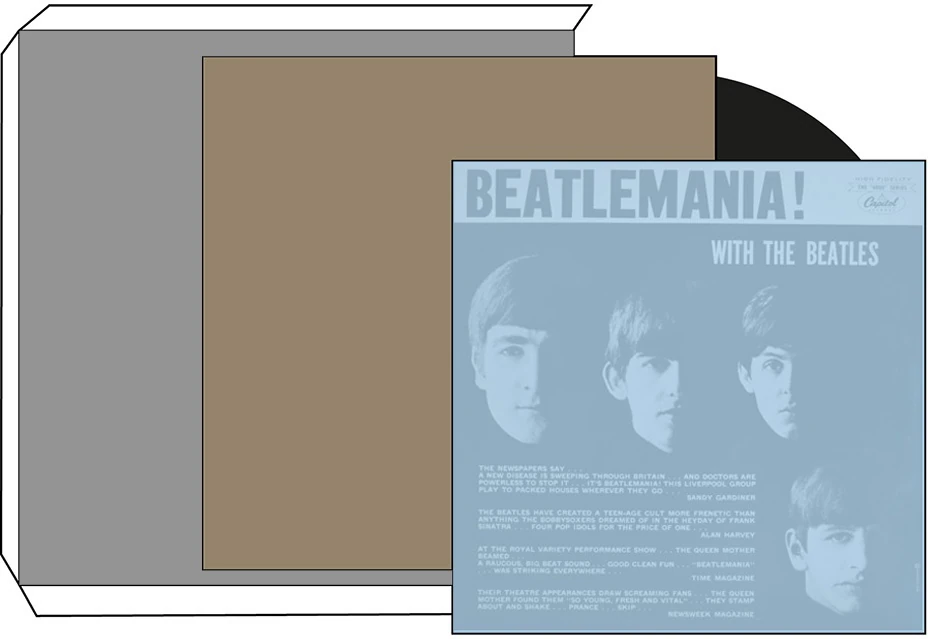
Covers up to the mid 70s used a “front slick” construction (a larger back slick, usually printed in black and white that wrapped around the front of the cardboard cover, onto which a smaller colour front slick was glued, creating a white frame effect all around the front image).
Slicks were now printed by Modern Graphics, another Toronto Area printer, featuring the new logo on the bottom left instead of the right.
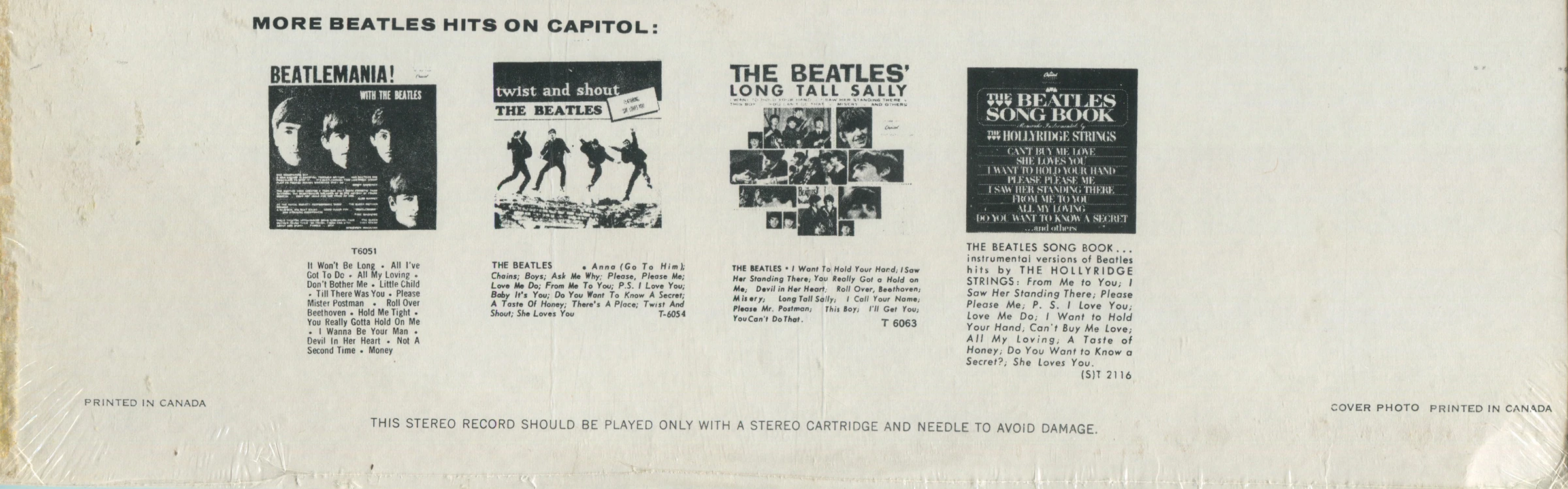
The back cover keeps the Canadian-market list of albums introduced with the first pressing: Beatlemania! and Twist and Shout instead of Meet The Beatles and The Beatles' Second Album, with Long Tall Sally added ahead of The Hollyridge Strings' Beatles Song Book. A Canadian back cover lists four Capitol albums, one more than the American.
The front cover now featured a BLOCK stereo designation in the title list, replacing the earlier arrow-shaped banner. The albums on the back remain in the correct chronological order.
Packaging
Copies of LP.2108.2.4 were packaged with a tight shrink wrap.
These were sold with a plain paper inner sleeve.
Sales
The arrival of a stereo version might have caused a small spike of renewed interest, but these were demand-driven pressings of an aging catalogue title. No stereo sales numbers have been documented for this album past 1967.