← The Beatles' Story Variations List
The Beatles' Story
LP.2222.7.1
Stereo, Orange 2nd Generation ™ (Columbia)
1974
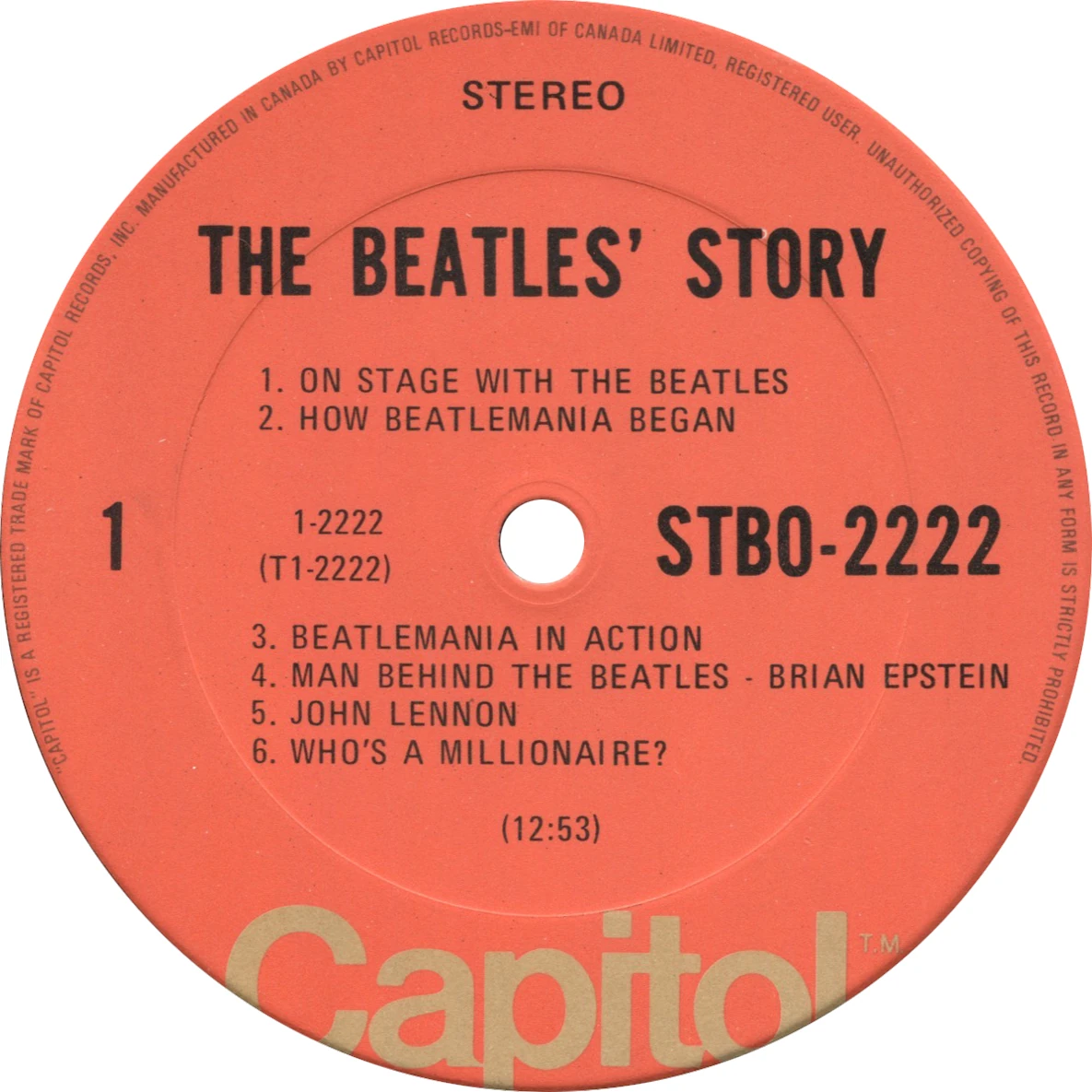
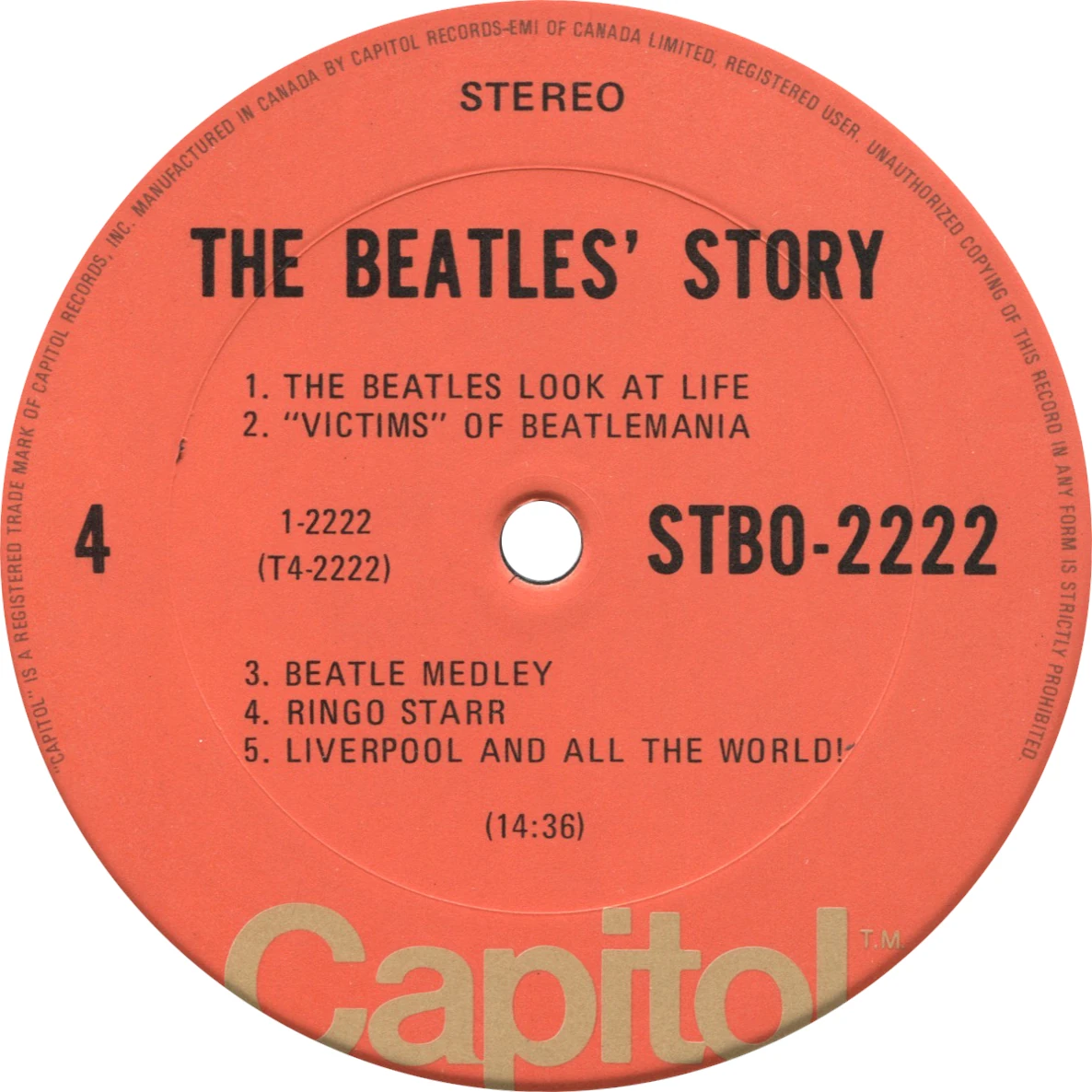
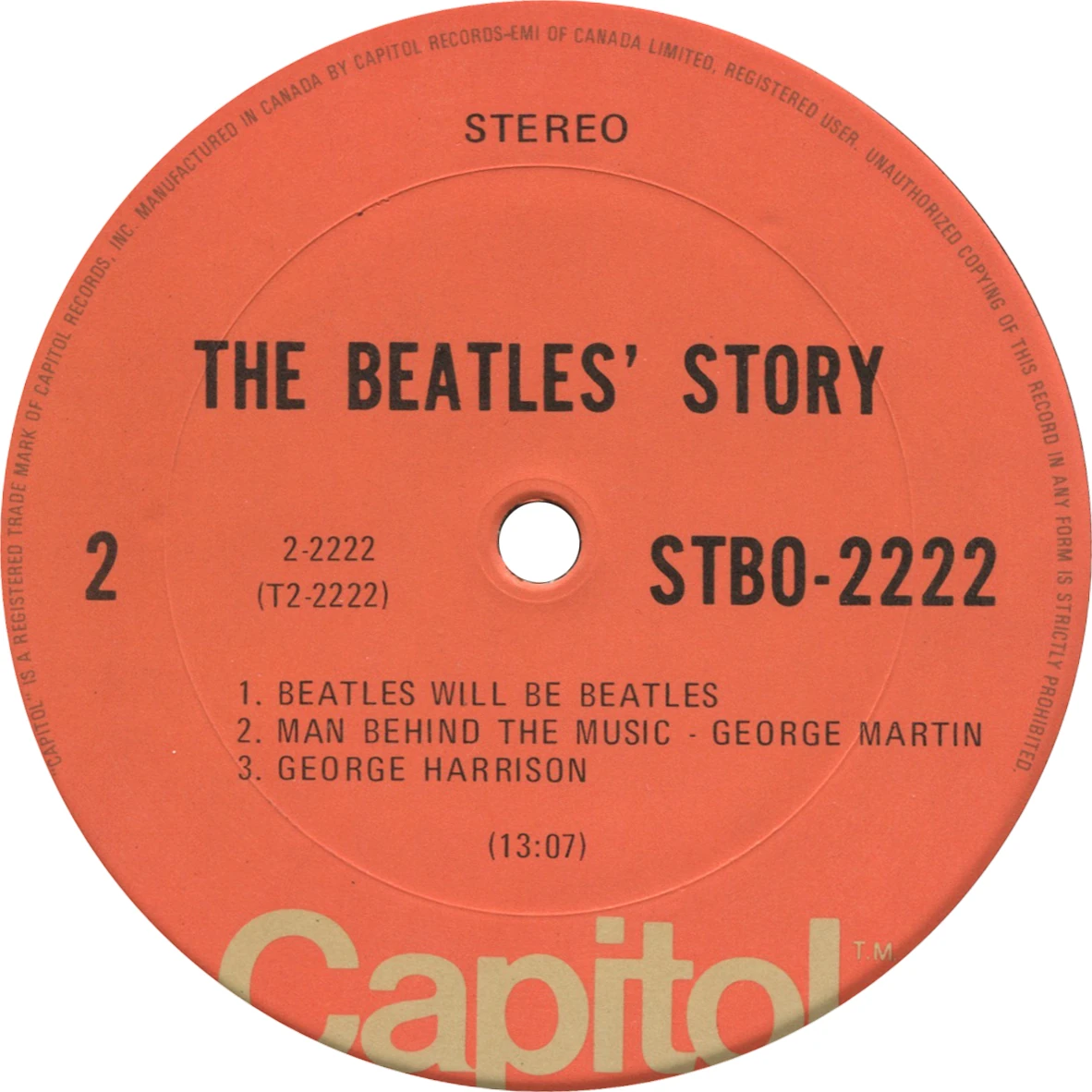
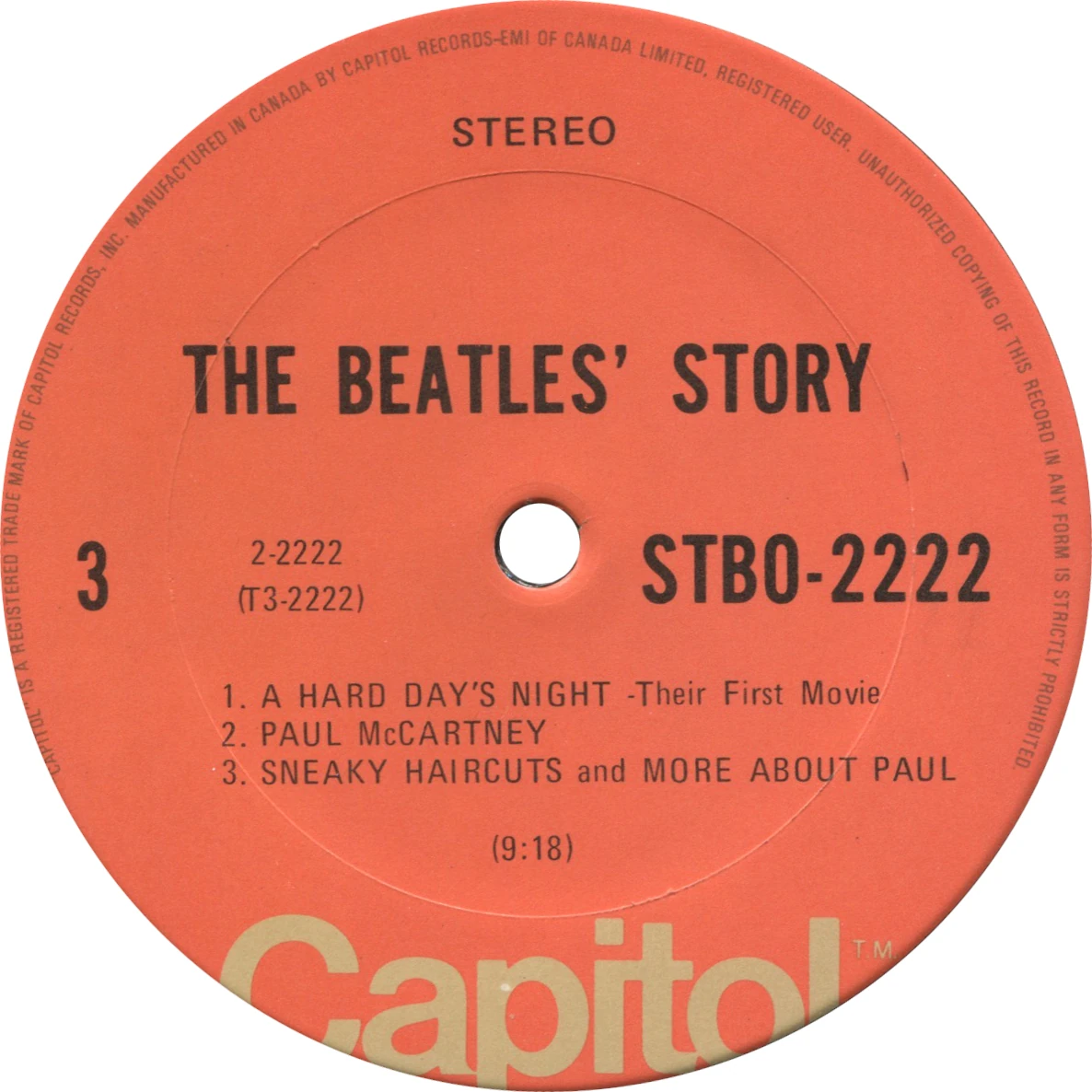
LP.2222.7.1 is the Beatles' Story pressing on the second generation orange label, with the ™ logo and the dark Capitol-EMI perimeter print. This is where things start to change: the discs were now pressed by Columbia (CBS), and two of the four sides come from new lacquers carrying the MASTERED BY CAPITOL stamp, while the other two still come from the old RCA lacquers of LP.2222.2.2.
Availability
The ™ labels were introduced in 1974, and the ® logo replaced them in early 1975 (see LP.2222.7.2). Keep in mind that the label alone does not date a copy precisely here: LP.2222.7.2 was found with a ™ disc and a ® disc in the same jacket, so leftover ™ labels were still on hand when the ® labels came in, and some copies of this pressing may well have been made in 1975.
General Information
By 1974, the stereo lacquers cut by RCA in 1968 had been in use for six years, on LP.2222.2.2, 2.3, 5.1, 6.1 and 6.2. For this pressing, two of the sides were replaced by new lacquers prepared by Capitol of Canada: side 4 on disc 1 and side 2 on disc 2. Each disc therefore pairs one old side with one new side. It is not known why only those two sides were redone (the metal parts for them may simply have worn out first), and more information is needed on how this happened.
The label layout is the one first seen on the Columbia pressing LP.2222.6.2: STEREO printed at the top, the title set in large type, and the small line under the side number reading "(T1-2222)", the prefix of the old MONO catalogue number, even though the record is in stereo. The pairing of the sides did not change (disc 1 holds sides 1 and 4, disc 2 holds sides 2 and 3).
Pressing Information
For the second generation orange labels, Capitol of Canada moved this title from RCA to the Columbia (CBS) pressing plant in Don Mills (Ontario), as it did with other albums of the period (LP.2108.7.1, for example).
The run-out shows the two sets of lacquers side by side. Sides 1 and 3 still carry the hand-written RCA numbers with their W suffix, while sides 2 and 4 carry new hand-written numbers, in a different hand and layout (STBO 2222, then the side number). The run-out also carries a stamped MASTERED BY CAPITOL marking, which goes with these new lacquers. Side 4 also carries the lathe code F8; an F lathe is one of Capitol's Hollywood lathes, which points to tapes sent from Los Angeles this time.
LP.2222.7.1 has markings as follows (by disc, in the pairing order):
Disc 1, side 1: STBO.1.2222 W7
Disc 1, side 4: STBO-2222-4 F8
Disc 2, side 2: STBO 2222-2
Disc 2, side 3: STBO-3-2222 W8
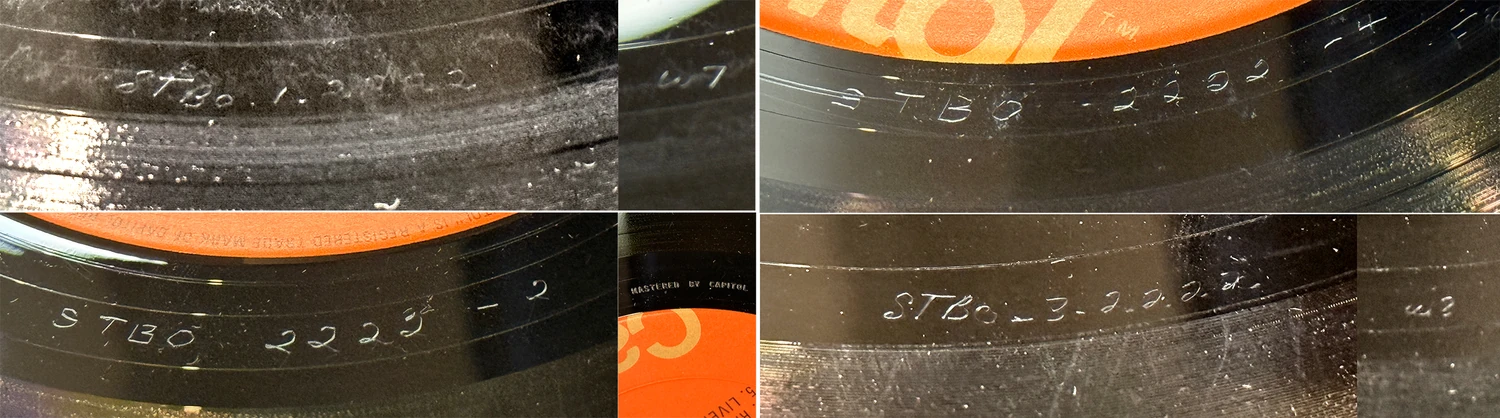
Read together, these markings tell how the record was made: disc 1, side 1 from lacquers cut by RCA in Toronto from New York tapes; disc 1, side 4 from lacquers cut by Capitol of Canada (MASTERED BY CAPITOL stamp) from Los Angeles tapes; disc 2, side 2 from lacquers cut by Capitol of Canada (MASTERED BY CAPITOL stamp) from Capitol USA tapes; disc 2, side 3 from lacquers cut by RCA in Toronto from New York tapes, then pressed by Columbia (CBS) in Don Mills.
These pressings feature the 68 mm thin pressing ring, a hallmark of CBS pressings, instead of RCA's 70 mm deep groove.
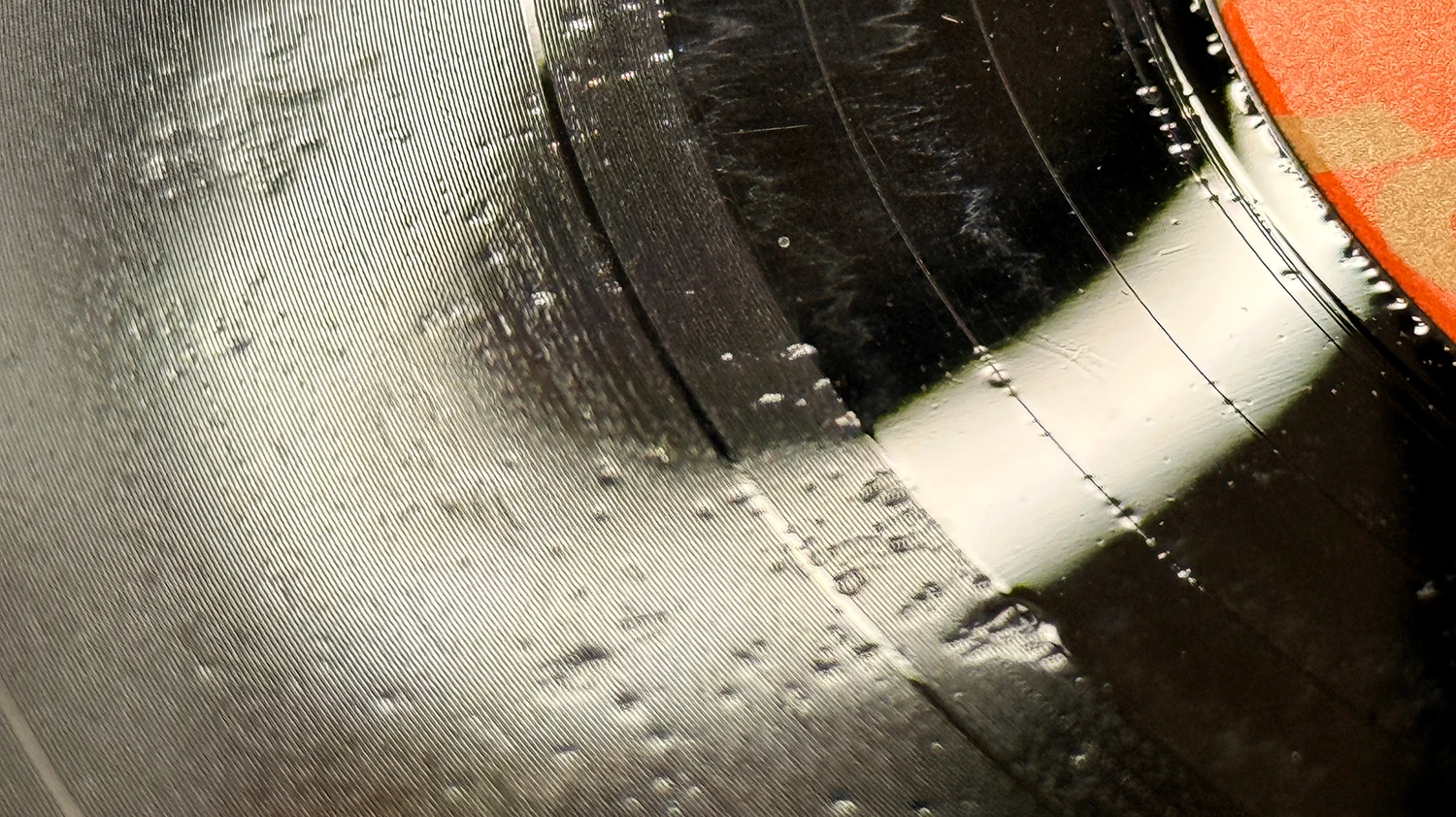
Some copies of this pressing are of very poor quality. The vinyl shows small spotted bubbles in the playing surface, a defect more readily associated with some Keel pressings of the period (this one is a CBS pressing all the same).
Cover
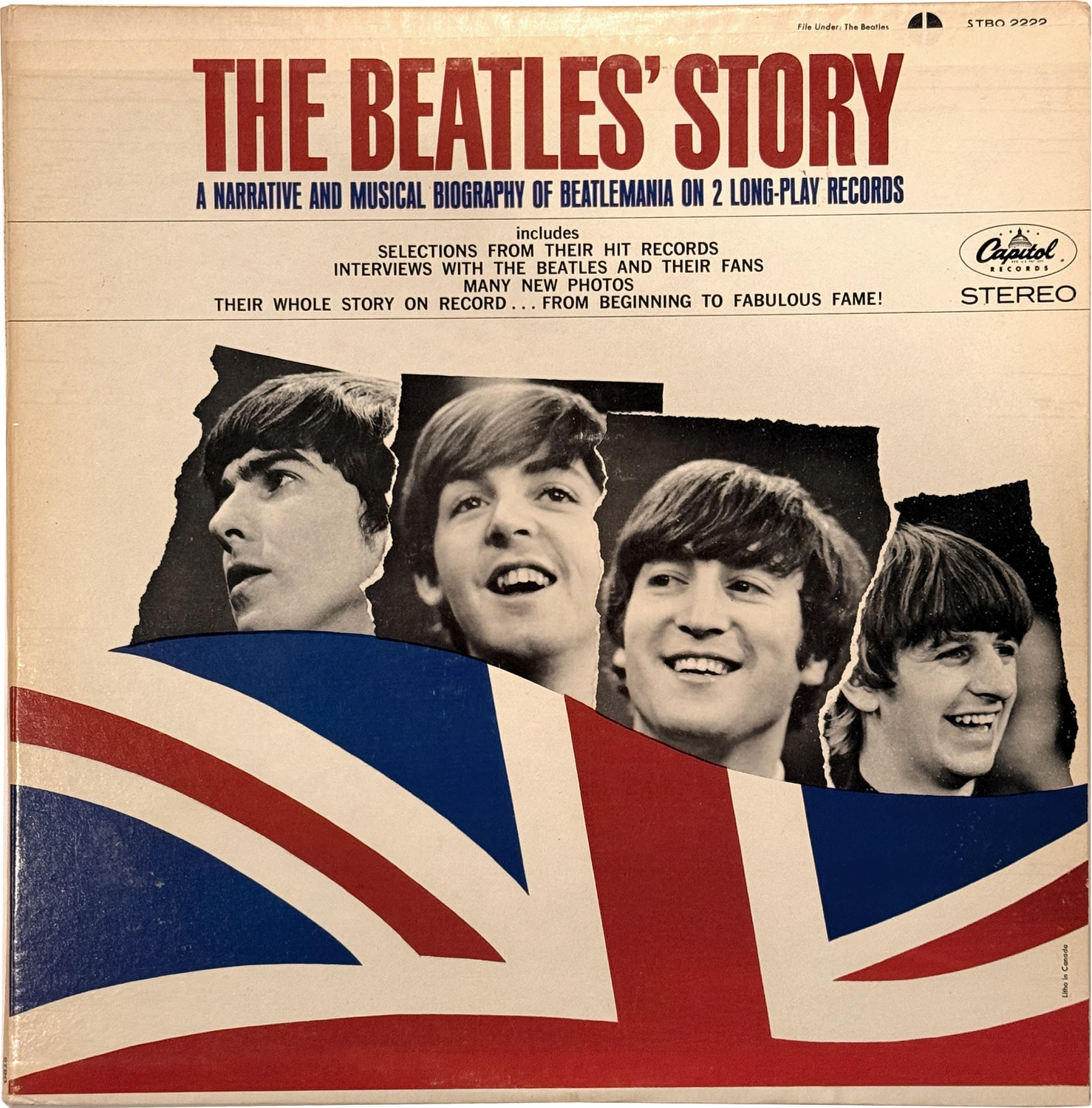
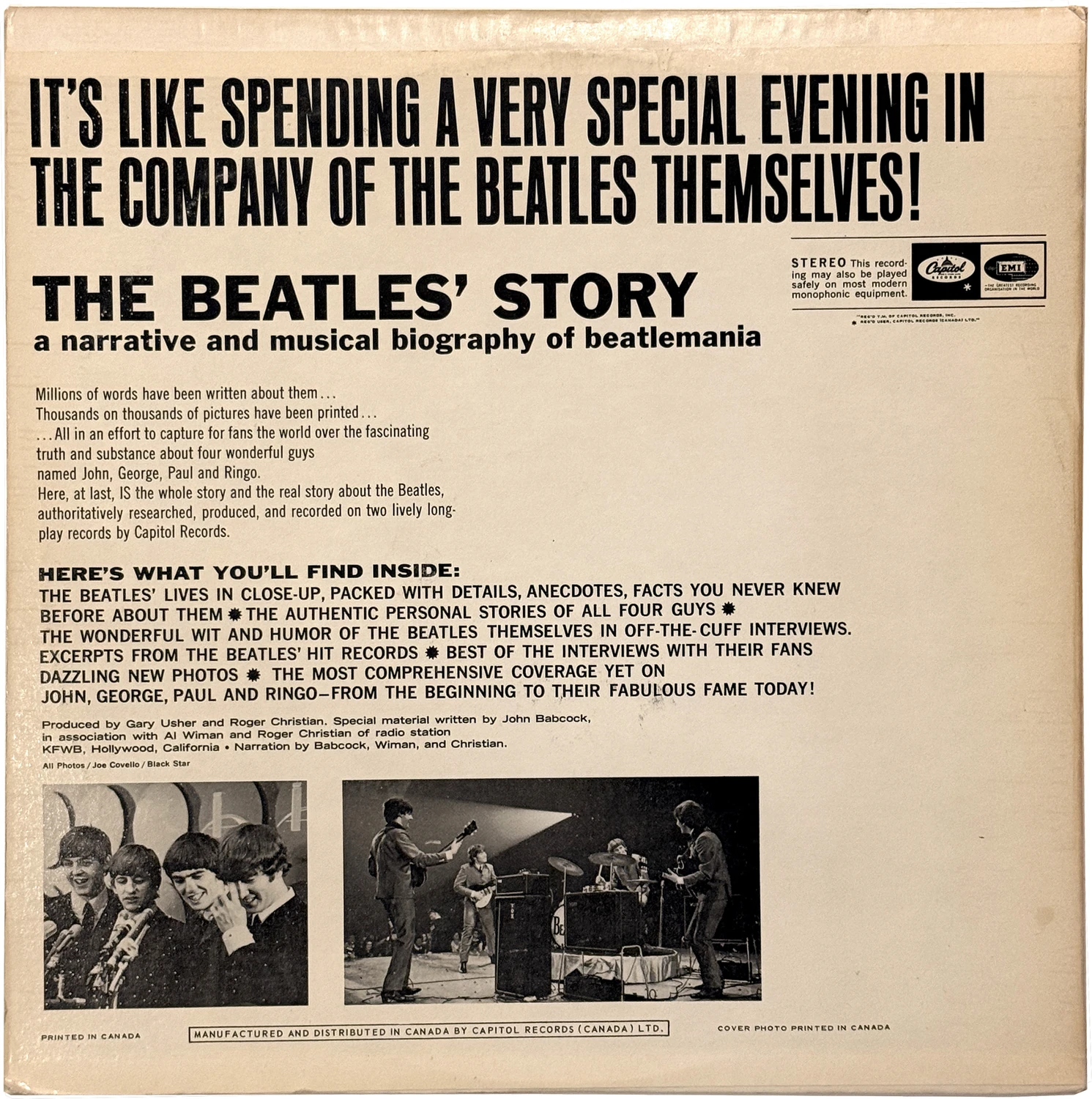
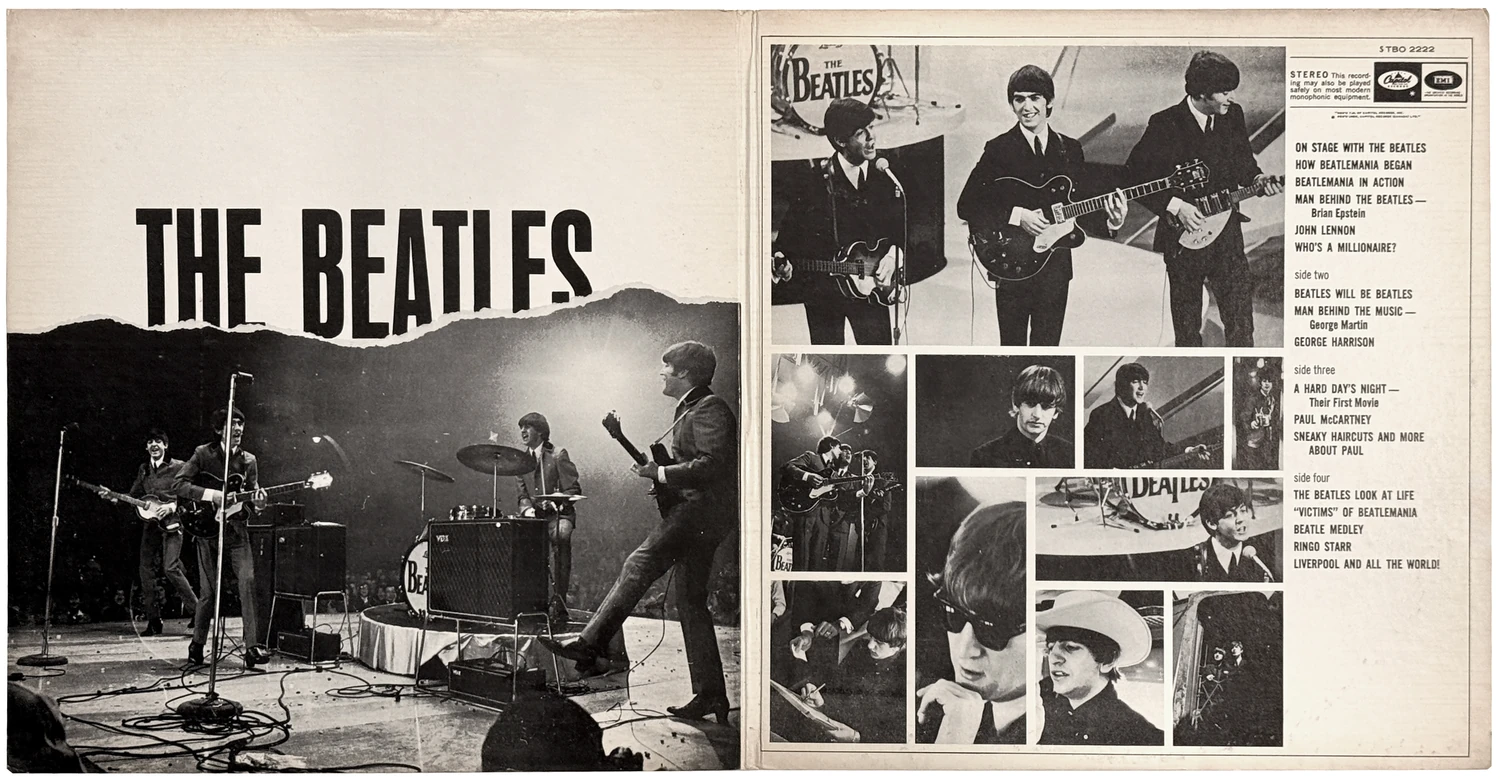
The jacket is still the Canadian gatefold of LP.2222.5.1 and LP.2222.6.1. Its back slick still reads "MANUFACTURED AND DISTRIBUTED IN CANADA BY CAPITOL RECORDS (CANADA) LTD.", even though the company had become Capitol Records-EMI of Canada in January 1974: the old artwork was simply reused.
Note that some copies of this pressing have also been found in the back slick jacket introduced with LP.2222.7.2. The change of construction was a slow one: both types of covers were used side by side for a while, with whatever stock was on hand going around the discs.

Packaging
As with every Canadian copy of the album, these were shipped in a loose poly plastic wrap, which let customers open the gatefold in the shop.
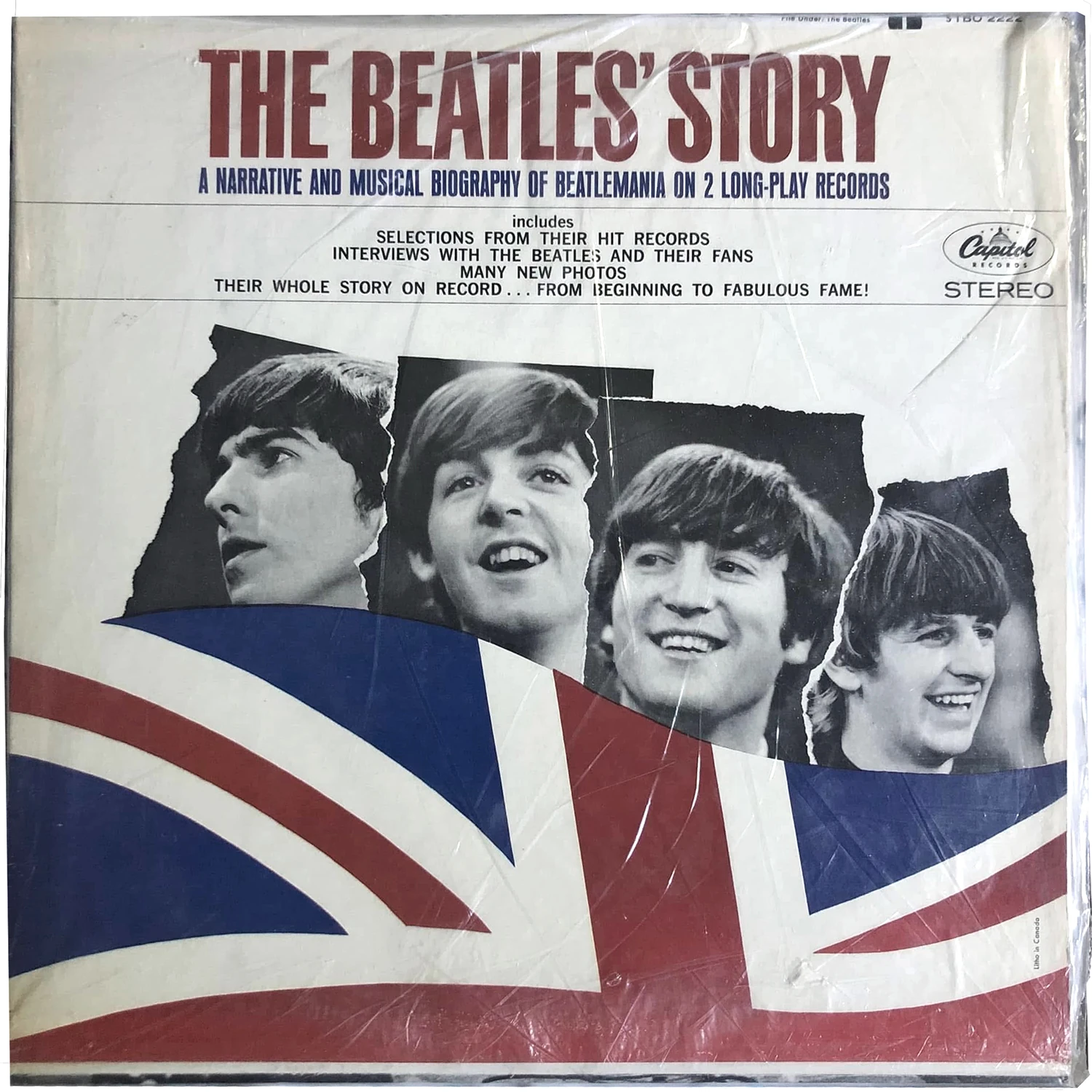
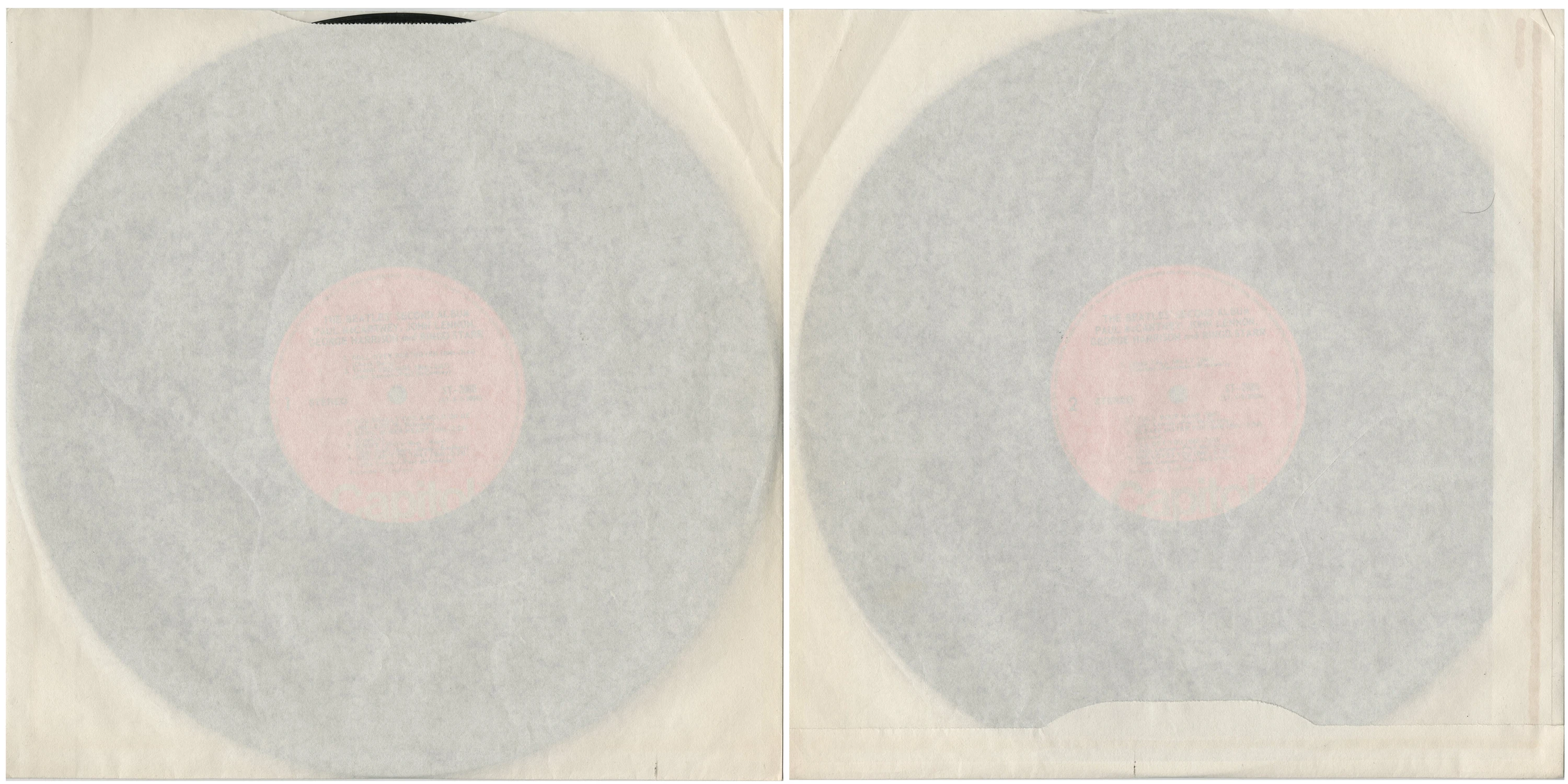
These were most likely sold with the plain paper inner sleeve used by Columbia (type 2 on the Inner Sleeves page), recognized by the small die-cut tab at the top and its reverse shape on the bottom flap. CBS had its own sleeve models, different from the ones found with the earlier RCA pressings.