Generic Sleeves
Vinyl is a fragile material, and the tiny grooves pressed into a record need protection from dust, grease, sunlight, and friction with other objects or other records. This was true for albums, but it was even more important for 45s. Unlike LPs, these smaller records were not housed in cardboard covers that offered at least some basic protection. Instead, they depended almost entirely on the thin paper sleeves in which they were sold, whether picture sleeves or generic company sleeves.
Because these sleeves were made of paper, their life expectancy was often much shorter than that of an album cover. It did not always take long for a sleeve to become creased, pinned to a wall, misplaced, or torn open. It was also common to see stacks of 45s stored on a shelf, in a box, or even piled together in a suitcase, with little or no protection at all.
Today, now that these records are recognized as historical artefacts worth cataloguing and preserving, it may seem surprising that they were once handled so casually. Collectors now protect them with paper and poly sleeves, carefully separating the record from its original packaging when needed. But at the time, records, especially singles, were everyday consumer products. They were meant to be played, shared, carried around, and enjoyed. For many young listeners, the 45 was the most accessible format for discovering new music.
As covered in each dedicated section, some early first pressings were sold in attractive picture sleeves, which helped present the artwork while also offering a basic level of protection (these were almost exclusively imported from the USA and not produced in Canada). Once those imported sleeves were used up, however, the company generally relied on standard generic company sleeves.
Just as label designs changed over time, the paper sleeves used to house the records also evolved. In many cases, these sleeves were designed to match the visual identity of the label variation found on stock copies. In other cases, they were created to identify or promote a specific series of records, such as the Starline series.
For collectors today, finding a record in the correct company sleeve adds an important layer of authenticity. It helps place the record in its proper historical and commercial context, and gives a more complete sense of how it would originally have appeared in stores. The following section presents the various generic company sleeves used for Canadian Beatles 45s, arranged in chronological order, beginning with the first 1960s issues.
Below is a detailed list of all company 45 RPM sleeves found with Beatles records between 1962 and 1986:
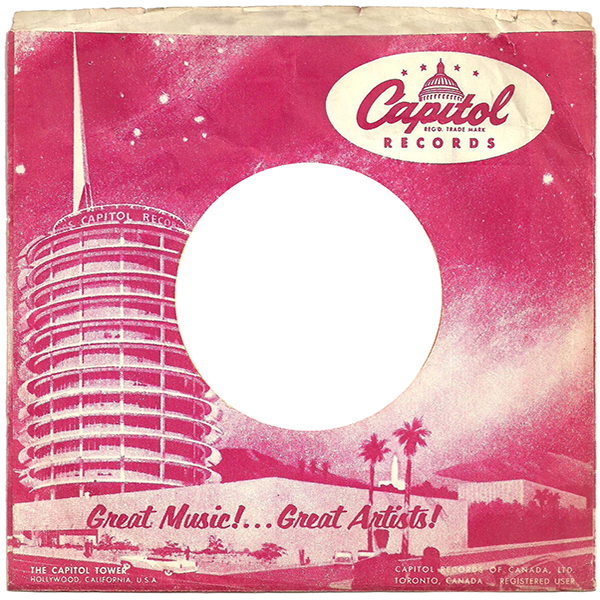
NOTE** This sleeve is often mistakenly paired with early Beatles titles by record dealers and collectors. Although it was indeed used until the early 1960s, it was never used with any Beatles records, domestic or exported. The company had changed for the new black glossy Capitol sleeve just a few years earlier, around the same time the swirl labels were introduced to replace the original purple labels.
S1. Decca Beige With Black Mesh Squares
April 1962
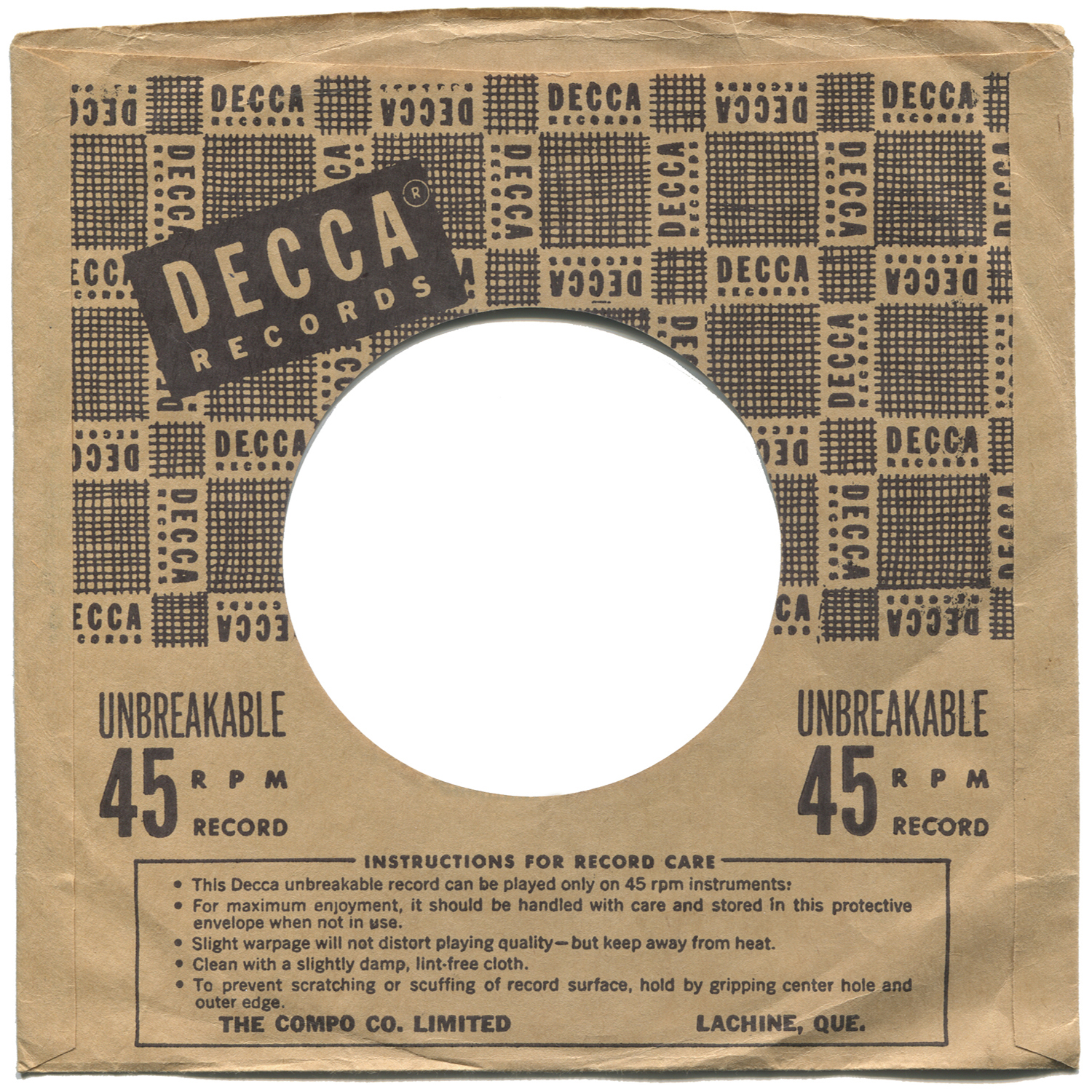
This sleeve was used exclusively with the Decca pressing of My Bonnie and features a black mesh pattern on a brown paper sleeve. The back side of the sleeve features instructions for record care below the centre hole, and identifies the Lachine Compo pressing plant.
Originally released in this sleeve: My Bonnie / The Saints (Decca 31382)
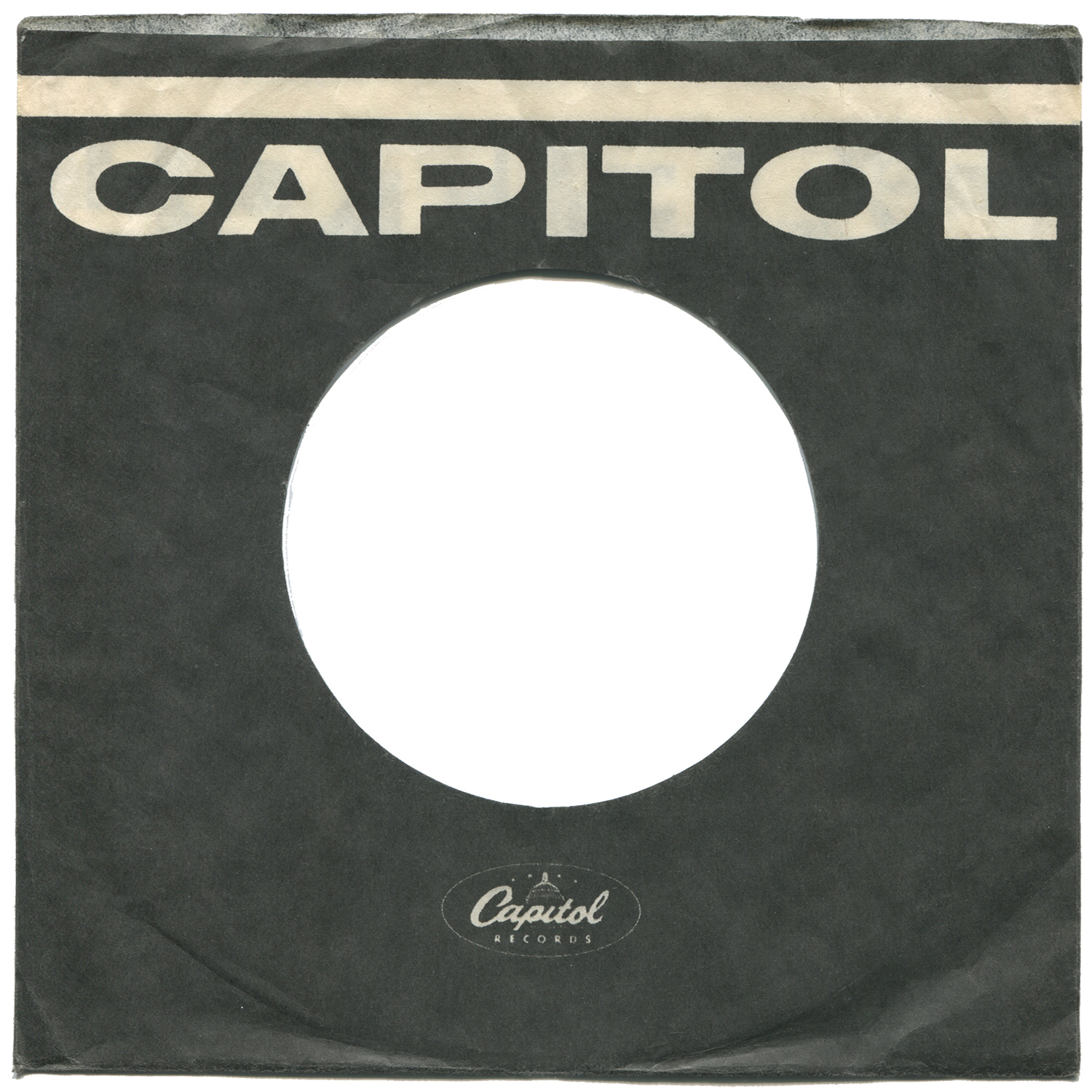
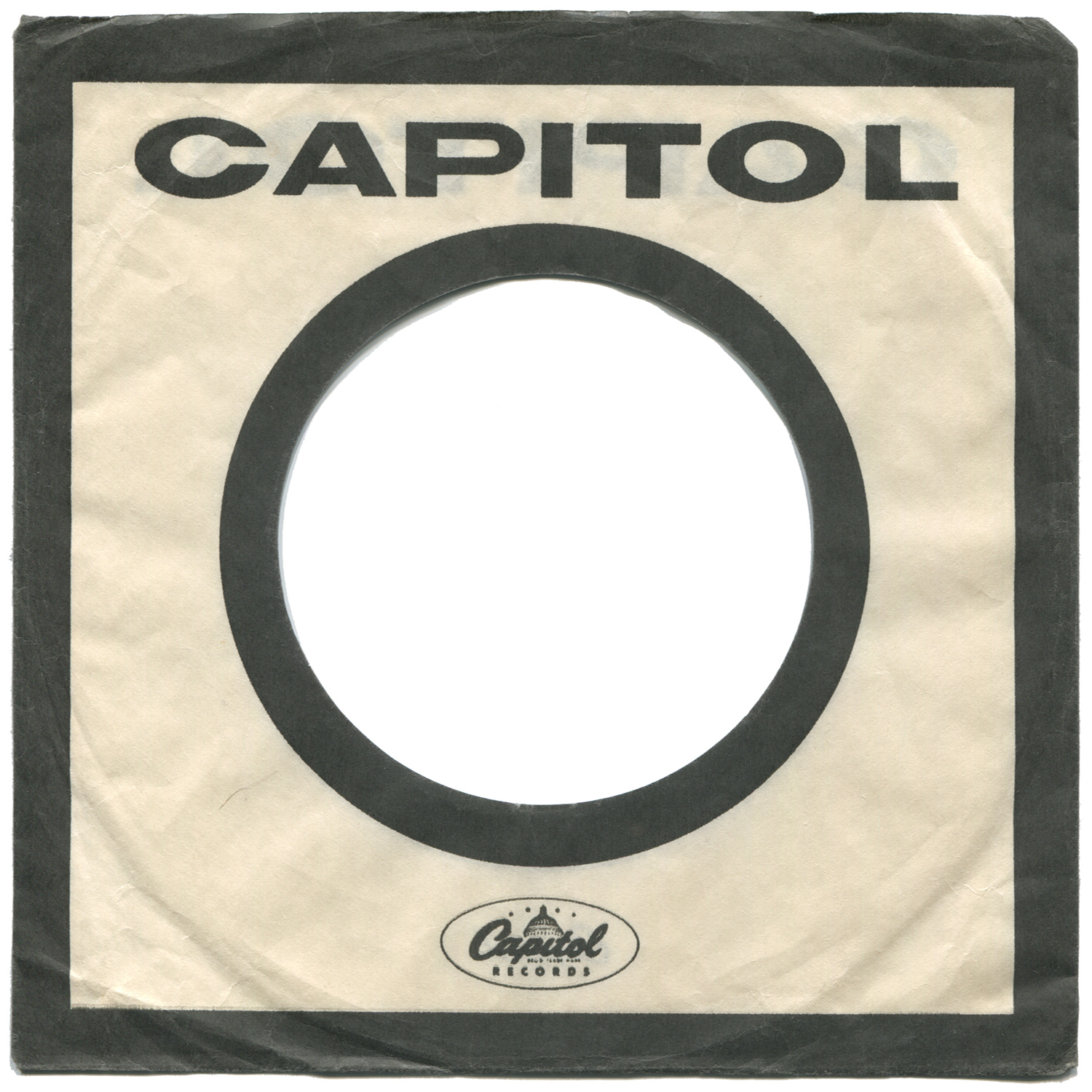
S2. Black Capitol Glossy
1963 - Late 1963
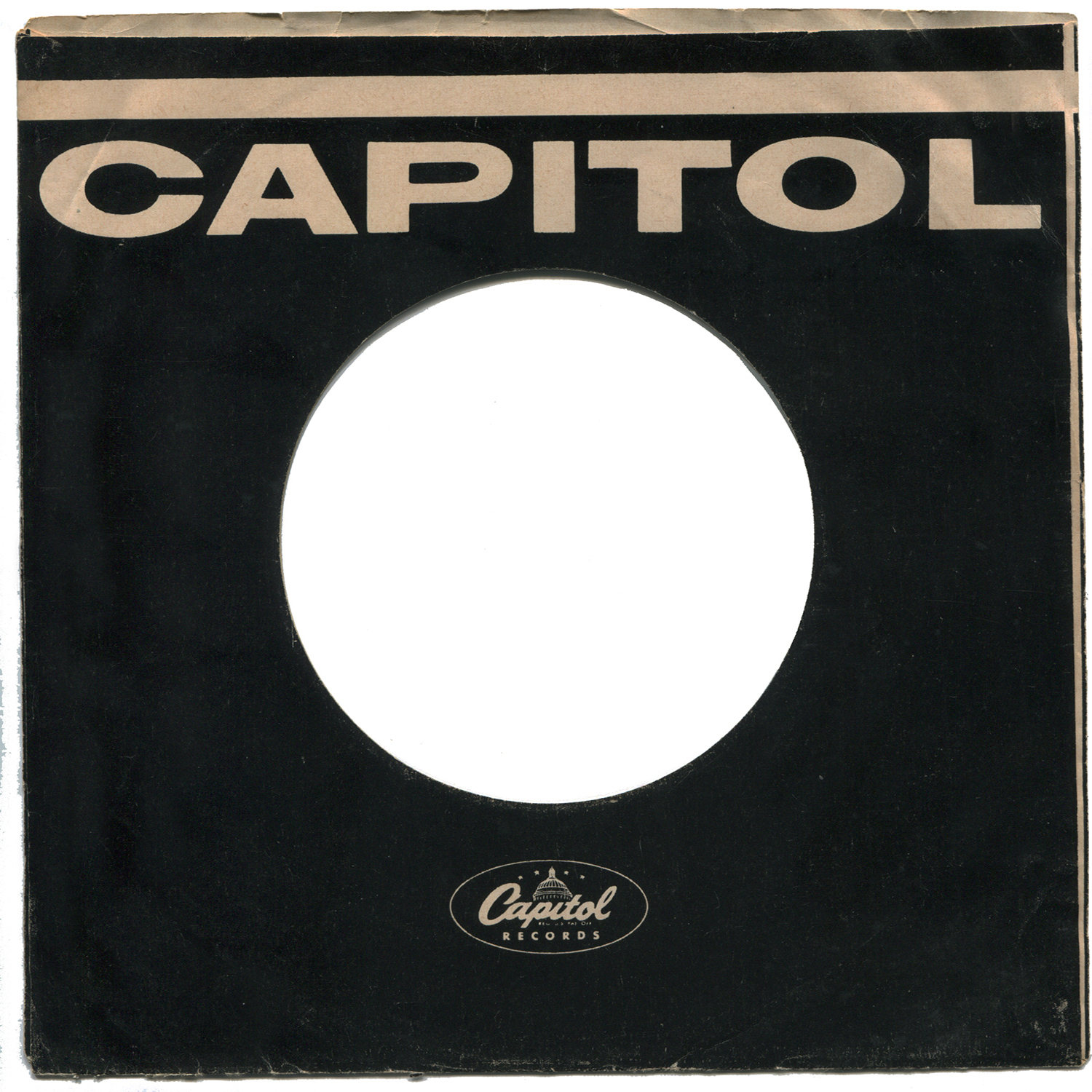
These sleeves supplied by Capitol were made of thick glossy paper. Canadian sleeves were straight cut and featured the word CAPITOL in large white letters at the top, below a thick white line. The company dome logo is also found below the centre hole. This sleeve was last used with Can't Buy Me Love.
Originally released in this sleeve: Love Me Do / P.S. I Love You (72076); Please Please Me / Ask Me Why (72090); From Me To You / Thank You Girl (72101); She Loves You / I'll Get You (72125)
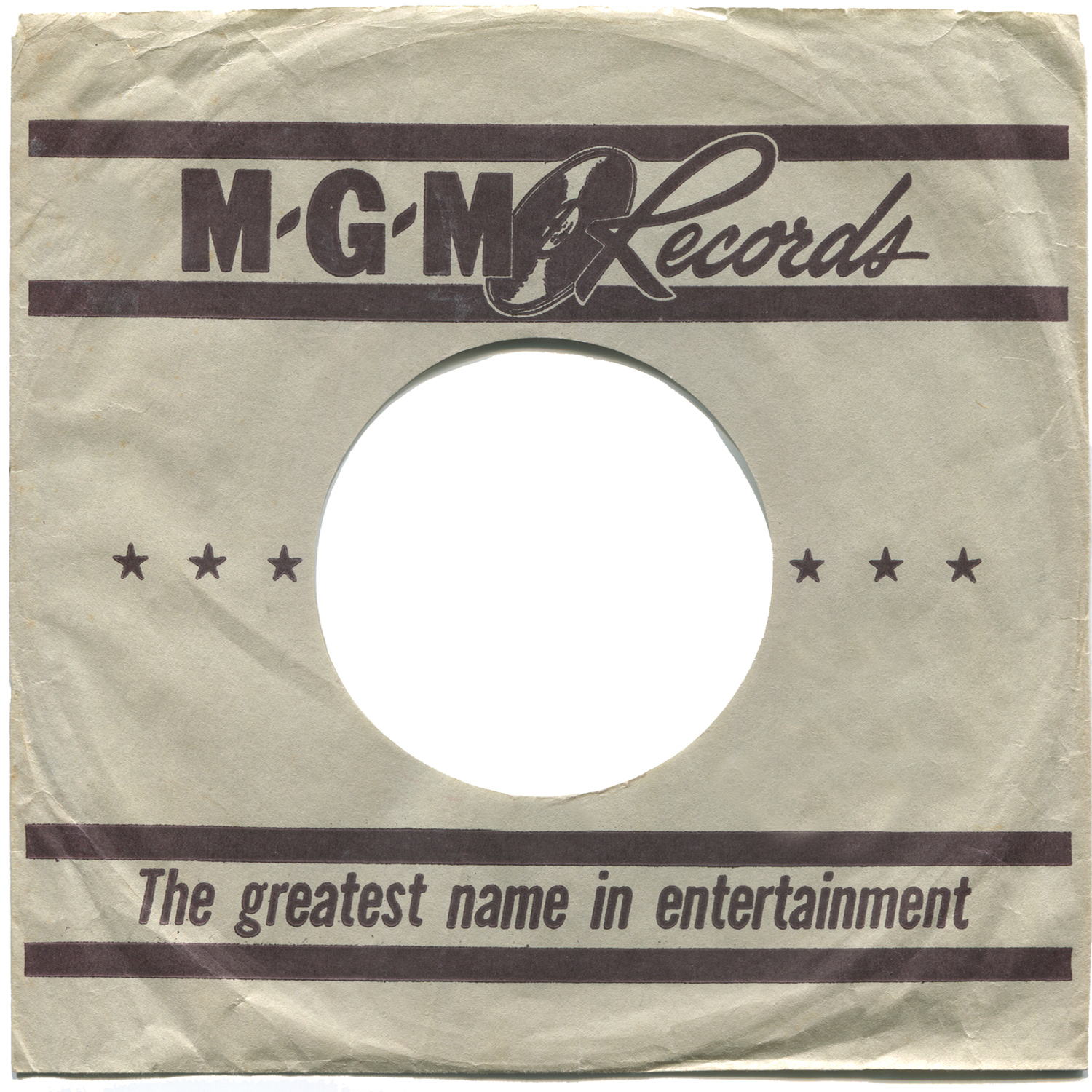
S3. MGM "The Greatest Name In Entertainment"
January - March 1964
These sleeves were supplied with the two yellow label MGM pressings of early 1964. It features a grey paper sleeve on which MGM RECORDS and THE GREATEST NAME IN ENTERTAINMENT are written between two thick lines above and below the centre hole.
Originally released in this sleeve: My Bonnie / The Saints (MGM 13213X); Why / Cry For A Shadow (MGM 13227X)
S4. Black Capitol Flat
Late 1963 - Early 1966
Although these sleeves supplied by Capitol featured exactly the same design as their predecessors, they were made of cheaper, and much thinner paper with a flat finish. This sleeve was first used with the Twist And Shout single up until Help!.
Originally released in this sleeve: Roll Over Beethoven / Please Mister Postman (72133); I Want To Hold Your Hand / I Saw Her Standing There (5112); All My Loving / This Boy (72144); Can't Buy Me Love / You Can't Do That (5150); Twist And Shout / There's A Place (72146); Do You Want To Know A Secret / Thank You Girl (72159); Sie Liebt Dich / I'll Get You (72162); A Hard Day's Night / I Should Have Known Better (5222); I'll Cry Instead / I'm Happy Just To Dance (5234); And I Love Her / If I Fell (5235); Slow Down / Matchbox (5255); I Feel Fine / She's A Woman (5327); Eight Days A Week / I Don't Want To Spoil The Party (5371); Ticket To Ride / Yes It Is (5407); Help! / I'm Down (5476), Act Naturally / Yesterday (5498); We Can Work It Out / Day Tripper (5555)
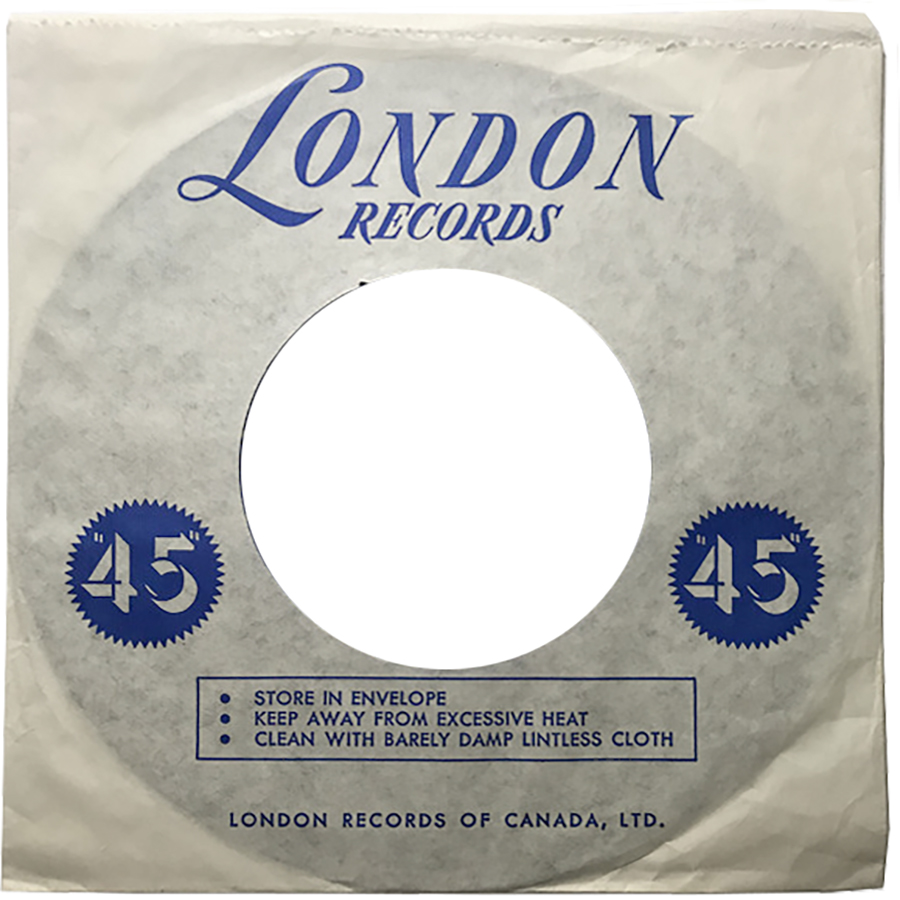
S5. London White and Blue (ATCO)
July 1964
The generic London white and blue paper sleeve was the one used with the ATCO single Ain't She Sweet, the previous model (brown sleeve) had been replaced by the white / blue design in mid 1962.
Originally released in this sleeve: Ain't She Sweet / Nobody's Child (ATCO 6308)
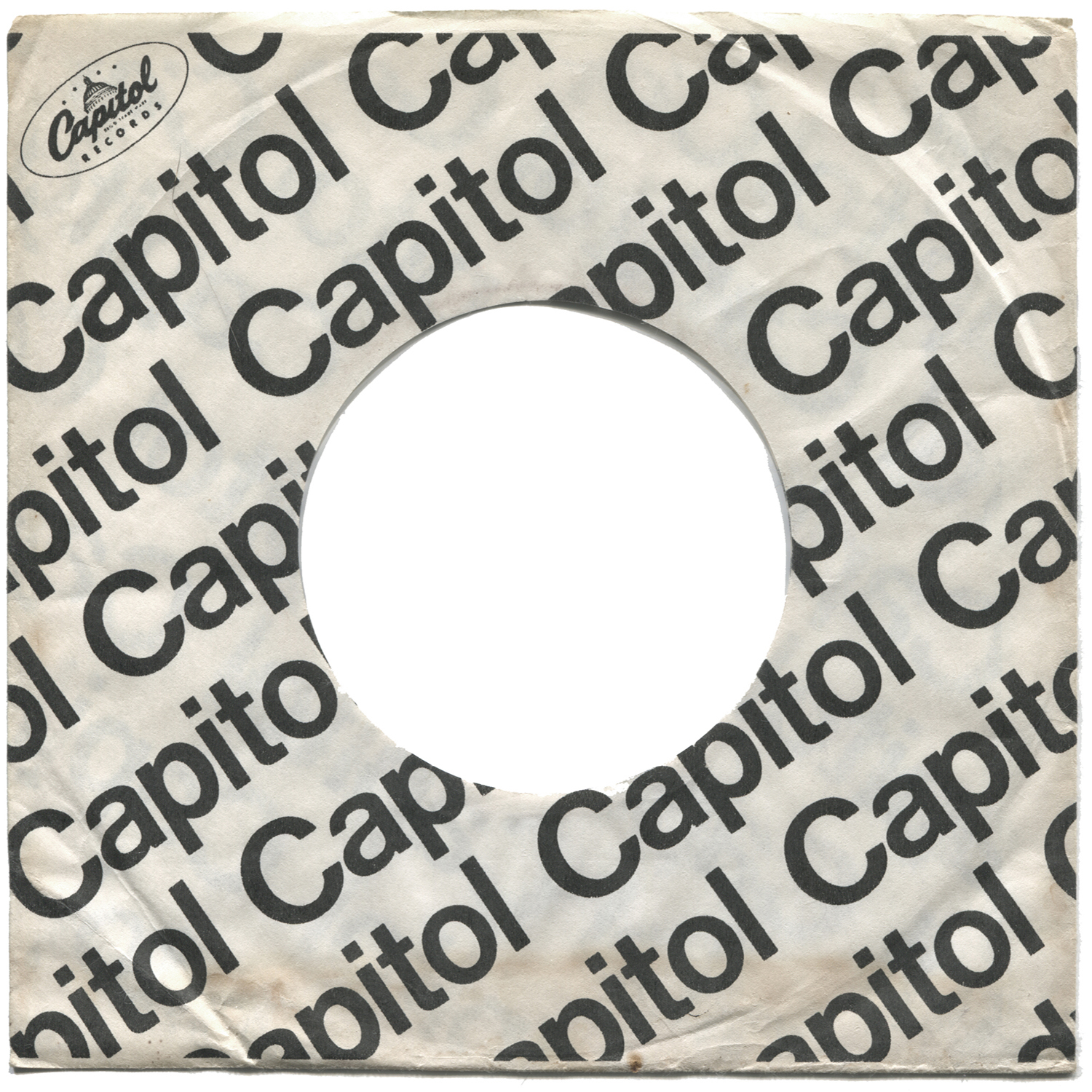
S6. Capitol Sideways Logo
Early 1966 - 1969 (approx)
These sleeves supplied by Capitol featured a modernized design with the word CAPITOL repeated in black at an angle on a white background across both sides of the sleeve. The dome logo is featured in the top left corner of the sleeve. Sleeves with small text below the dome logo are American-made, and not Canadian. This sleeve was introduced with Yesterday, and was used on non-Apple releases until 1969.
Originally released in this sleeve: Paperback Writer / Rain (5651); Yellow Submarine / Eleanor Rigby (5715); Penny Lane / Strawberry Fields Forever (5810); All You Need Is Love / Baby You're A Rich Man (5964); Hello, Goodbye / I Am The Walrus (2056); Lady Madonna / The Inner Light (2138)
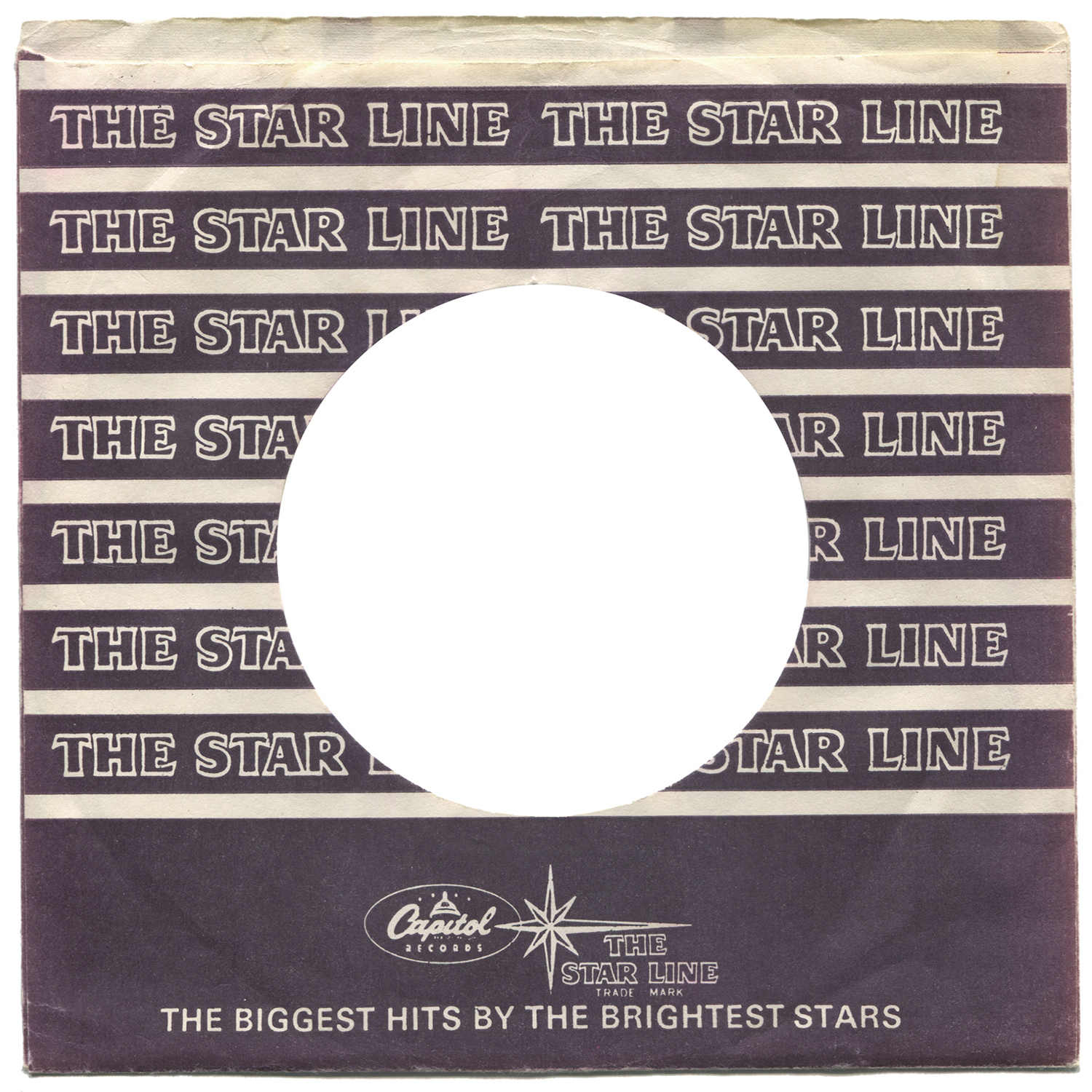
S7. Capitol Starline
October 1965
These sleeves supplied by Capitol featured a list of other Starline releases in Canada. The design used with the 1965 Beatles Starline releases features the 4 Beatles titles on the sleeve (later sleeves do not). Canadian sleeves have the words PRINTED IN CANADA centred at the bottom. The black print has a slightly purple hue compared to their US counterparts. Only used with Starline releases of October 1965.
Originally released in this sleeve: The four 1965 Starline releases — Twist And Shout / There's A Place; Love Me Do / P.S. I Love You; Please Please Me / From Me To You; Kansas City / Boys (6066)
S8. Capitol White With a Black Frame
1966
Although this design was used extensively in the USA around 1962, this Capitol generic sleeve was used for a very short time in 1966 in Canada. Some copies of Nowhere Man were sold in this sleeve design. Some copies of the previous 2-3 singles were also reported to have been sold in this sleeve, but never officially confirmed.
Originally released in this sleeve: Nowhere Man / What Goes On (5587)
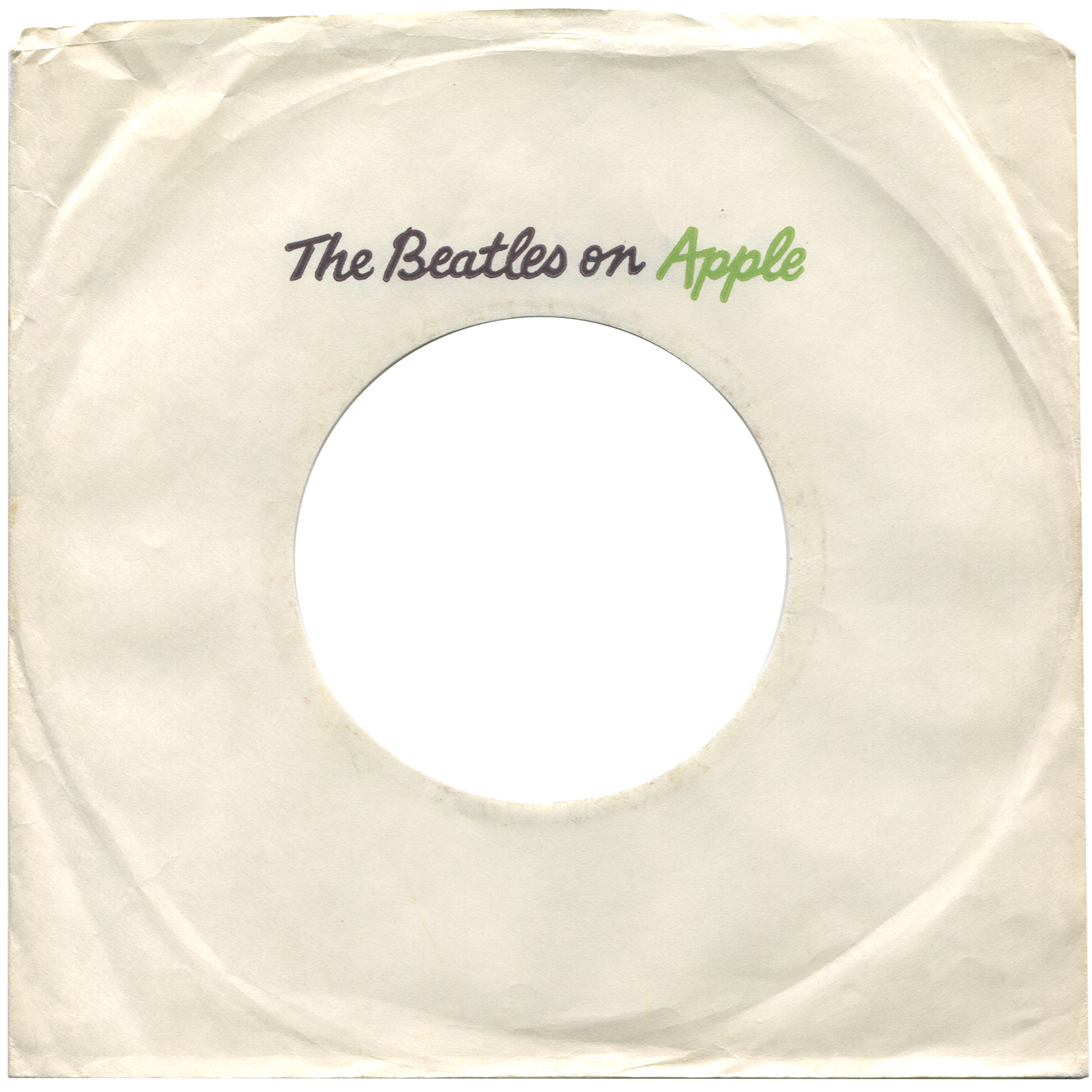
S9. White "The Beatles On Apple"
November 1968 - 1969 (approx)
This unique sleeve was used for all original Beatles Apple releases. It is all white with green text, and is made of a more fragile flat paper. This sleeve is unique to Canada since all American sleeves were black.
Originally released in this sleeve: Hey Jude / Revolution (2276); Get Back / Don't Let Me Down (2490); The Ballad Of John And Yoko / Old Brown Shoe (2531); Something / Come Together (2654) — the last title to use this sleeve
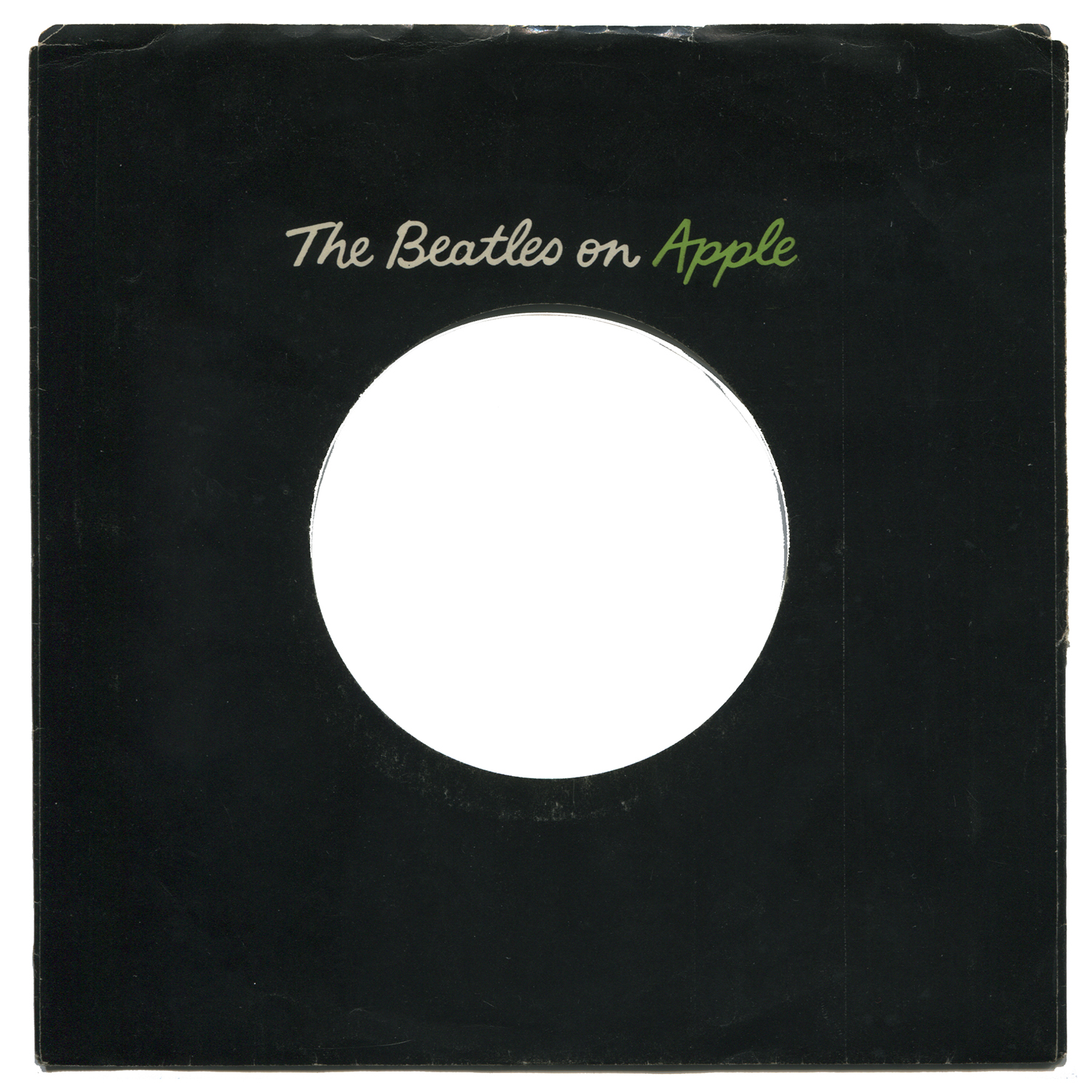
S10. Black "The Beatles On Apple"
November 1968 - 1975 (approx)
These American sleeves were heavily imported to Canada and are made of thick glossy paper. American sleeves can be found with either a straight or round cut tab. These were used on Beatles Apple releases until 1975.
Originally released in this sleeve: Let It Be / You Know My Name (2764); The Long And Winding Road / For You Blue (2832).
Label generation featured (reissues): Label 3 (Apple) — ongoing reissues of earlier Apple titles through 1975
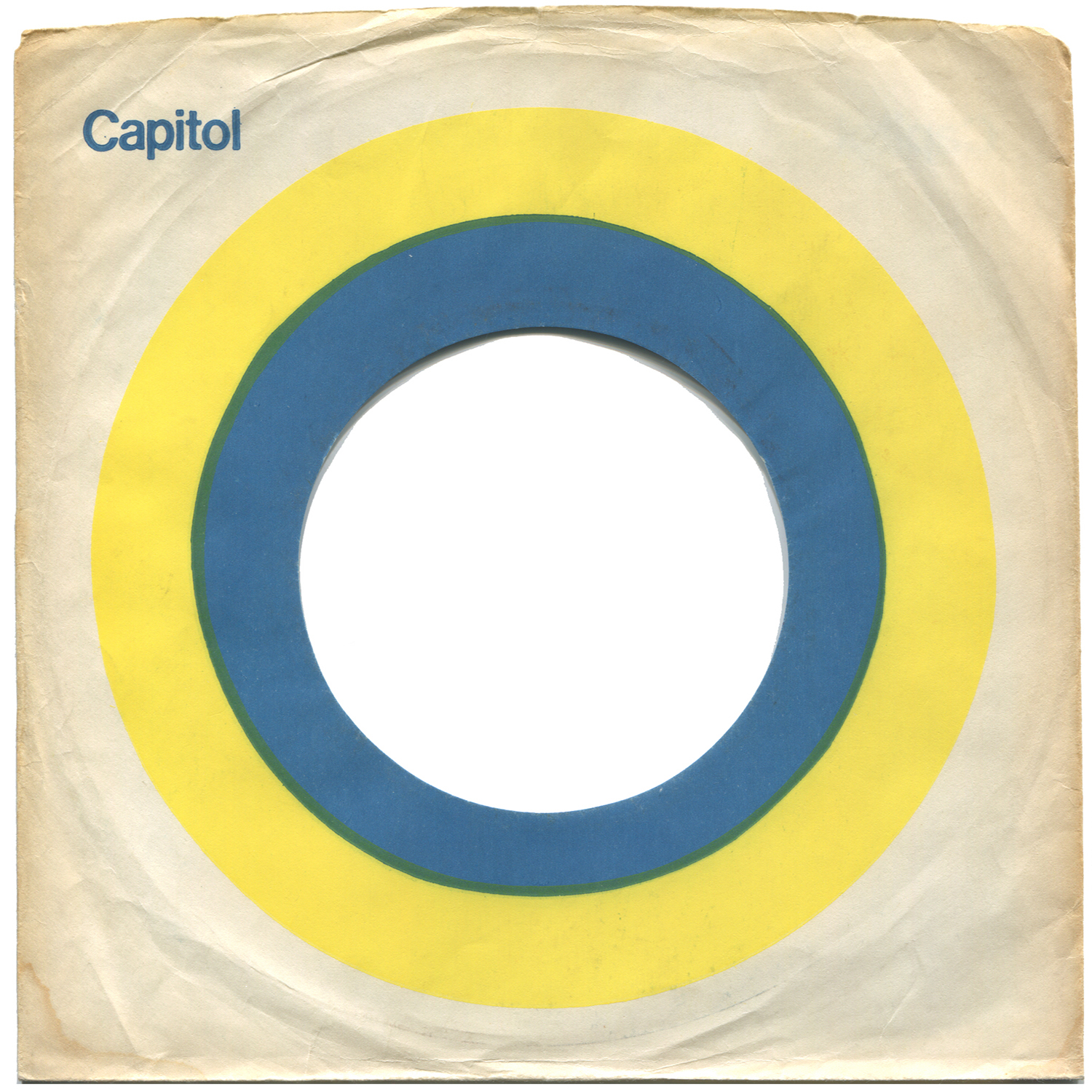
S11. Capitol Yellow and Blue Target 1
April - May 1969
This sleeve was used in early 1969 with the rare mistake target label 45s featuring the dome logo. The sleeves have blue and yellow concentric circles around the centre hole, and have the word CAPITOL on the top left corner of each side. Both sides of the sleeve are identical.
Label generation featured: Label 4 (Target with Oval/Dome Logo) — rare reissues of earlier Capitol catalogue titles
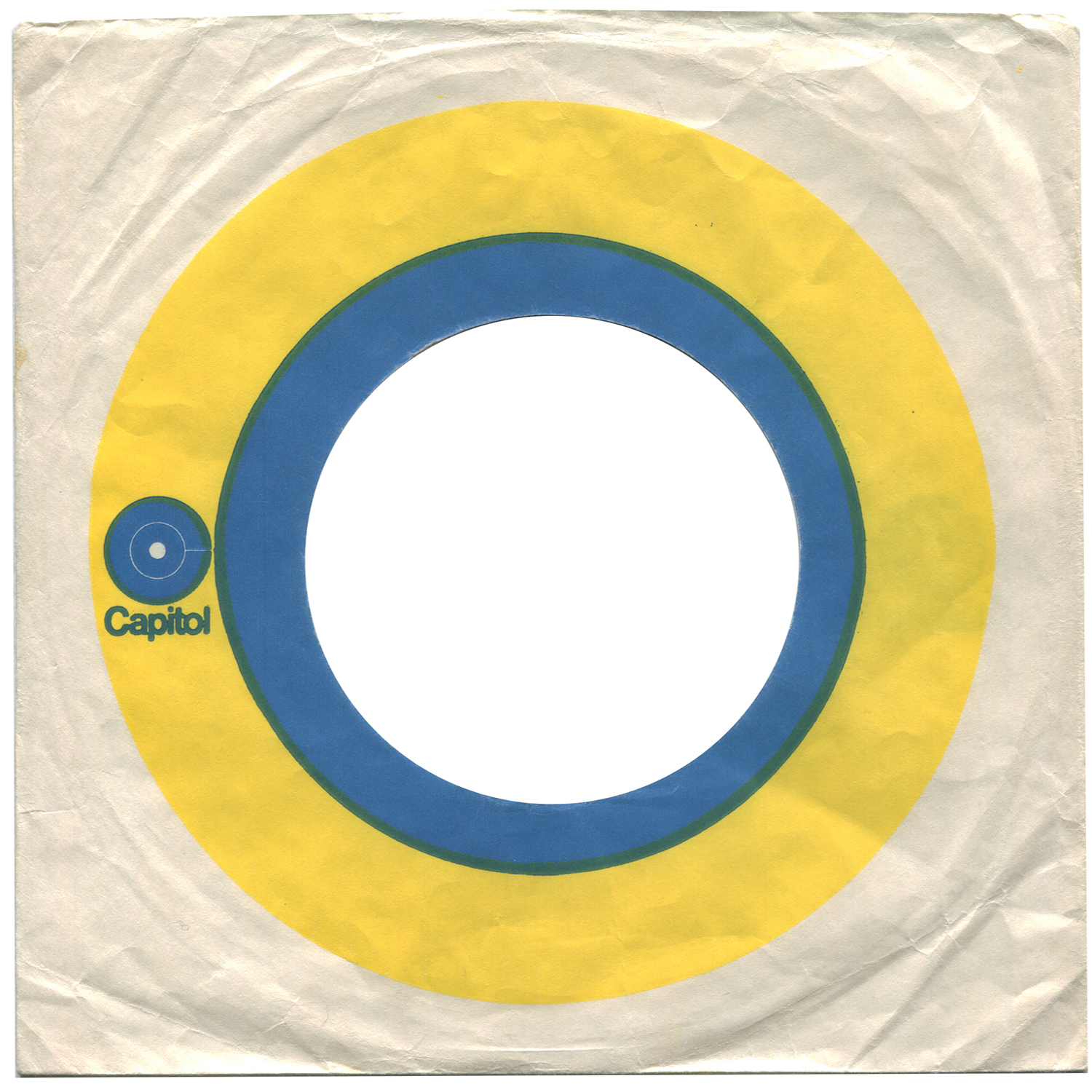
S12. Capitol Yellow and Blue Target 2
June 1969 - 1970
This sleeve was used with the corrected target label 45s featuring the target logo. The sleeves have blue and yellow concentric circles around the centre hole, and have the new (and appropriate) Capitol target logo to the left of the centre hole on each side. Both sides of the sleeve are identical.
Label generation featured: Label 5 (Target with Target Logo) — reissues of earlier Capitol catalogue titles
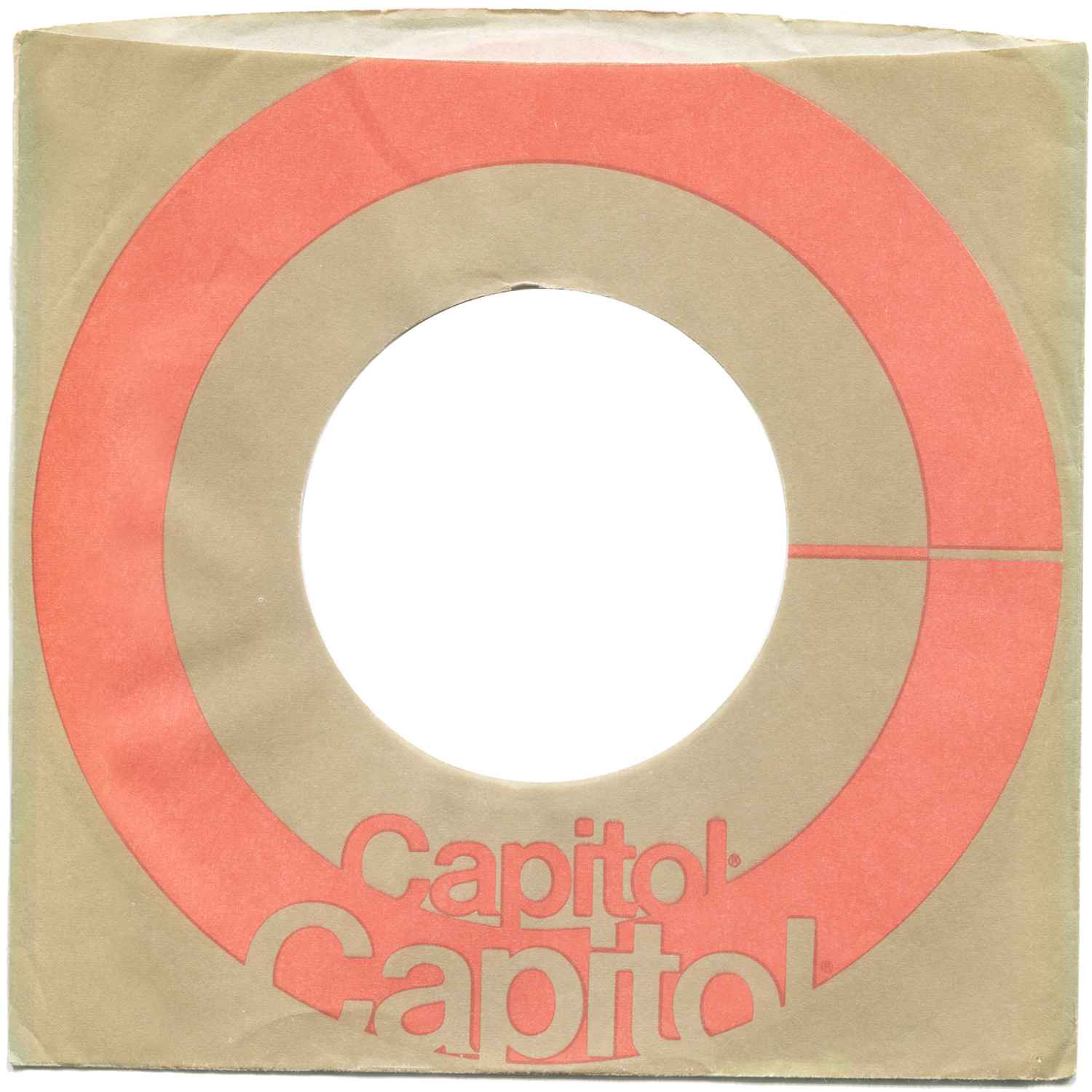
S13. Capitol Red and Beige Target 1
1972 - July 1978
These sleeves were supplied with orange label pressings. Not many titles were issued on these labels until 1976, so the sleeves would mostly have been seen with 3rd generation pressings when the Beatles Forever sleeves were unavailable. These feature a red target design with the word CAPITOL written in each circle, on a brown paper sleeve. The sleeve has a curved cut tab. These sleeves were still being used with early copies on the "new purple label" in the first half of 1978.
Label generations featured: Label 6 (Orange 1st Generation, 1972-1973); Label 8 (Orange 3rd Generation, 1976+) when Beatles Forever sleeves were unavailable
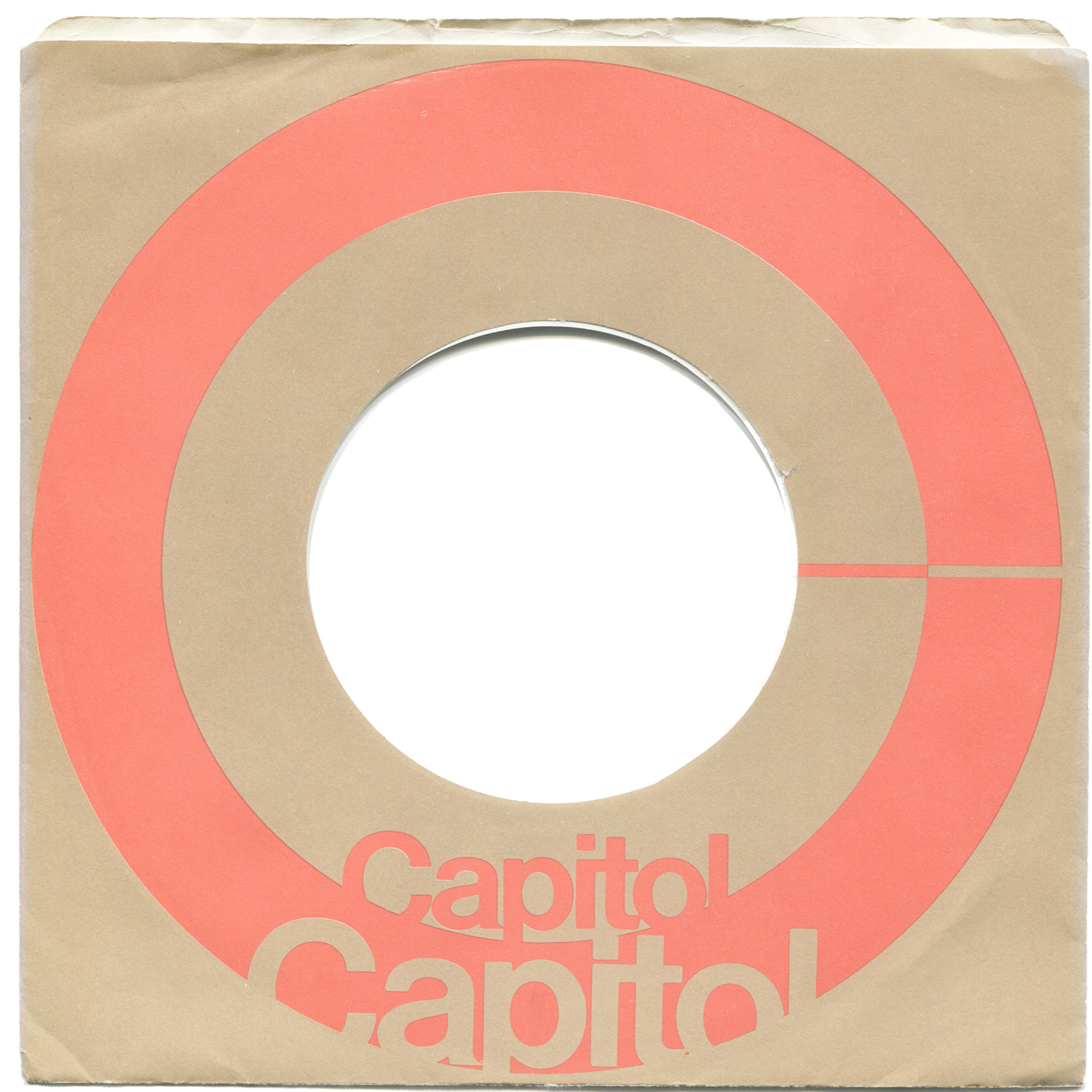
S14. Capitol Red and Beige Target 2
1974 (approx)
This sleeve is almost identical to the previous design, but is printed on much thicker paper, and has round corners and a straight cut tab. Its construction is quite similar to the thicker and flat paper black Apple sleeves used briefly in 1974. This was most likely used with second generation orange labels.
Label generation featured: Label 7 (Orange 2nd Generation, 1975)
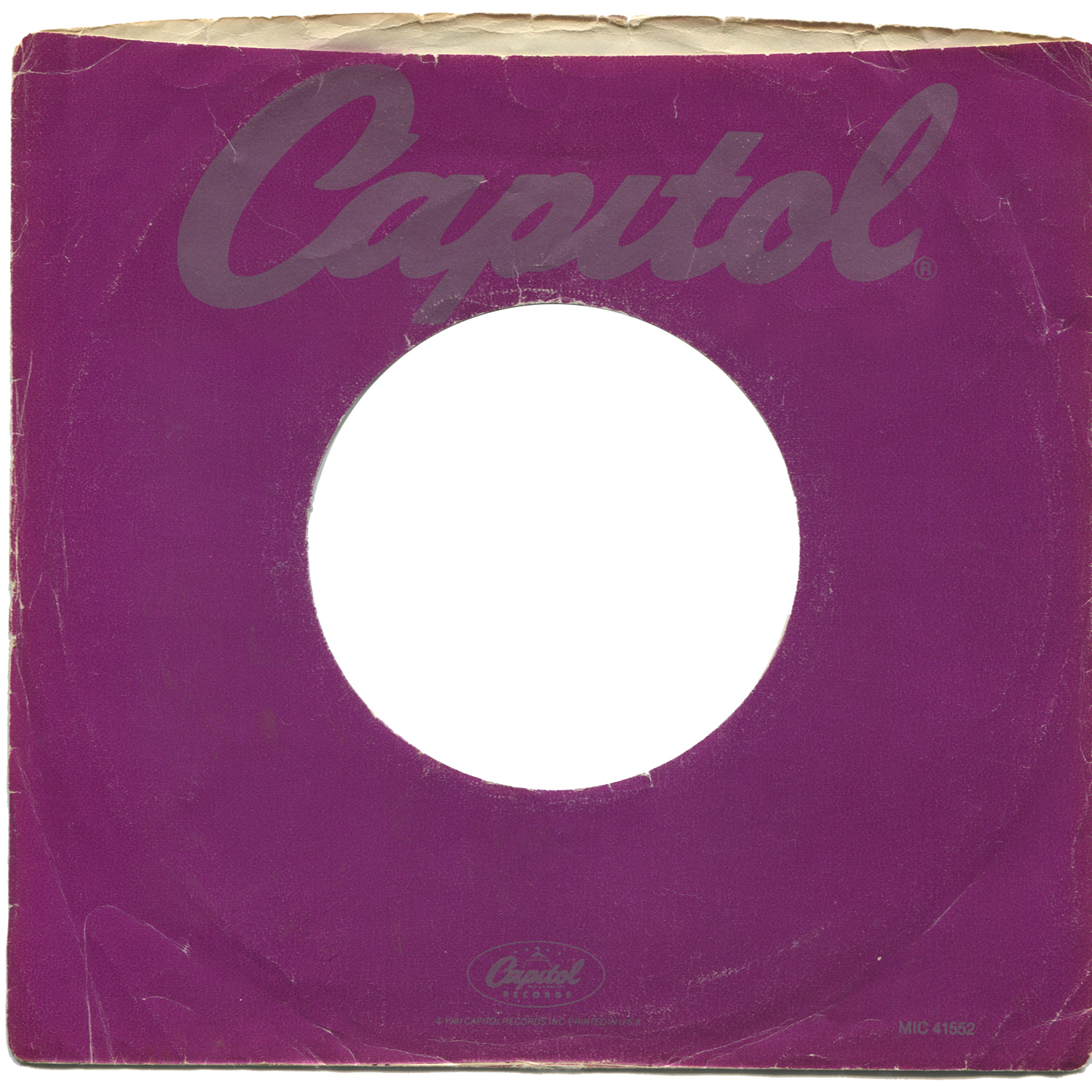
S15. Capitol Purple (paper)
July 1978 - 1980 (approx)
These sleeves were supplied with the early generation of purple label pressings, starting around July 1978. It features a dark purple colour with CAPITOL printed in silver above the centre hole. This sleeve has a curved cut tab. Later sleeves from the fall of 1979 switched to a non-glossy finish.
Label generation featured: Label 10 (Purple 2nd Generation, 1978-1980) — early issues
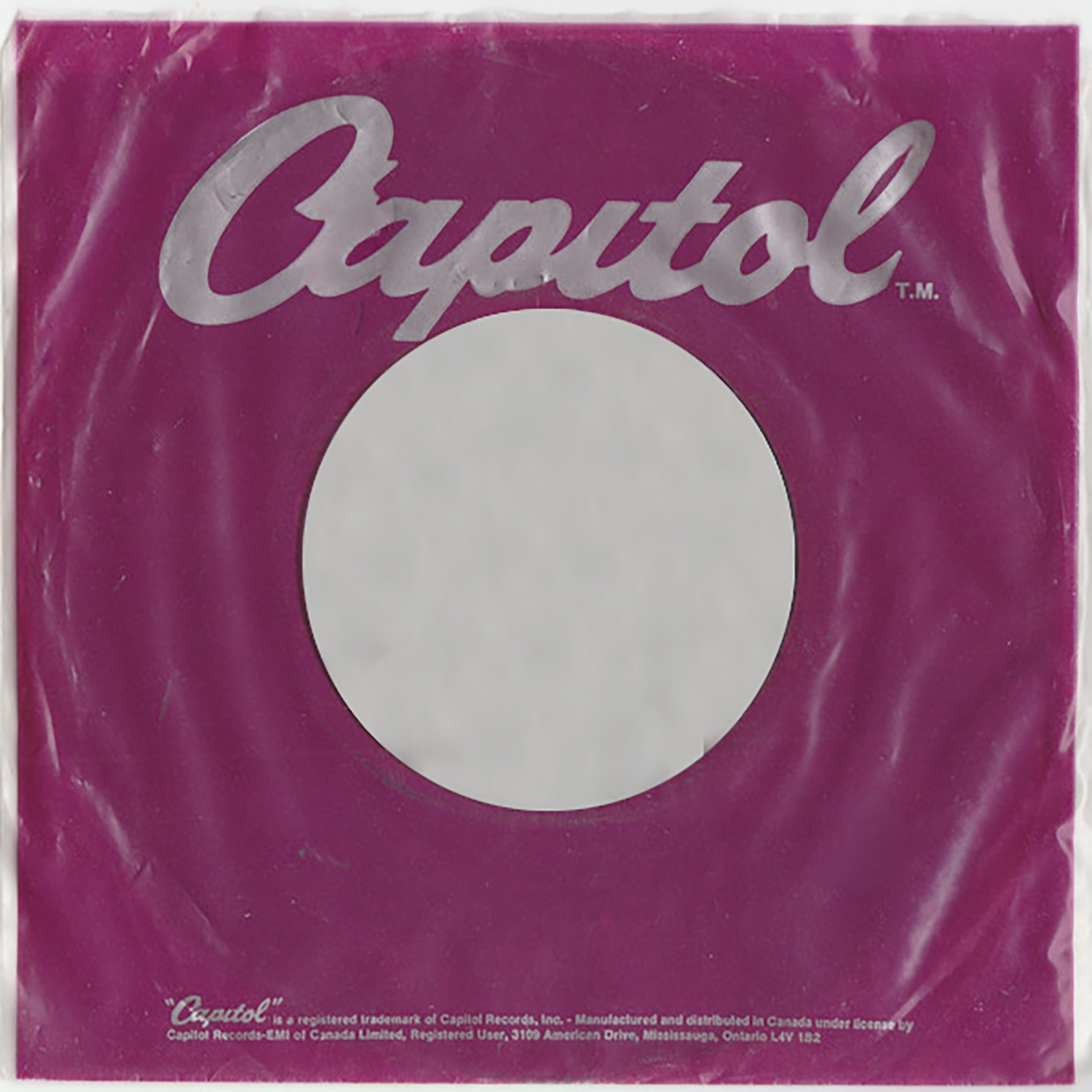
S16. Capitol Purple (Mylar)
1980-1983 (approx)
These sleeves were supplied with the third generation of purple label pressings. It features a dark purple colour with CAPITOL printed in silver above the centre hole. This sleeve are not paper but mylar.
Label generation featured: Label 11 (Purple 3rd Generation, 1980-1983) — early issues
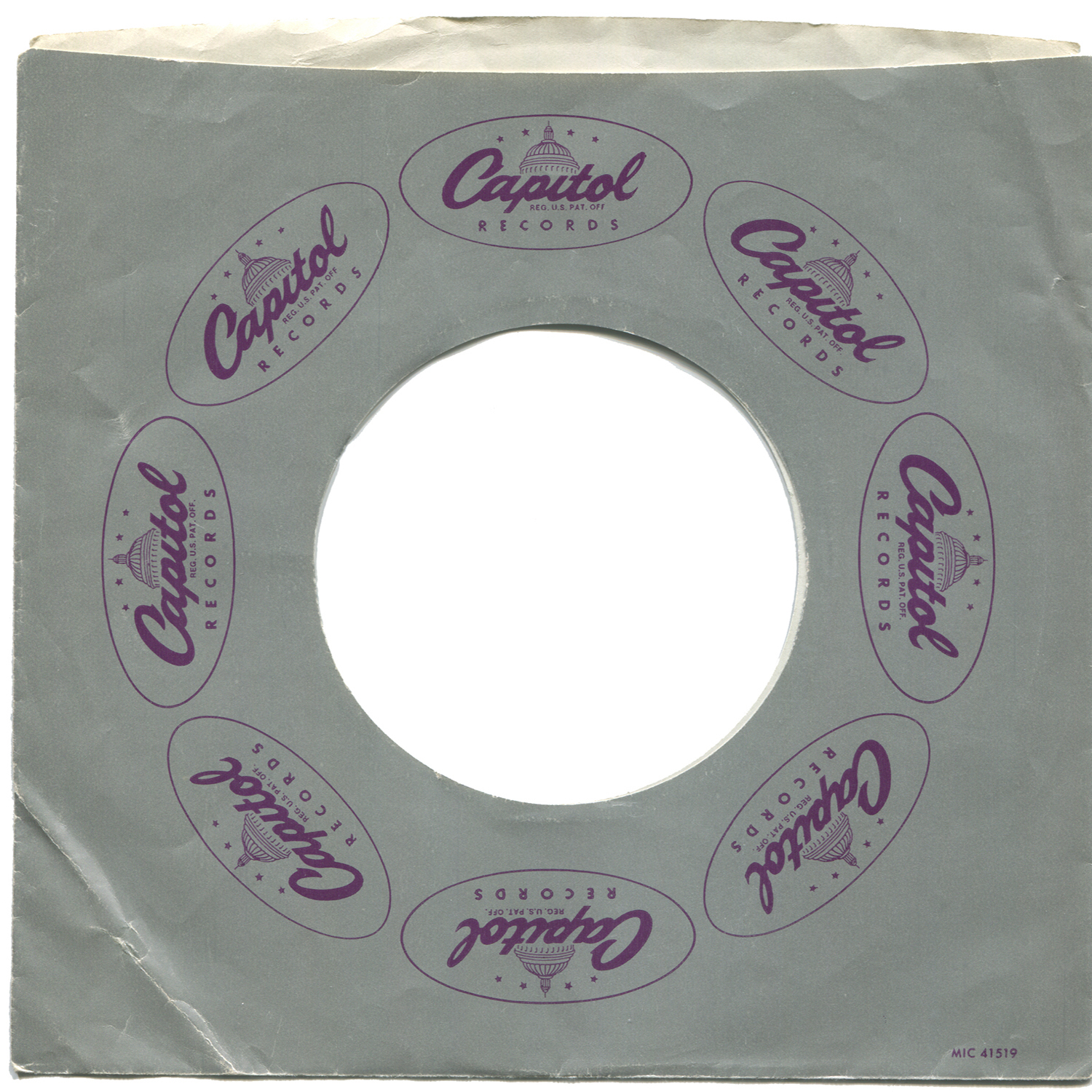
S17. Capitol Silver With Dome Logo Disposed In a Circle
1980 (approx)
These sleeves were supplied with the early generation of purple label pressings. It features a silver thick paper sleeve with purple Capitol dome logos displayed in a circle around the centre hole. This sleeve has a curved cut tab.
Label generation featured: Label 10 (Purple 2nd Generation, 1978-1980) — later issues
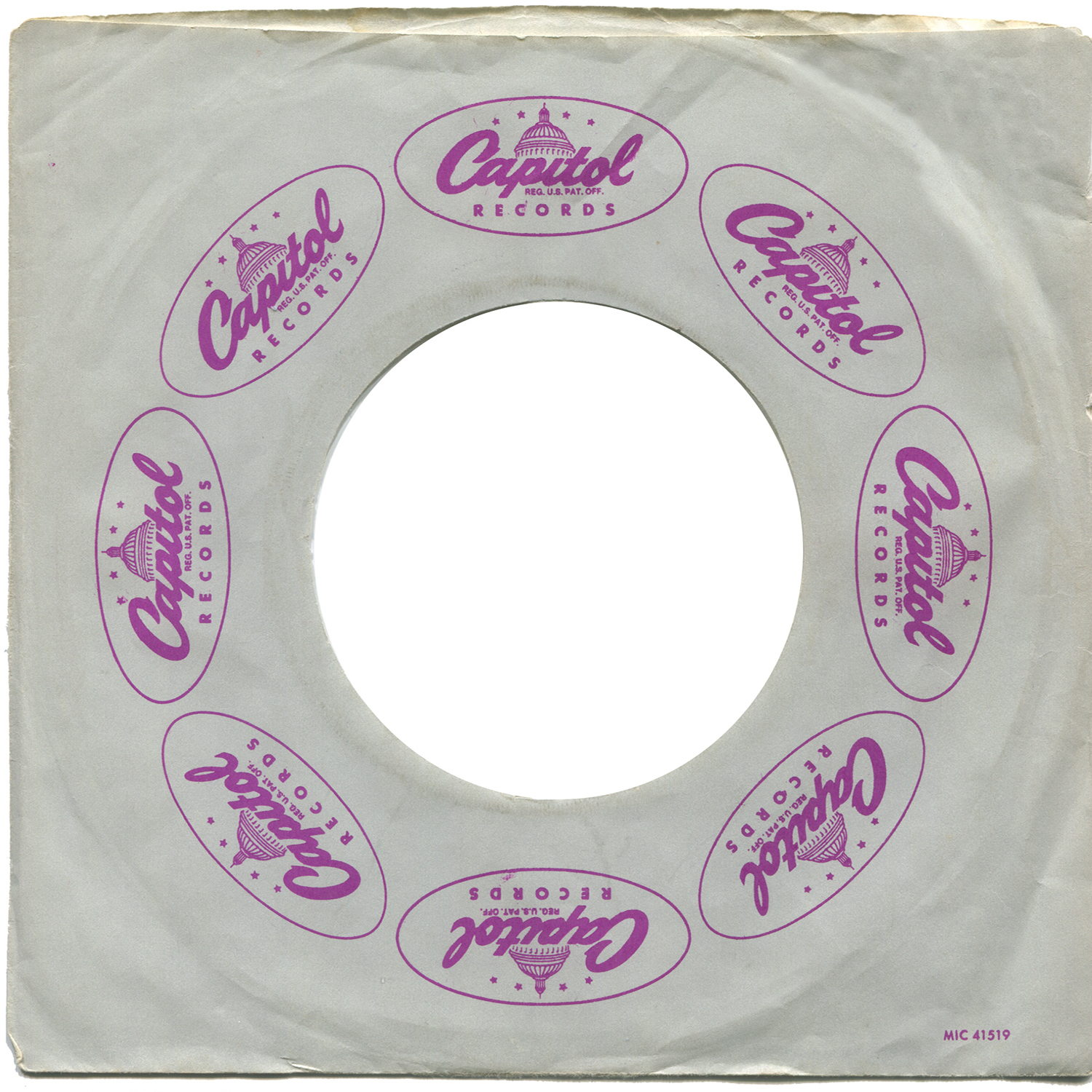
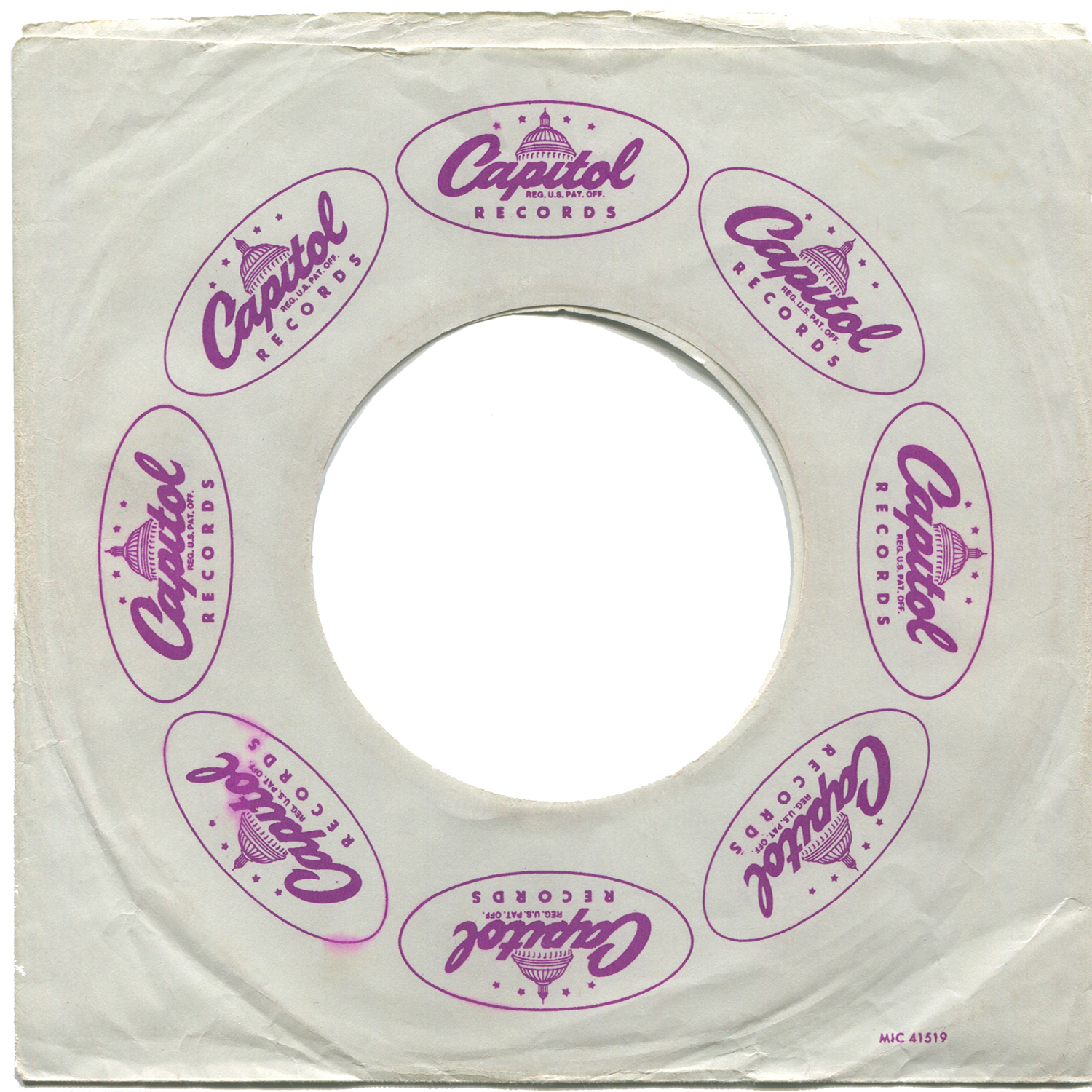
S18. Capitol Light Grey With Dome Logo Disposed In a Circle
1981 - 1983 (approx)
These sleeves were supplied with later purple label pressings. It features a light grey thin paper sleeve with purple Capitol dome logos displayed in a circle around the centre hole. This sleeve has a curved cut tab.
Label generation featured: Label 11 (Purple 3rd Generation, 1980-1983)
S19. Capitol White With Dome Logo Disposed In a Circle
1983 (approx)
These sleeves were supplied with later purple label pressings. It features a white thin paper sleeve with purple Capitol dome logos displayed in a circle around the centre hole. This sleeve has a curved cut tab.
Label generation featured: Label 11 (Purple 3rd Generation, 1980-1983) — late issues; possibly Label 12 (Retro Rainbow 1st Generation, Capitol pressing, 1983)
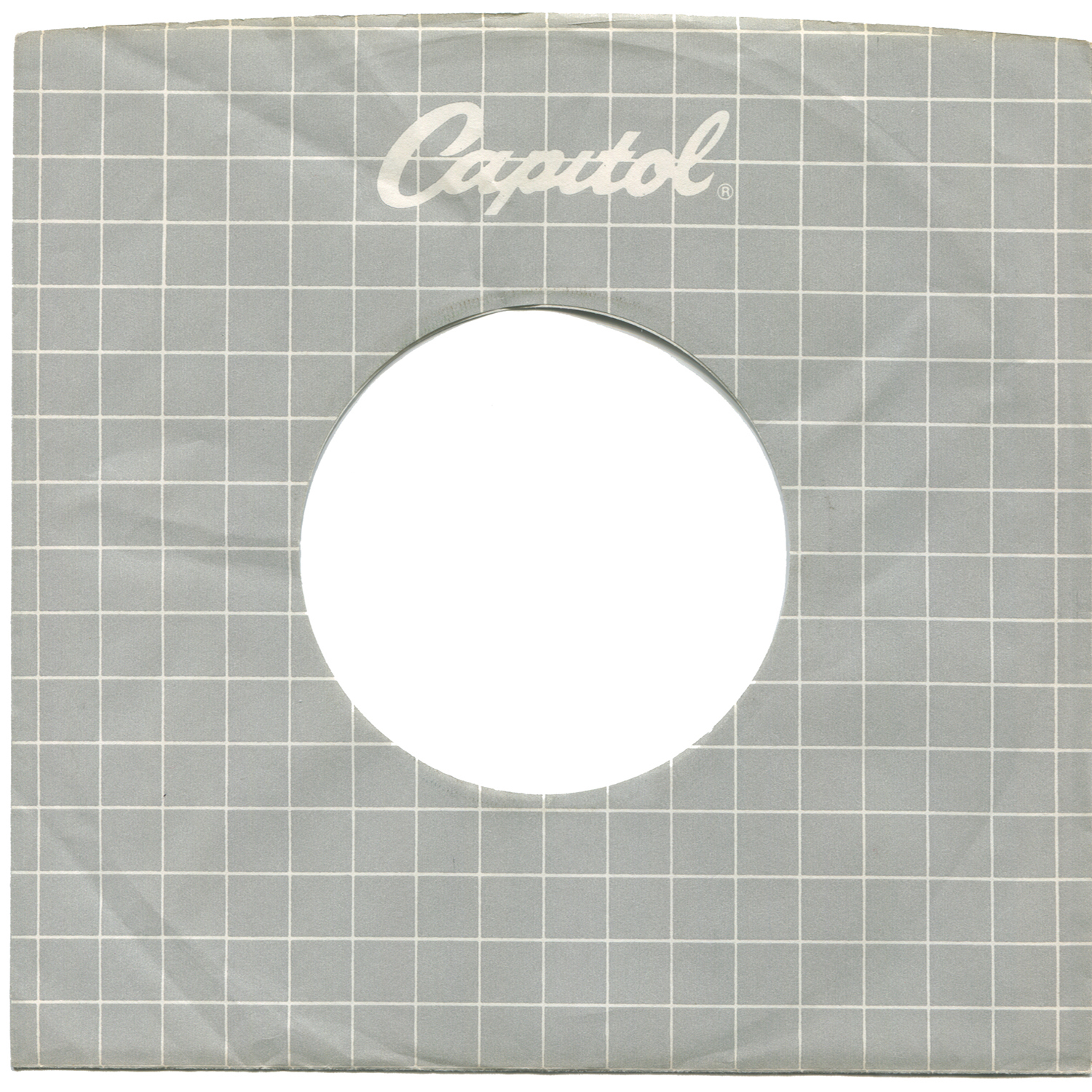
S20. Capitol Grey Checkered Paper
1983 (approx)
This was used with early retro rainbow label pressings, and features a grey sleeve on which was printed a white grid pattern with the word CAPITOL printed in white over the centre hole. This sleeve has a curved cut tab.
Label generation featured: Label 12 (Retro Rainbow 1st Generation, Capitol pressing, 1983)
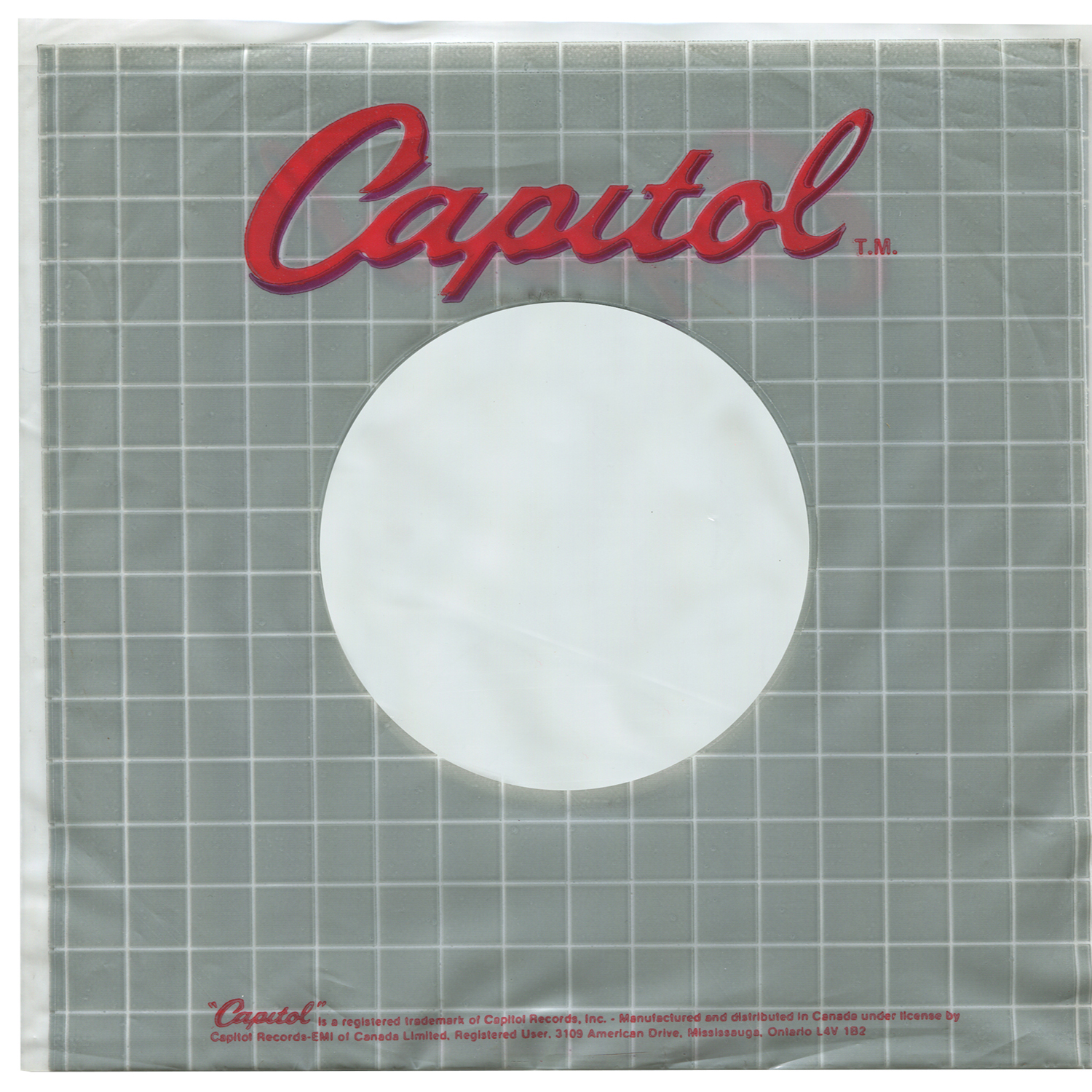
S21. Capitol Grey Checkered Mylar
1983 - 1986 (approx)
For the first time, Capitol used a mylar sleeve instead of a paper sleeve. This was used with retro rainbow label pressings, and features a clear sleeve on which was printed a grey and white grid pattern with the word CAPITOL printed larger in red over the centre hole.
Label generations featured: Label 13 (Retro Rainbow 2nd Generation, Columbia pressing, late 1983-1986); Label 15 (Neo Purple, 1986)
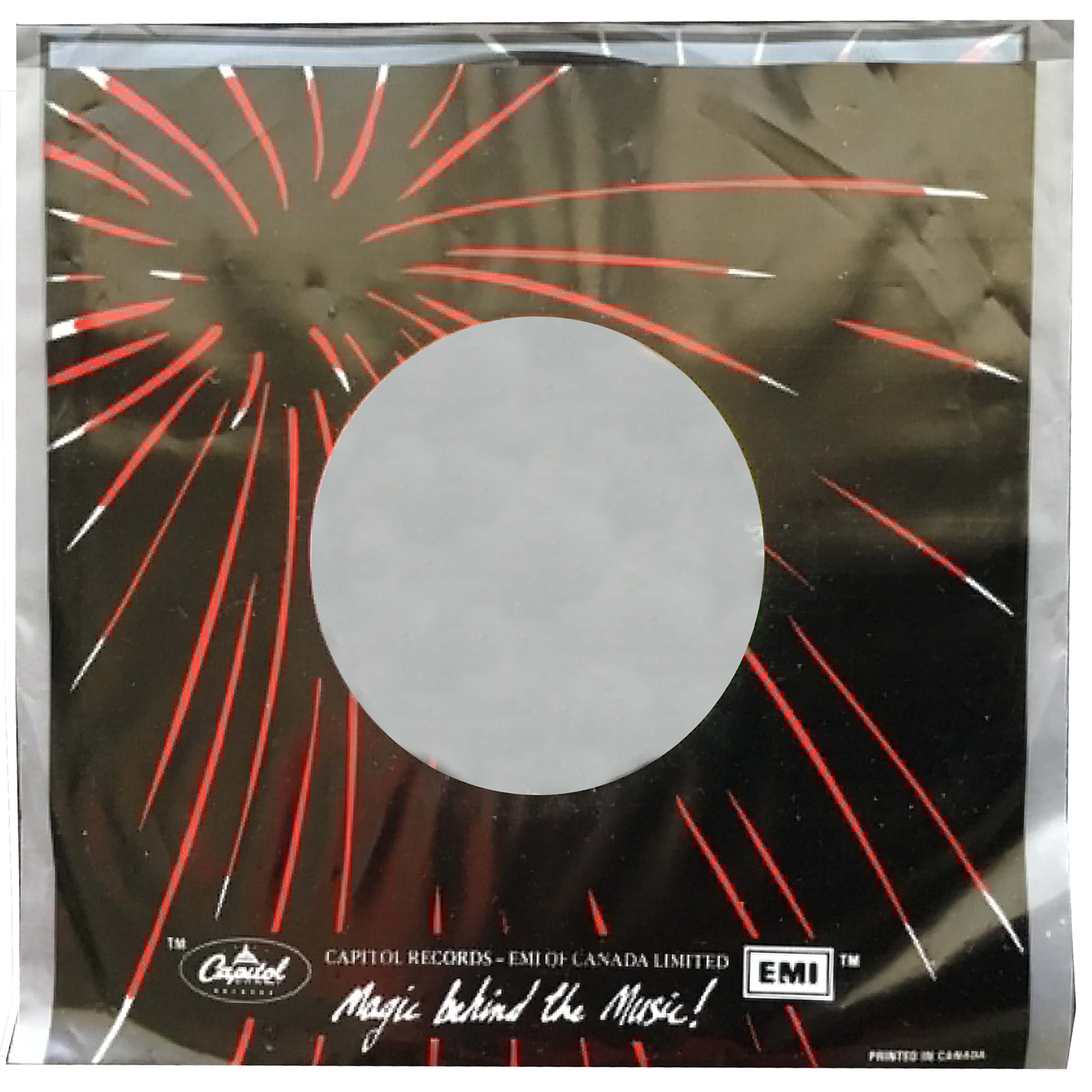
S22. Fireworks Mylar
1987-1988 (approx)
Capitol used a black "fireworks" mylar sleeve with a "Magic Behind The Music!" slogan on it. This was used with late retro rainbow label pressings.
Label generations featured: Label 13 (Retro Rainbow Columbia pressing, Circa 1987-1988)