
← Roll Over Beethoven Variations List
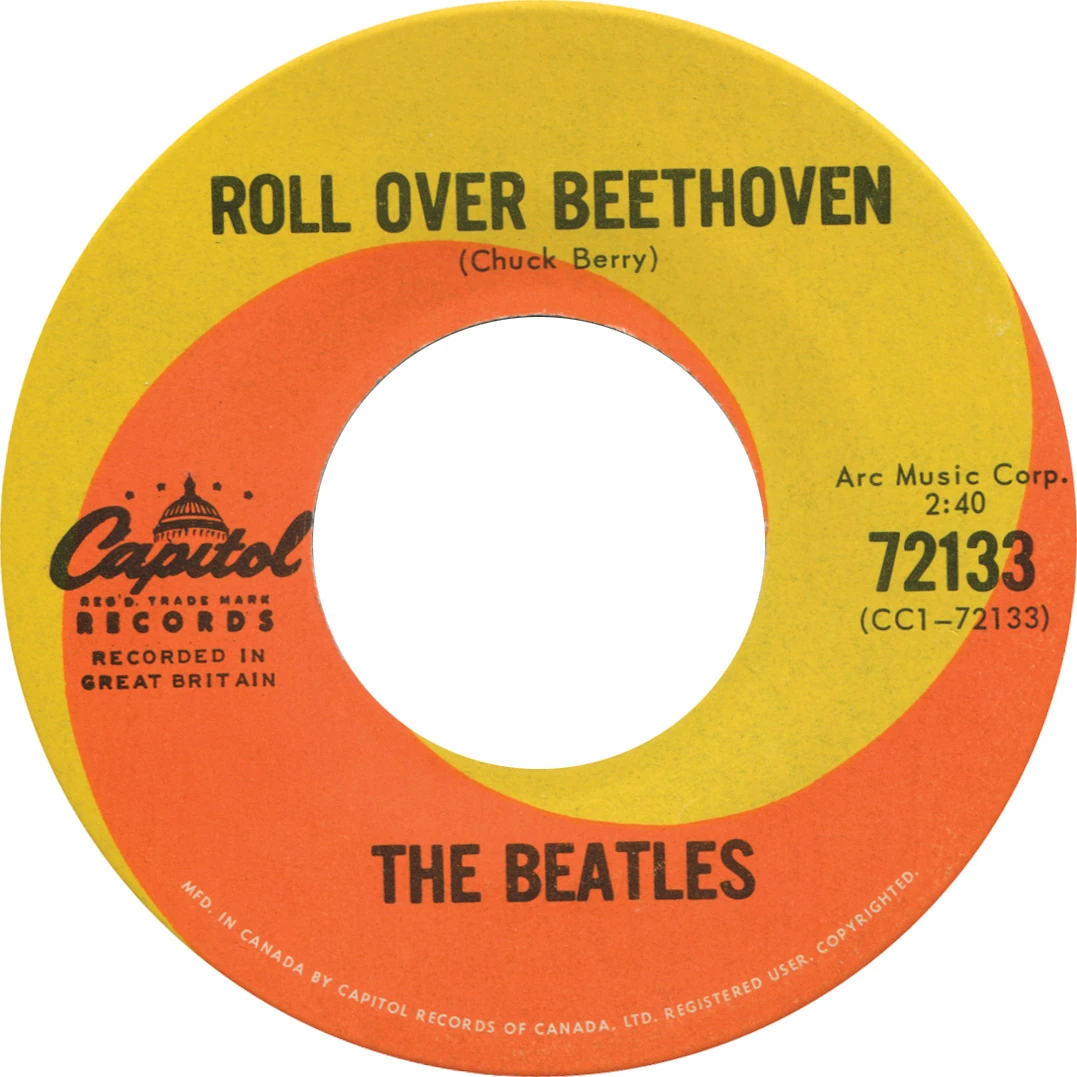
Roll Over Beethoven /
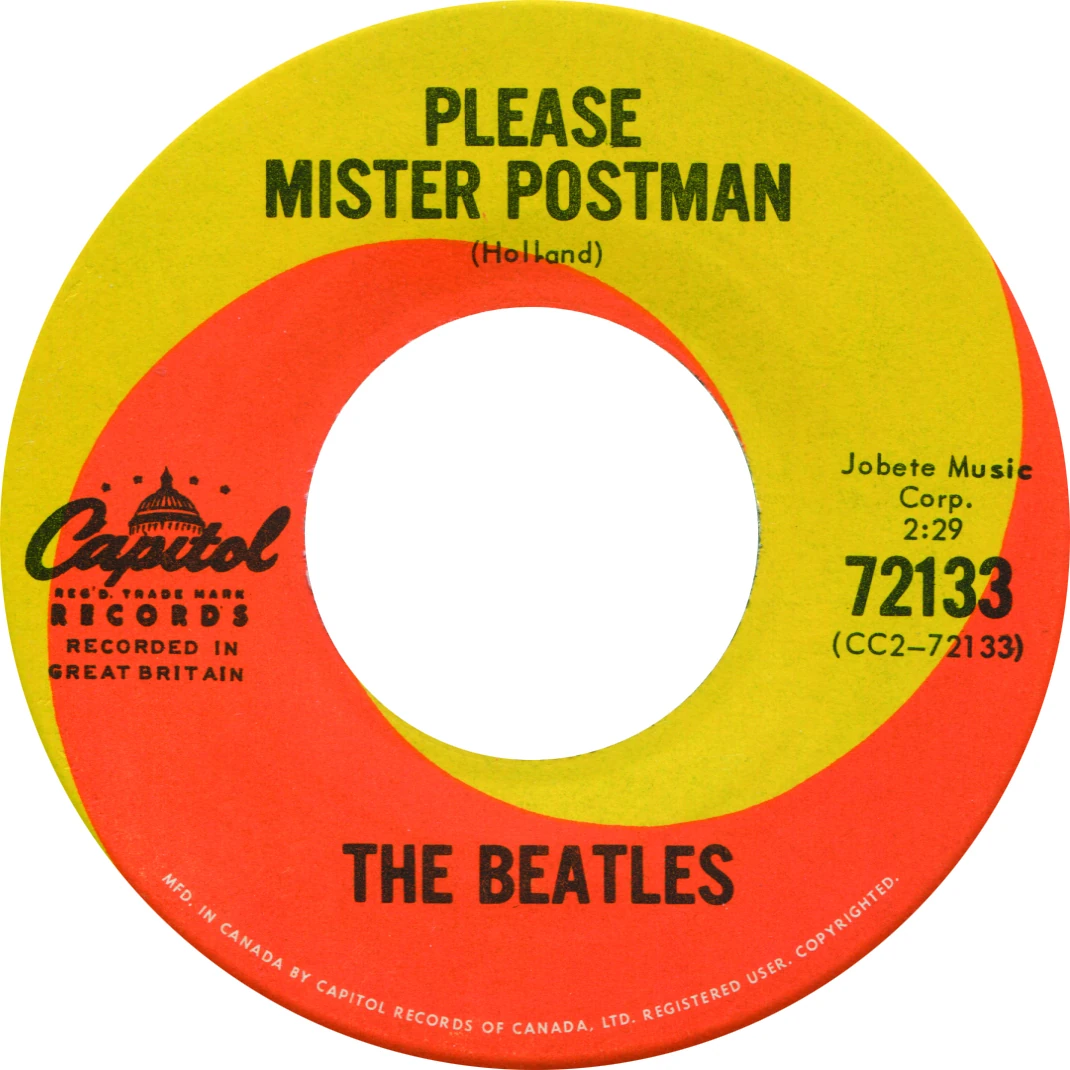
Please Mister Postman
45.72133.1.2 | Second pressing, no brackets, -2
45.72133.1.2 is the second pressing variation of this single. It features a "dash 2" matrix on the A-side and is considered scarce, since few copies were repressed with these markings. The single was heavily exported to the USA, but most copies still retain the "no dash" markings despite the high reported production numbers.
Availability
This repress was most likely manufactured around mid 1965, and remained available until stocks were depleted. It is unclear how many copies were pressed and until when they were officially available, but no "-3" copy has been documented to date, and these were never repressed after June 1966.
General Information
This repress, made from a new lacquer, was pressed in small quantities and is quite difficult to find today. The only "-2" copies known to date are hybrid copies, where the B-side still carries the original no-dash matrix number. No -3 copies have been documented either. The existence of no-dash copies with delete holes (marked for bargain bins) makes this repress even more surprising: why repress a title whose sales were low enough to be relegated to discount prices?
Pressing Information
The 45 was prepared by Capitol of Canada from the UK master tapes provided for the Beatlemania album. The matrix number reads a "CC" prefix, designating "Canadian Capitol". This new matrix number reads:
Side A: CC1 - 72133-2
Side B: CC2 - 72133

Reported sales and verbal recollection of pressing numbers do not match matrix number sequences, so these numbers would still need to be verified. As a reference, a stamper was reportedly capable of pressing on average up to 10 000 discs, but as a few Canadian collectors have highlighted, Canadian operations were a smaller market and had a tendency to pay extra attention to quality control and would often not "abuse" the plates until the end, but would change them earlier to ensure proper pressings.
Again, it is not known how many more copies were made, but these newer plates with a -2 matrix were likely made in mid 1965 and are extremely scarce today. Matrix numbers do not match sales figures of 150 000 copies + 350 000 exported copies in 1964 (source: Piers Hemmingsen's Canadian discography part 1). Such high numbers would normally lead to much higher matrix numbers than -2; Love Me Do, for example, has numbers up to -7. Any insight on this matter would be appreciated.
Packaging
45.72133.1.2 was also released with the generic THIN FLAT black Capitol sleeve:

Sales
It is unknown how many -2 copies were pressed and sold; these were likely made when sales were declining heavily.
Another important fact to factor in was that this 45 was "heavily" exported to the USA in 1964 (along with Love Me Do and All My Loving). 350 000 copies were reportedly shipped south of the border (source: P. Hemmingsen, The Beatles’ Canadian Discography part. 3). These were mostly (if not all) no dash copies, so again, this number seems high, impossible even, when looking strictly at matrix numbers. But a few other factors need to be considered to make sense of these numbers:
A word on sales numbers and manufacturing quantities
It seems that in many cases, the logical matrix number sequences found on records do not align with reported sales (i.e., reported sales are not always consistent with the number of manufactured copies, according to matrix information). It is believed that in the 1960s, up to 10 000 copies could be pressed from a single stamper before being worn out and replaced (and some numbers are even more conservative, at around 2000 copies).
Technically, every time a part was replaced, a dash and number were added to the matrix, indicating it was a new generation of parts. In this sense, a record would have an added "dash and number" at every 10 000 copies (if the part was good for that long). So again, following this logic, a -2 would be a record in the 10K-20K copies range, and so on. Similarly, a record sold at 100 000 copies would see masters up to approximately -10.
Reality is always a little different, and below are possible explanations why matrix numbers could be different from expected numbers, and therefore misalign with matrix numbers:
- 1. Records of sales / memory and recollections can be incomplete or skewed
- 2. Stampers broke or wore out earlier than expected
- 3. Older stampers were re-used later
Below is a representation of the different steps required to press a record. Terminology changes from one plant to another, but the gist of it remains valid:
Lacquer > Metal Master(s) (or Father) > Metal Mother(s) > Stamper(s).
The million-dollar question is "which part of the process saw an updated matrix (-2)?": The stamper? (Every 10 000 copies), the Mother (every 100 000 copies if a mother produces 10 stampers), or the lacquer producing multiple mothers? (i.e., even more identical copies).
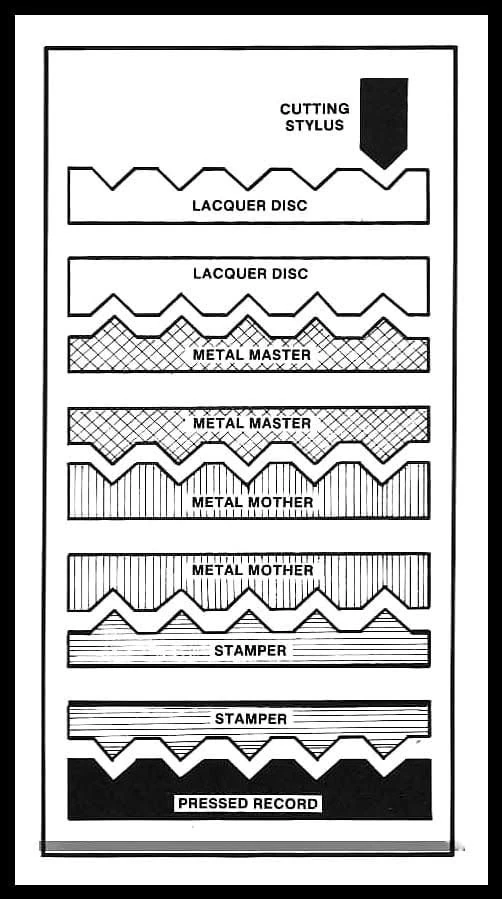
This would imply two other possible explanations:
- 4. Matrix numbers only changed on lacquers (and therefore on the Father producing multiple mothers)
- 5. A single mother produces many identical stampers (with no added -2 number)
These last two seem to be the most plausible explanations, especially when looking at singles with official sales figures that have kept very low matrix numbers (like All My Loving, 45.72144.1.1, for example) - this would account for higher reported numbers without having the high matrix numbers that would reflect the reported quantity of discs pressed. In any case, the sales numbers presented here do not always align with the records matrix numbers as we understand them and the various factors above need to be considered when exploring the different ranges of sales / pressed copies.