
Beatles'65
LP.2228.1.4
Third Pressing - Mono, Canadian GN Master
Early 1965 - July 1966
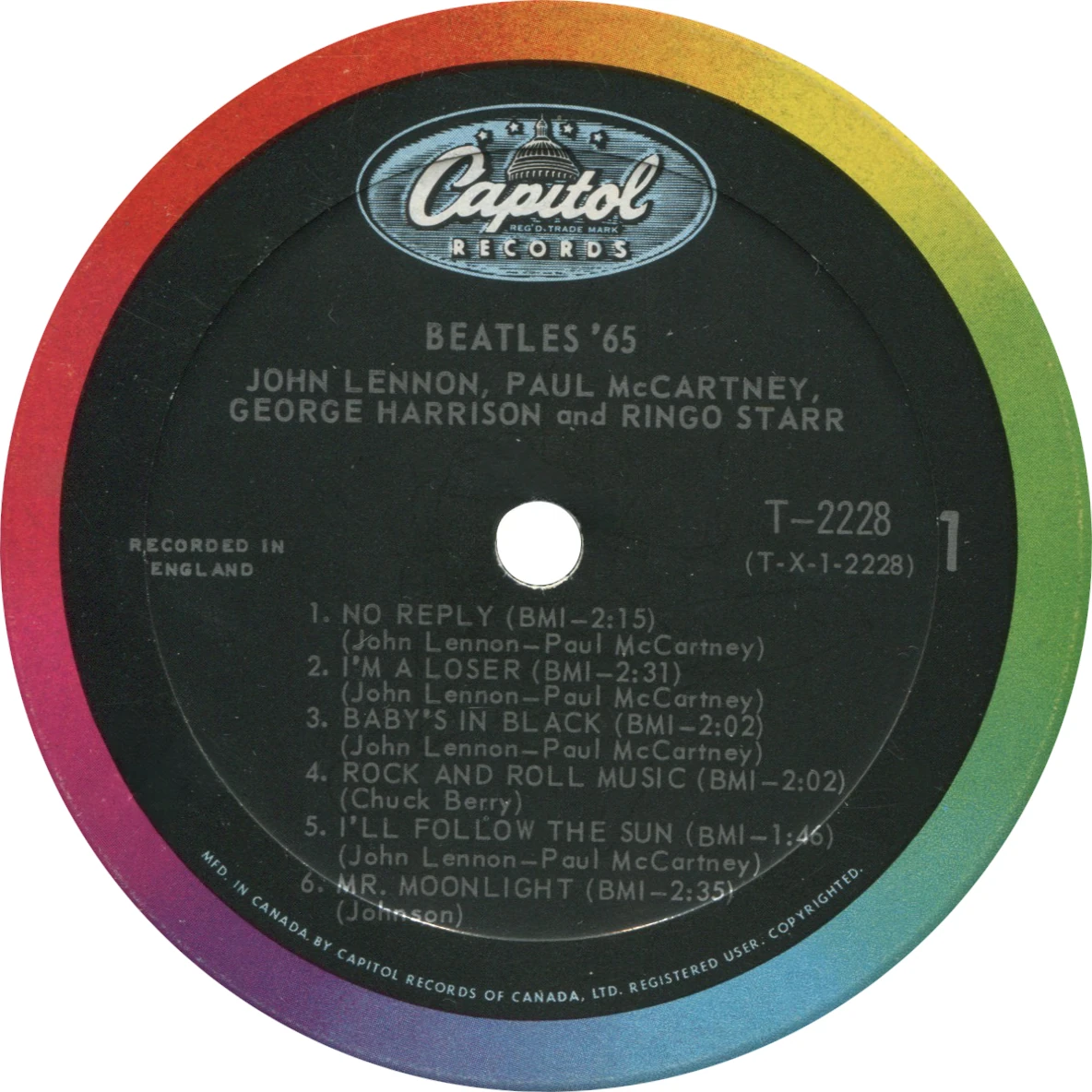
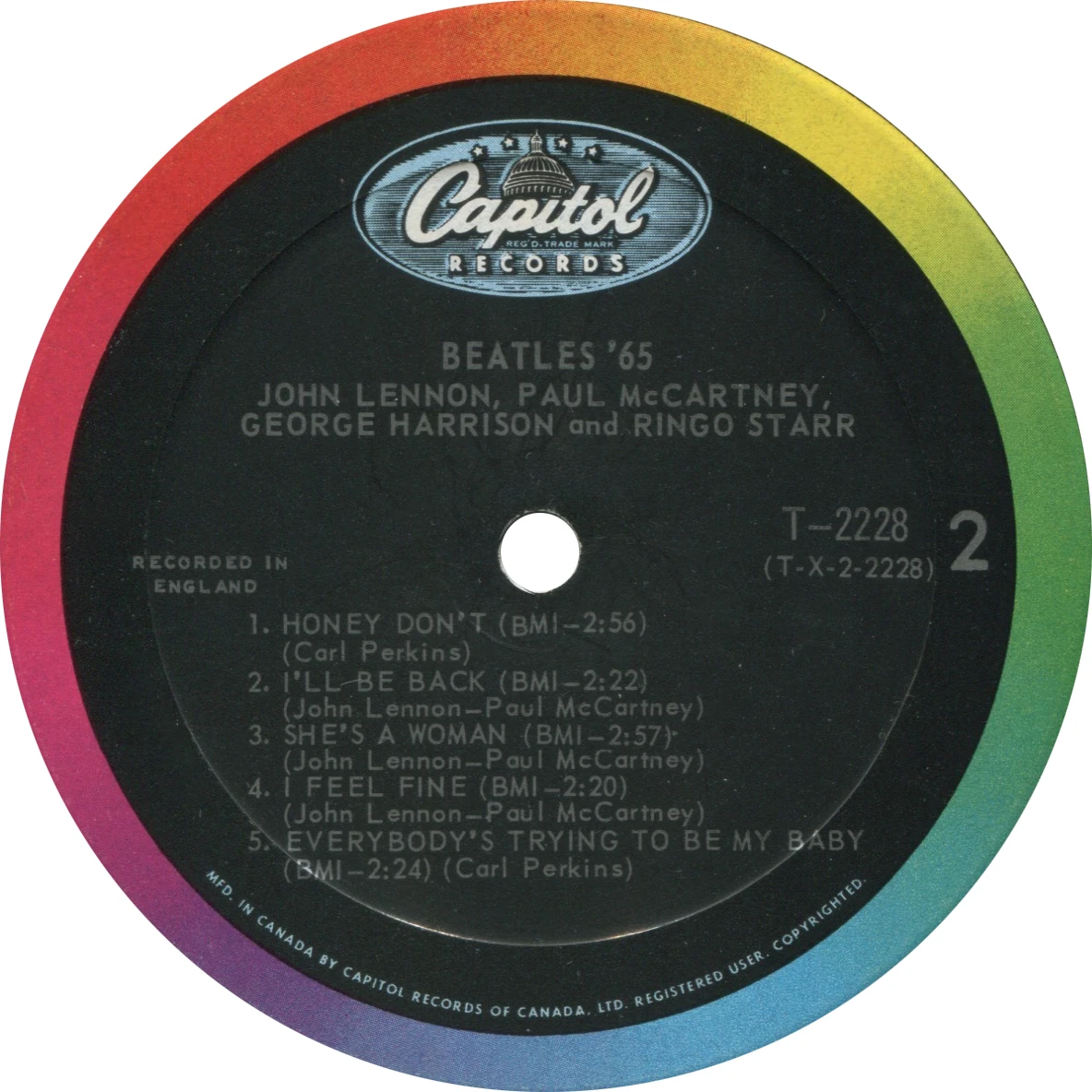
LP.2228.1.4 is the third mono pressing of Beatles'65 in Canada, appearing in early 1965. The label is still the rainbow no brackets design and the jacket is unchanged, but the record was now pressed from a Canadian-cut master: the matrix numbers are hand-etched instead of machine-stamped, and are joined by the initials GN in the trail-off (those of RCA engineer Graham Newton, who cut the lacquers), which gives this master its nickname.
Availability
This variation was available between early 1965, and July 1966 (for approximately 18 months) when the perimeter print changed to a version with brackets around the word CANADA (see LP.2228.2.1). It is the longest-running of the no-brackets mono variations, and the most common.
General Information
The reason Capitol of Canada replaced the USA plates after only a few weeks is on record: they wore out. Mono and stereo metal stampers had been shipped from Capitol's Scranton plant (Pennsylvania) to RCA Victor in Smiths Falls in early December 1964, and with Beatles'65 selling very fast over the holiday season, the mono set did not last long. They were replaced by "made in Canada" parts supplied by RCA Victor sound engineer Graham Newton (source: P. Hemmingsen, "The Story Behind The Very First Stereo Beatles Album Released In Canada", Capitol 6000, 2011). The stereo stampers, used far less, lasted into the early 1970s (see LP.2228.1.3). A set of lacquers cut locally could be duplicated as often as needed from then on.
The GN initials etched next to the catalogue number are those of Graham Newton, who shared the RCA Victor Scully lathe at 225 Mutual Street in Toronto with fellow engineer Fred Burchill. Between 1963 and 1965, the two men cut the lacquers for the Canadian Capitol Beatles LPs. Each wrote the matrix numbers by hand on his own lacquers, and later on added his initials as well (GN also turns up on Canadian 45s of the period, Ticket To Ride / Yes It Is included). These initials are the easiest way to tell this variation from the USA-plate copies (LP.2228.1.1 and LP.2228.1.2), whose numbers are machine-stamped and carry the IAM logo.
By his own account, Newton cut most of the mono masters for Canadian distribution during his time at RCA, for RCA's own releases and for the companies RCA manufactured for (Capitol among them). Mono lacquers were cut on the Scully lathe with a Westrex cutter head, while stereo masters went to a Neumann lathe with the then-new Westrex 3B head. The two engineers checked their work on what they called the "truth box" (a $29.95 portable record player, the kind most teenagers owned) to make sure the needle would not skip (source: P. Hemmingsen, "Record Pressing Services Used By Capitol Records of Canada", Capitol 6000, from a meeting with Graham Newton on 31 October, 1999).
Rainbow "no brackets" labels are found on the earliest of Beatles pressings (between November 1963 and July 1966). Canadian operations being smaller than south of the border, these early pressings are usually of high quality, sounding dynamic and their deep grooves being less prone to scratches affecting the sound.
Pressing Information
As with all previous variations, Capitol of Canada subcontracted the RCA pressing plant in Smiths Falls (Ontario) to manufacture this batch of pressings. From this point forward the mono records were pressed from Canadian-made plates. RCA Toronto cut a set of lacquers from the Capitol USA master tapes, replacing the USA-supplied plates used on LP.2228.1.1 and LP.2228.1.2. The lacquers then went to Smiths Falls, where RCA made the metal parts in three steps (matrix, mother, then stampers) for the presses.
LP.2228.1.4 has markings as follows (hand-etched):
Side 1: T1-2228-3 GN
Side 2: T2-2228-2

As with Something New, the numbering here does not start at 1: side 1 comes from the third lacquer, side 2 from the second. It is possible that the first attempts were deemed substandard and redone until an acceptable lacquer was obtained (or that copies from the earlier lacquers have simply not surfaced yet).
These pressings feature a 70 mm deep-groove pressing ring, a hallmark of early RCA Canadian manufacture. Labels feature the "no brackets" rainbow label (see perimeter print at the bottom of the label: "MFD. IN CANADA BY CAPITOL RECORDS OF CANADA" with no brackets around the word CANADA).

Hybrid (transitional) copies
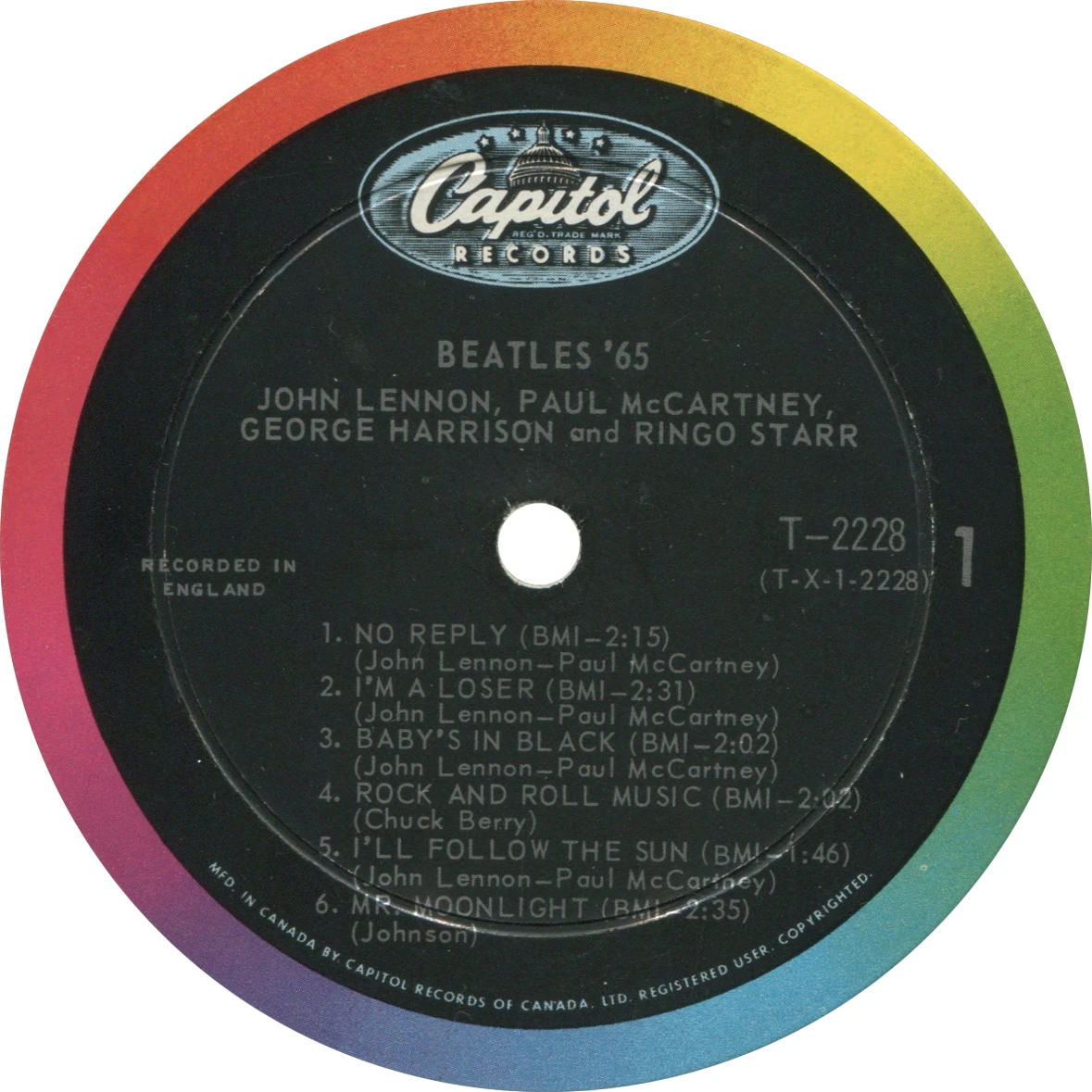
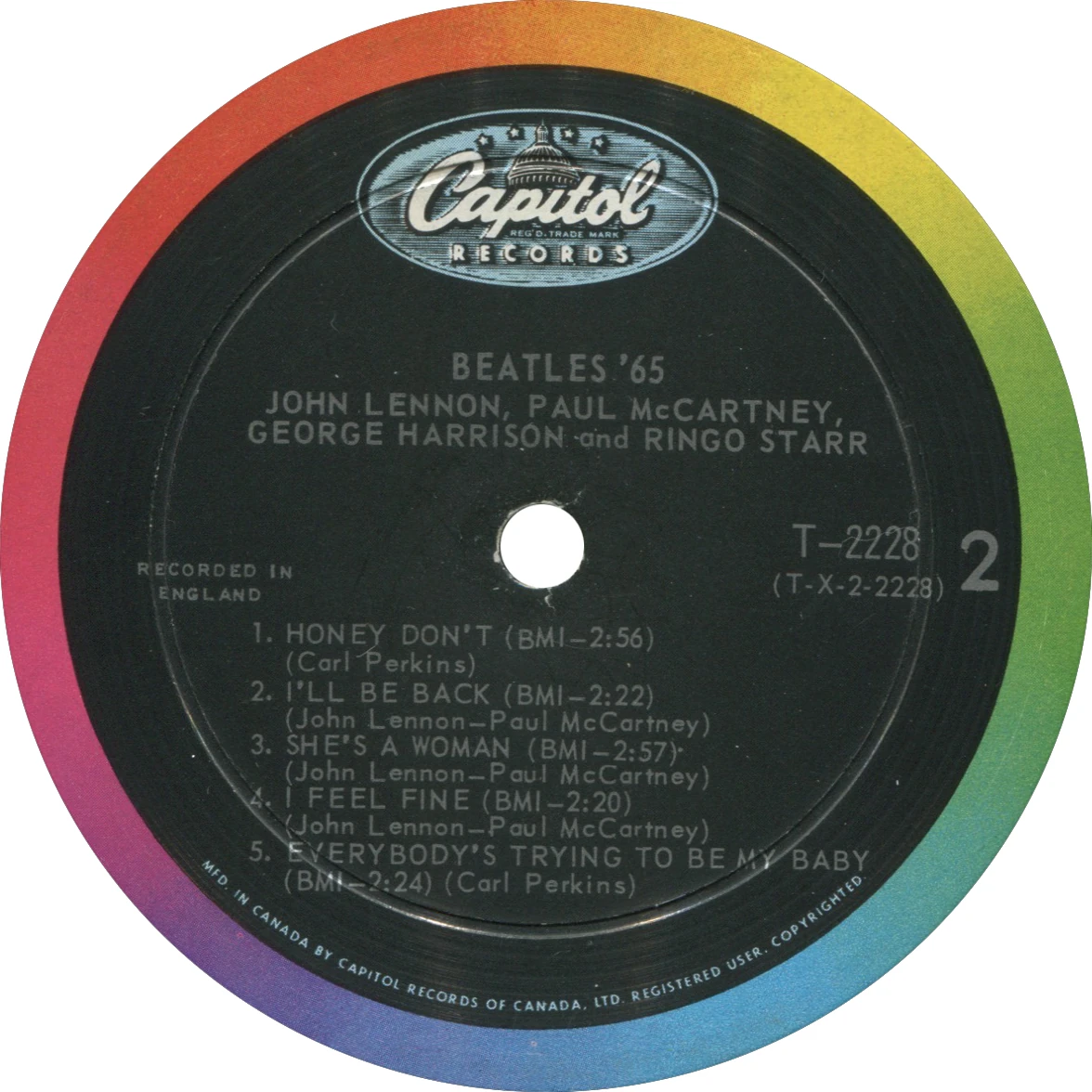
The switch from USA plates to the Canadian master was not a clean break. Transitional copies exist that combine one Canadian-cut side with one USA-stamped side, assembled from whatever stampers the plant had mounted at the time. The documented combination pairs the hand-etched Canadian side 1 with a USA side 2 (Scranton plant) from a later stamper generation:
Side 1: T1-2228-2 GN
Side 2: T2-2228-P3

These hybrid copies are documented here as "transitional" within the LP.2228.1.4 entry rather than as a separate variation; they wear the same labels and the same jacket, and only the trail-off tells them apart. Labels and covers of a hybrid copy are shown below.
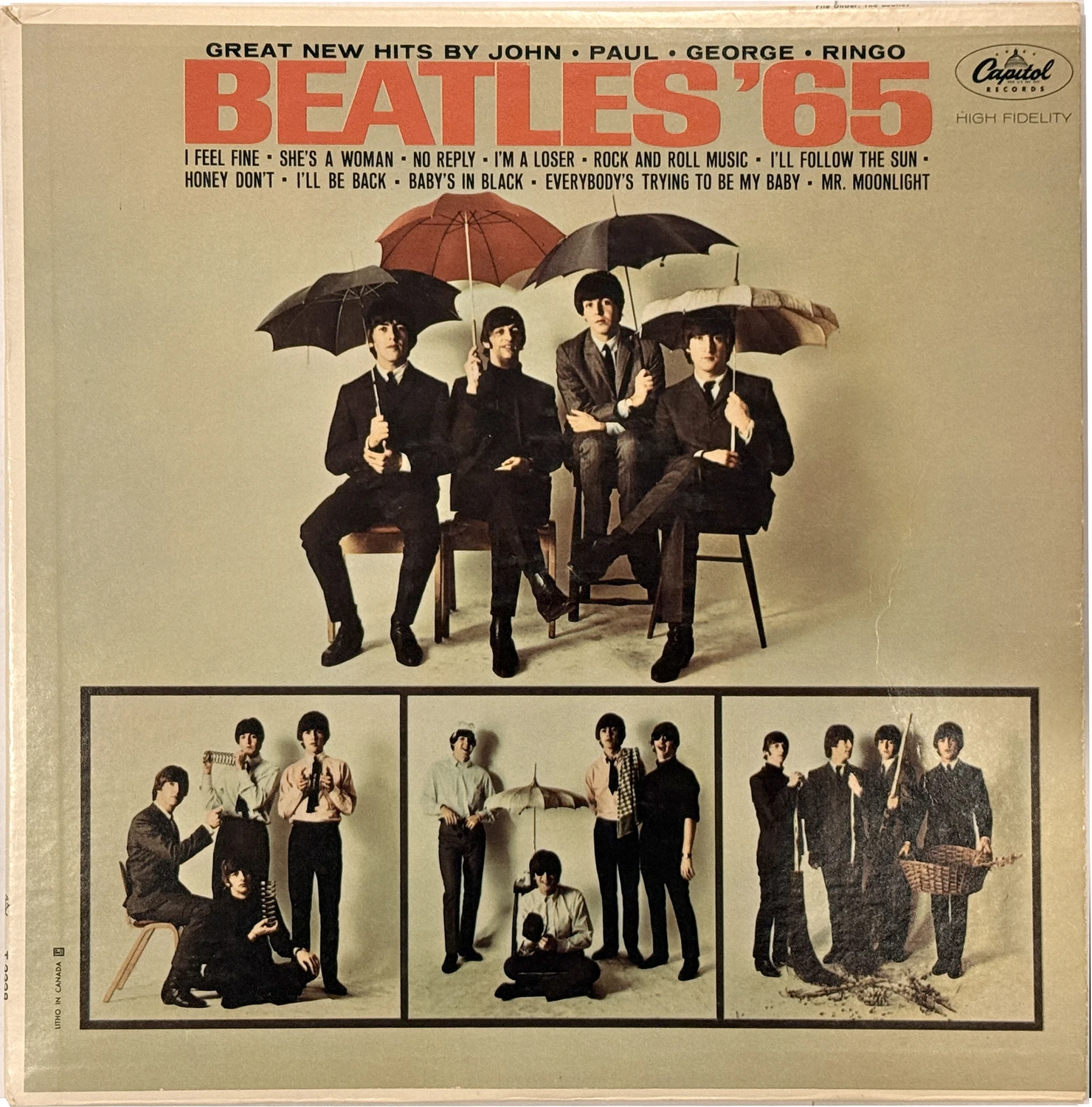
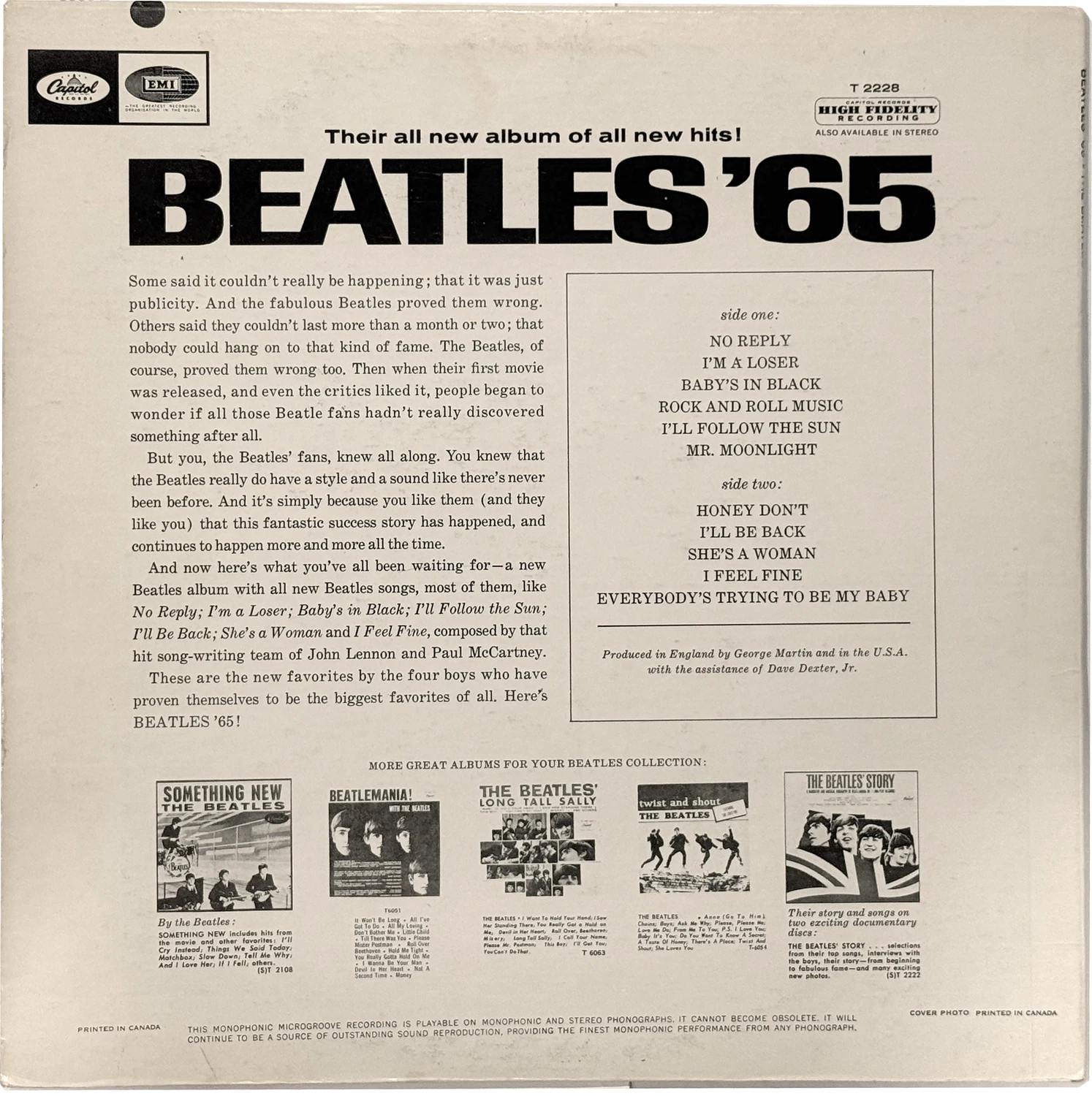
Cover
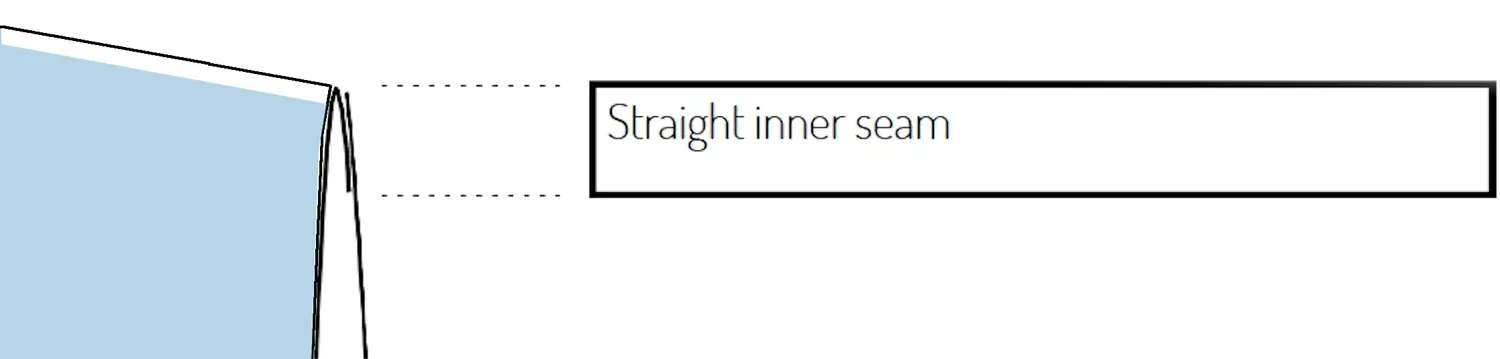
The jacket for LP.2228.1.4 is identical to LP.2228.1.2: the inner seams (the inside fold of the cardboard jacket) are cut straight and measure 10 mm high.
Covers up to the mid 70s used a “front slick” construction (a larger back slick, usually printed in black and white that wrapped around the front of the cardboard cover, onto which a smaller colour front slick was glued, creating a white frame effect all around the front image).
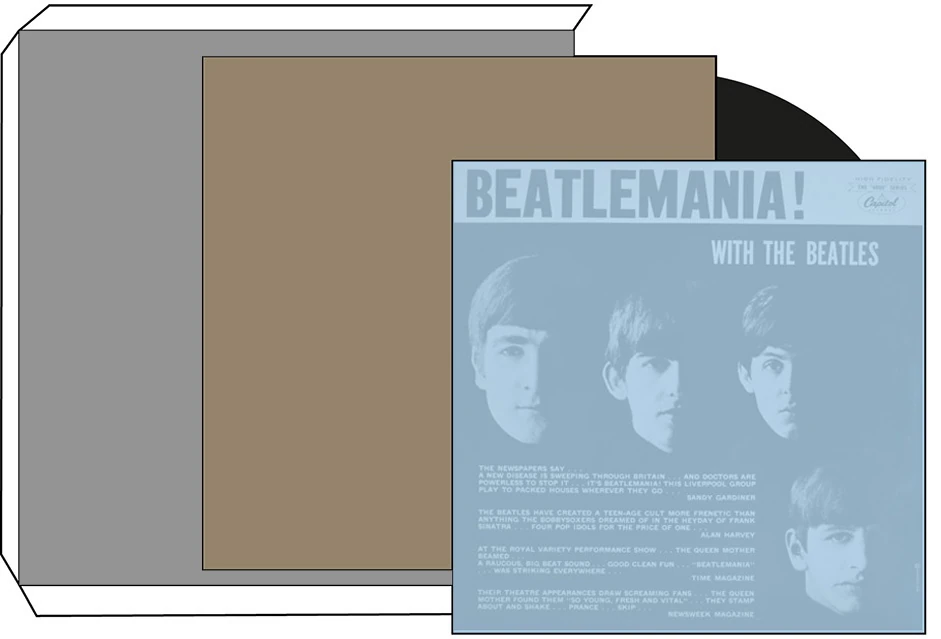
Both slicks were printed by Parr's Print and Litho in Toronto and assembled onto the cardboard frame by Modern Albums. The back cover carries the catalogue block (T 2228 number, HIGH FIDELITY RECORDING box and "Also Available in Stereo" notice) in its lowered position, level with the "Their all new album of all new hits!" tagline, as introduced with LP.2228.1.2.
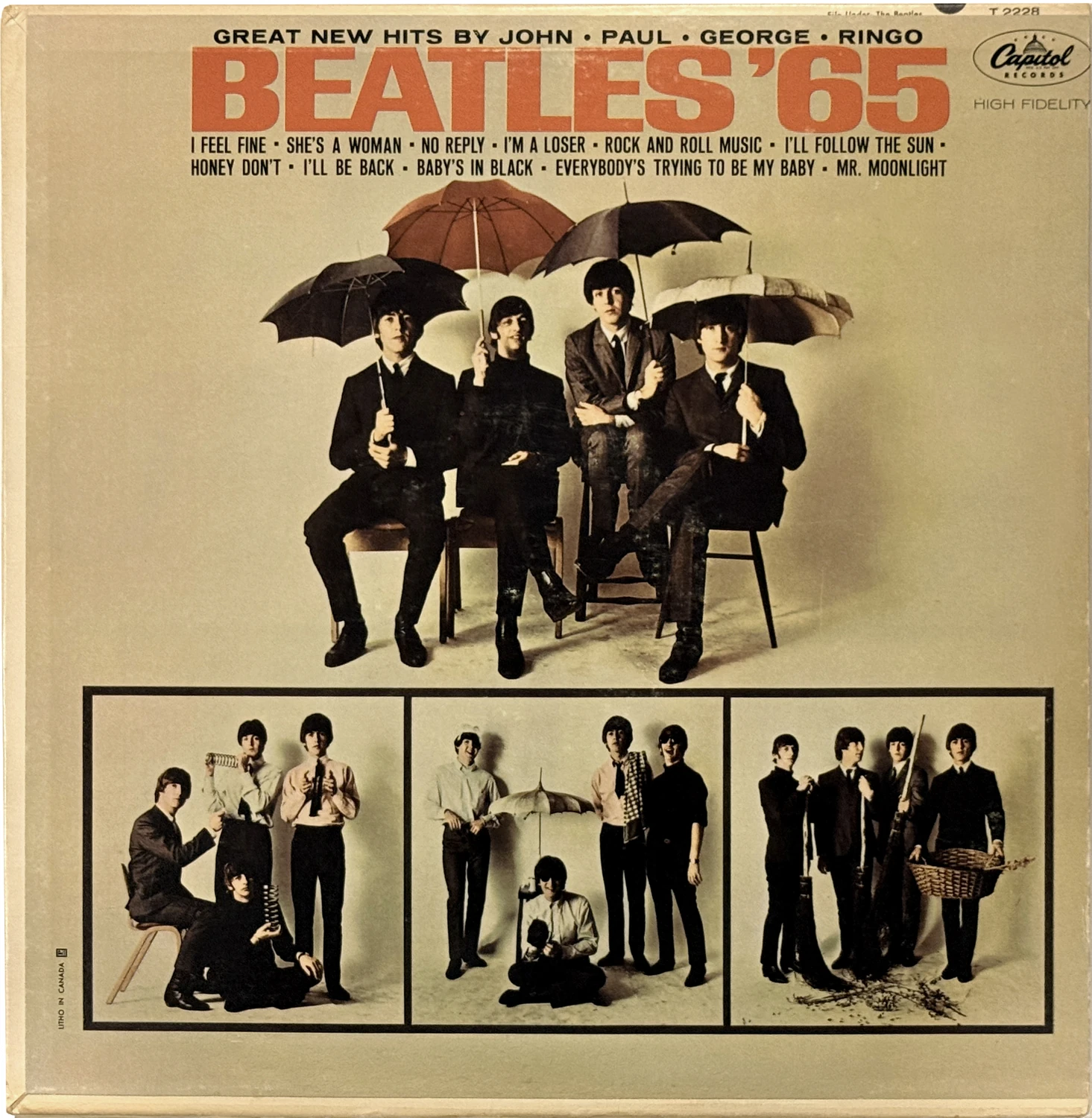
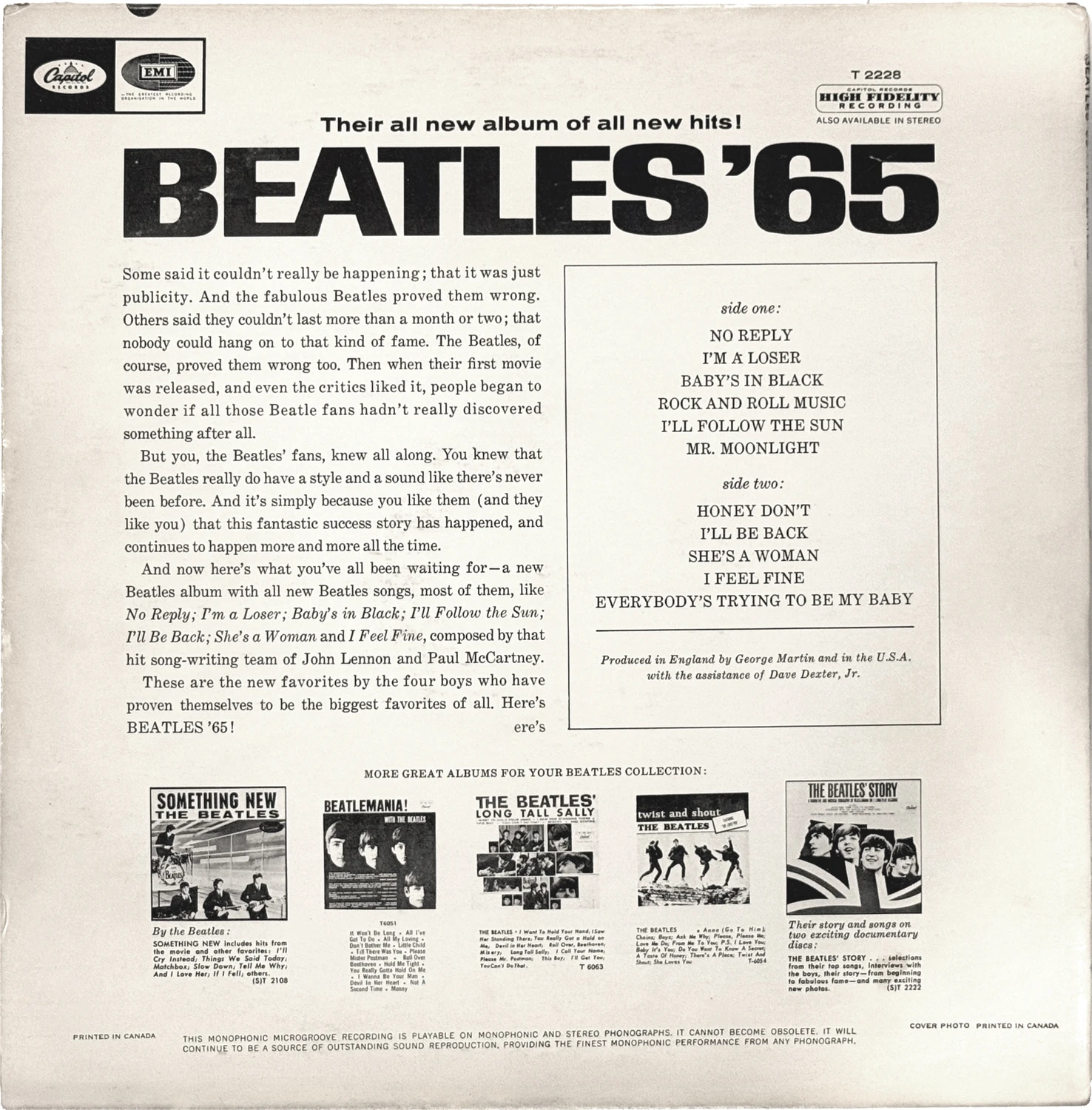
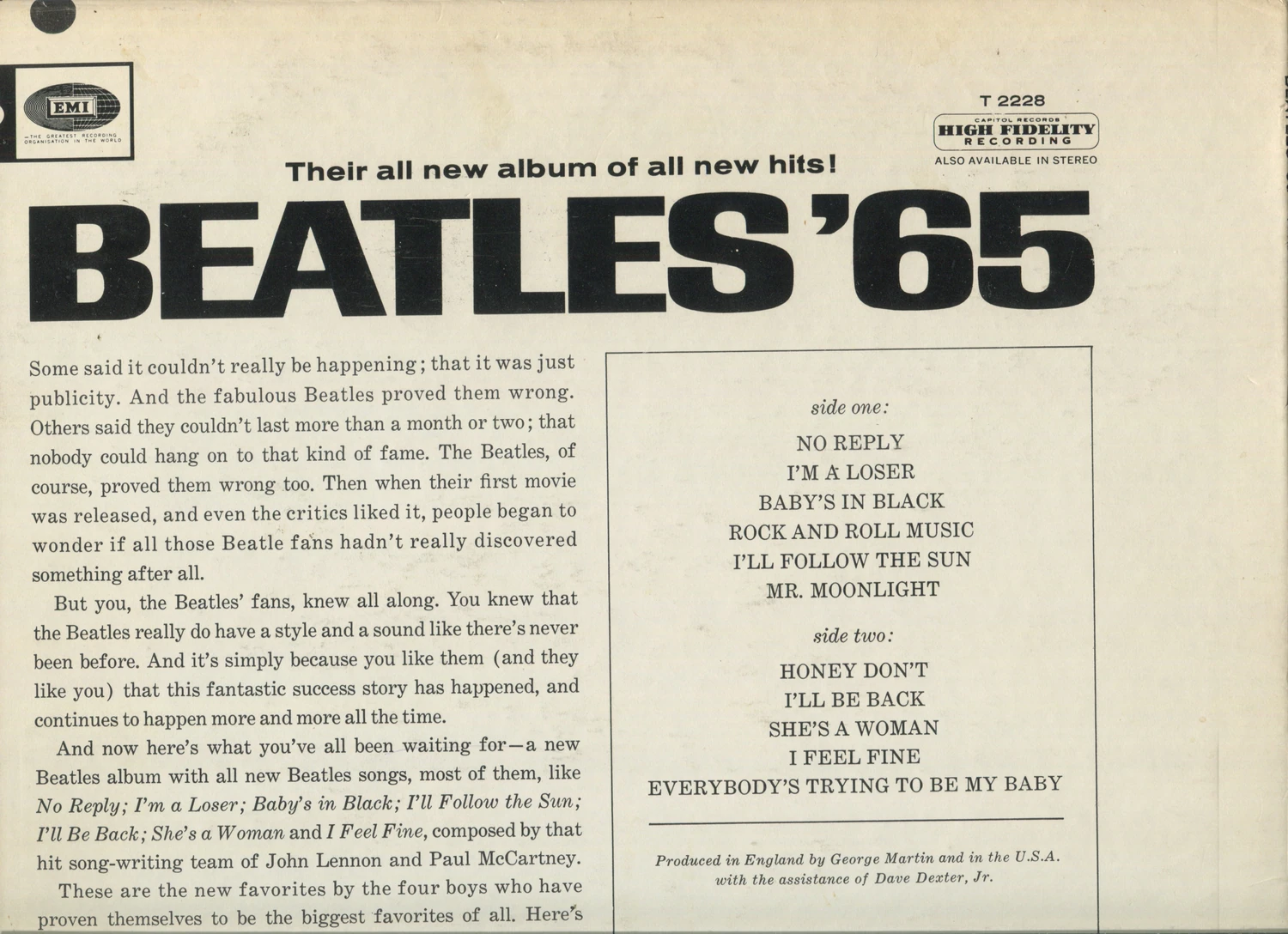
Packaging
Copies from this point forward were packaged only in the newer tight shrink wrap.
These were sold with / without a red and white Capitol / Pathé paper LP inner sleeve (apparently designed by Paul White).

Sales
Sales records show that 53,804 copies of Beatles'65 sold in Canada in 1965 (this includes variations LP.2228.1.2, 1.3 and 1.4), and 6,376 in 1966 (variations LP.2228.1.3, 1.4, 2.1, 2.2 and 2.4) (source: P. Hemmingsen, The Beatles’ Canadian Discography part. 3, "Sales of Beatles Records in Canada"). As the longest-running mono variation of the period, LP.2228.1.4 accounts for the bulk of the 1965 figure. Over its first four years, Beatles'65 therefore sold a total of 151,152 copies in Canada (1964 to 1967), all formats combined: these Capitol figures are per title, not per format, so from July 1965 they also include the reel-to-reel tape (see RE.2365.1.1). These figures include a mix of mono and stereo copies.