← Something New Variations List
Something New
8T.2108.3.1
Black Ampex Datapack, Black Shell / Black Slick
1970-1973
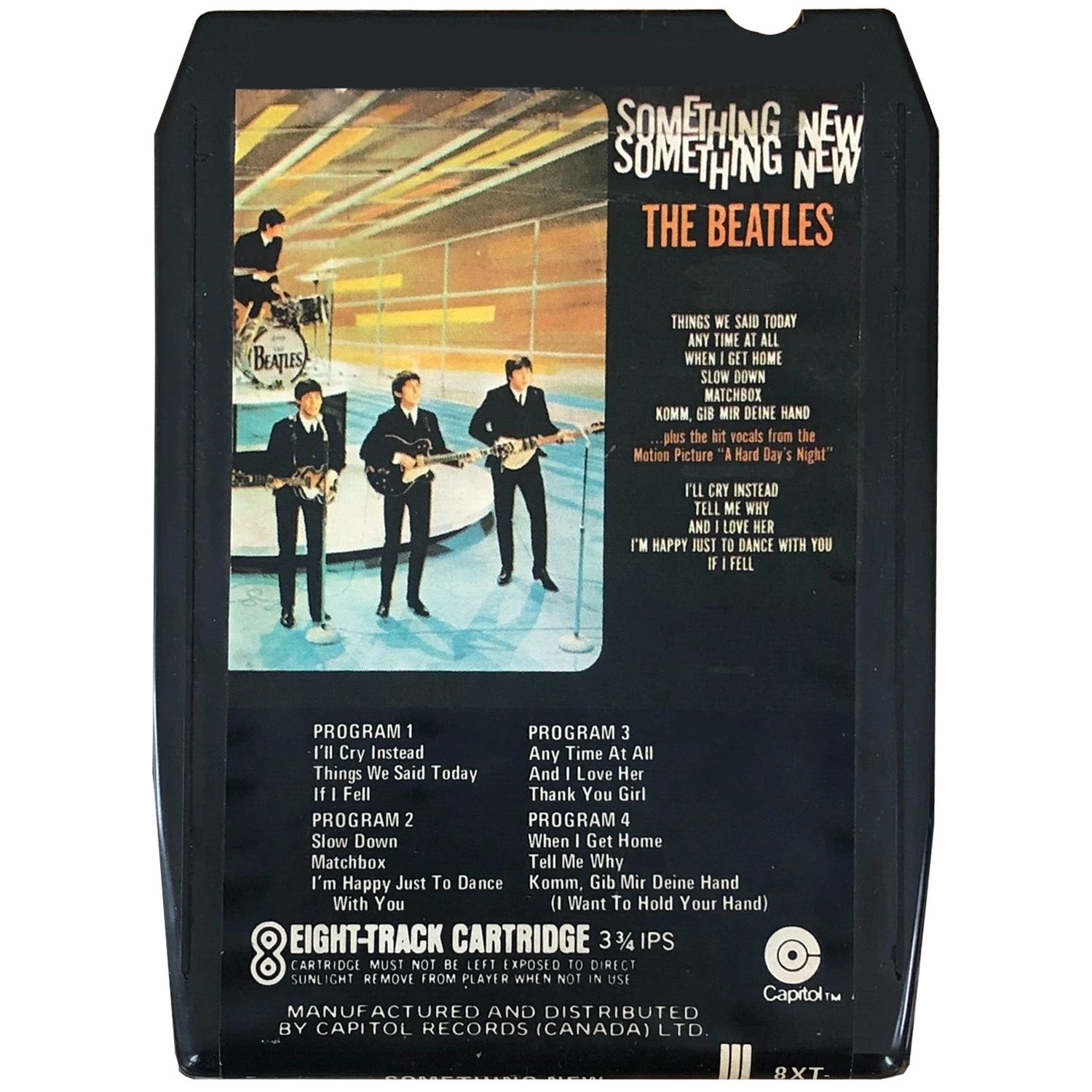
8T.2108.3.1 is the second official incarnation of Something New in Canada on the 8-Track format. This variation was issued in stereo. This variation is recognized by its black Ampex Datapack shell and black slick marked "MANUFACTURED AND DISTRIBUTED BY CAPITOL RECORD (CANADA) LTD".
Availability
This variation was available between 1970 and 1973 (for approximately 2 1/2 years) when Capitol changed its tape provider, opting for Lear Jet to manufacture its 8-Track tapes instead of Ampex (see variations 4).
General Information
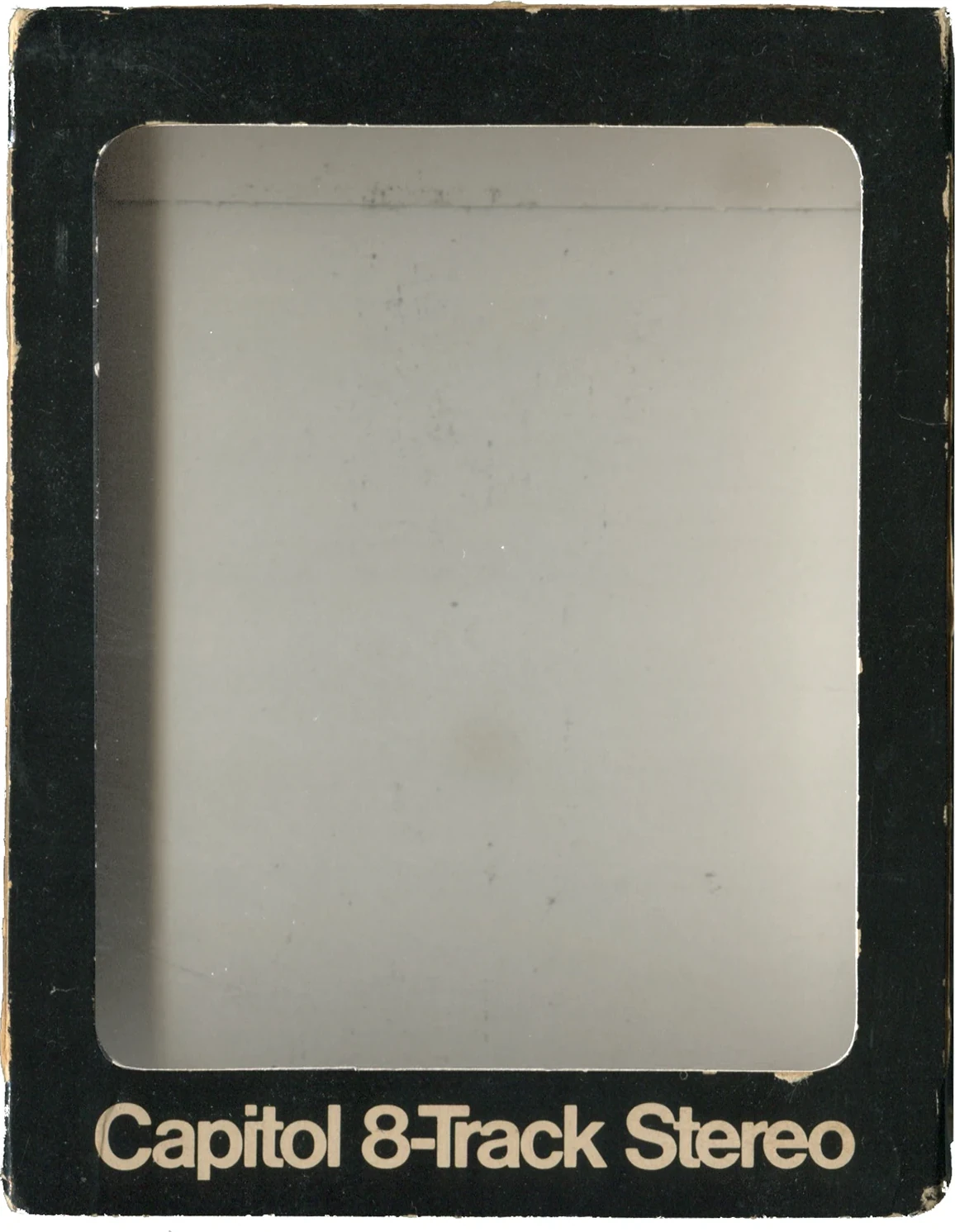
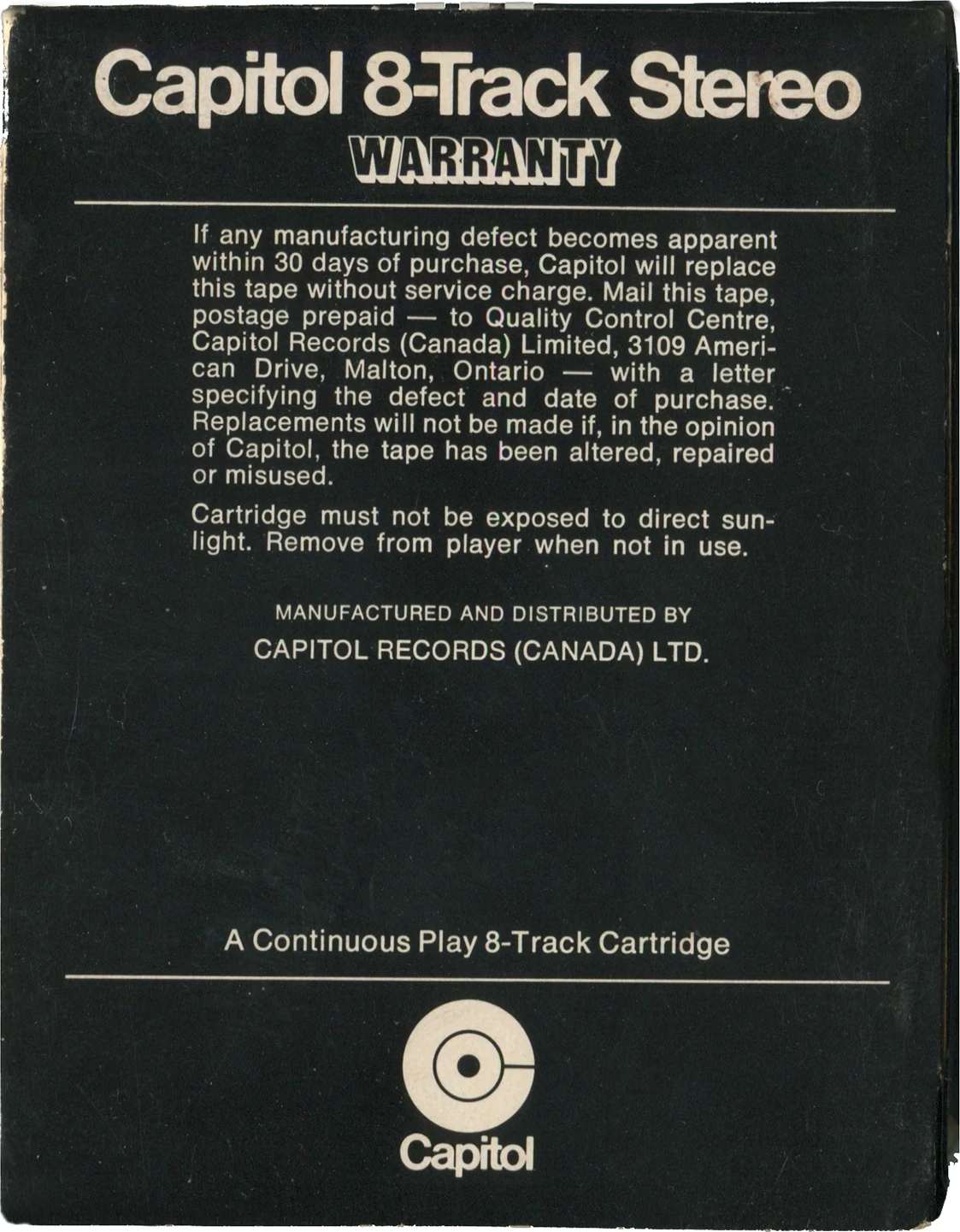
These later 8-Track tapes from 1970 were not manufactured by Capitol (Capitol hired subcontractors until 1976, as they were doing for vinyl records before they opened their own pressing facility in Mississauga). These black shell Datapack tapes featured a black Ampex Datapack shell with a black Canadian paper slick. Canadian black shell tapes were originally housed in a generic cardboard Capitol slip case with either CAPITOL or APPLE markings on the front and back.
Pressing Information
Capitol of Canada subcontracted Ampex of Canada Limited in a suburb of Toronto, to manufacture these Canadian 8-Track tapes. These Ampex of Canada 8-track tapes were manufactured in Canada using black plastic “Datapack” shells (the shell model that was produced under licence from Data Packaging Corp. in the USA). These generic shells were unbranded, allowing companies to present the cartridges as their own in-house productions (source: P. Hemmingsen, The Beatles’ Canadian Discography part. 2 and 3).
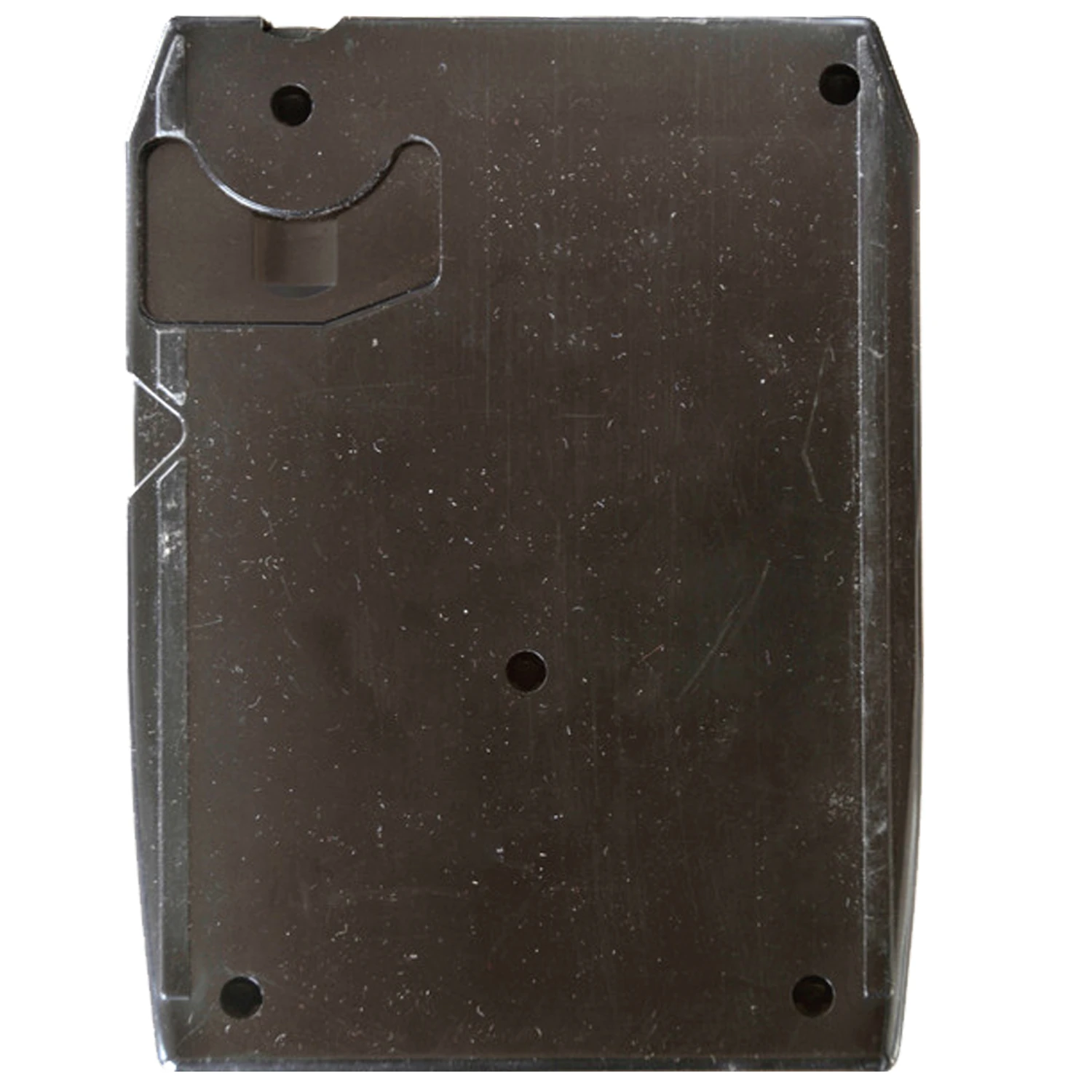
8T.2108.3.1 has markings as follows:
• Black plastic shell
• Long gripper cavity
• A deep "U" shaped slot on the top left back side
• 5 clip holes holding the two halves of the shell together
• Black paper slick

Cover and packaging
The "all black" Datapack tapes were packaged in a standardized generic slipcase featuring "Capitol" text and logos. Earlier models appear to have been made from a thicker, darker cardboard, whereas later versions used a thinner, almost white type of cardboard.